The endless river of family faith
150th Anniversary of James Maxwell's Mission to Taiwan
Photos Credit: Andrew Su
Part One: The Wisdom and Vision of Early Missionaries to Taiwan as Seen Through the Kao Zhang Family
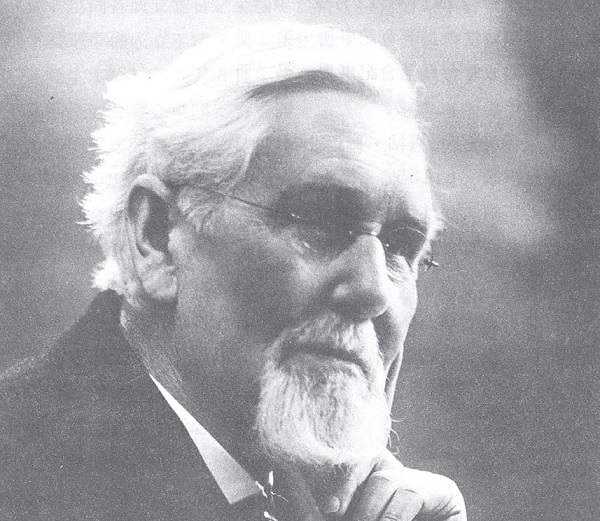
This year (2015) marks the 150th anniversary of Dr. James Maxwell (1836-1921) from Scotland beginning his missionary work in Taiwan, and it is also the 150th anniversary of my family's conversion to Christianity and service to the Lord!
All-Round Pioneer
This faithful and courageous medical missionary was not only a pioneer in Taiwan's church history, modern medical history, and educational history, but more importantly, he had a decisive impact on Taiwan's modern development history (not just for Christians). His landing in Taiwan in 1865 opened a new chapter of modernization for Formosa—one that came through grace.
He was also the missionary who led my great-grandfather Kao Zhang (1837-1912, who was the first Han Chinese Christian and local preacher in Taiwan since the Dutch departure in 1662) to faith.
Because of Maxwell's courage and obedience, my great-grandfather came to know Christ. Through my great-grandfather's transformation, my family members have received abundant blessings from our Heavenly Father for 150 years from 1865 to the present. We have established hundreds of churches, nurtured many ministers and doctors, and this legacy continues through seven to eight generations, spreading throughout Taiwan and around the world. Generation after generation, we have passed down the life mission of building churches and glorifying God while benefiting humanity.
Solely Depending on God
Although I was born nearly half a century after my great-grandfather's death, his example continues to strongly influence and inspire my life and ministry to this day. For this reason, I am especially grateful to Dr. Maxwell, who led my great-grandfather to faith.
In 1863, this young surgeon—barely two years older than my great-grandfather—graduated from the University of Edinburgh Medical School in Scotland, then went on to study the most advanced medical techniques of the time in Berlin, Germany, and Paris, France. Upon returning to his homeland, he contemplated not how to use these advanced medical skills to live a prosperous and comfortable life, but rather how to apply what he had learned in the places that needed him most.
Therefore, he accepted a mission from the Presbyterian Church and took an eight-month voyage to Shanghai, China. His colleagues in Shanghai told him that Xiamen in the south needed him more, so he immediately moved south to the relatively underdeveloped Xiamen at that time and diligently studied the Hokkien dialect.
In 1865, he decided to leave Xiamen, which already had missionaries and a medical team, and crossed the sea to backward and dangerous Taiwan, bringing along a Fujian assistant. It was during his street preaching that my great-grandfather encountered God!
Since childhood, we had daily family worship at my grandmother's house. I remember that after dinner, everyone would arrange chairs in a circle and begin singing hymns, reading Scripture, and praying. Therefore, I was fortunate to hear many anecdotes about my great-grandfather Kao Zhang from my grandmother, Mrs. Kao Hsu Bi (the fourth daughter-in-law of Kao Zhang), and other elders. This included how he heard the Gospel from Dr. Maxwell and accepted the Lord while on his way to the temple to pray for protection and good luck in gambling—becoming Dr. Maxwell's first fruits upon entering Taiwan. This completely transformed his life direction and path by 180 degrees, not only changing his own family history but also bringing God's blessings to the hundreds of churches he established and the countless people led and shepherded through these churches.
From 1865 until his death in 1912, my great-grandfather traveled courageously throughout Taiwan on foot to preach the Gospel and establish churches, carrying only a romanized Bible in his pack, a bag of sweet potato chips and a pot, one set of spare clothes, and eight hymns set to indigenous Taiwanese tunes memorized in his mind.
This has become my example and inspiration today. If my great-grandfather back then—who had no education (strictly speaking, he was illiterate in Chinese characters), no car, no horse, no comfortable hotels, none of the equipment I have today (computers, phones, cars, planes, hotels, plus various Chinese and English biblical commentaries and reference books)—could establish churches, save souls, and naturally experience miracles and wonders in his daily life and ministry simply by relying on the name of Jehovah, then what is impossible for me today? I fear that today we have too many things to rely on, except for relying on God!
Living Out Kingdom Characters
Early believers in 19th-century Taiwan were extremely lacking in material possessions, and often faced isolation, exclusion, attacks, and persecution for upholding certain principles of faith. The Christianity section in the religious chapter of Mr. Lian Heng's "General History of Taiwan" records how my great-grandfather was framed and imprisoned in a dungeon, later rescued through the efforts of British missionaries. Christians truly need to walk the path of the cross and desperately need to live out heavenly testimony within their social and cultural context. Therefore, they were very serious and principled in their interpersonal dealings, emphasizing reason, righteousness, and integrity.
According to family elders' accounts, Taiwan was plagued by bandits at that time, and without today's postal and telecommunications delivery systems, if someone wanted to send items from one place to another to family or friends, they could only entrust familiar acquaintances to help. However, there were frequent reports of valuable items being robbed or stolen. Because my great-grandfather often traveled everywhere preaching, friends would ask him to help deliver items, and he almost never failed to deliver them to their destinations safely. Legend has it that even the bandits made an agreement among themselves: "Don't touch Elder Kao's belongings, because that man is protected by God."
He admonished his own family and believers: "Those who believe in the Lord must take even better care of their relatives. If we don't even care for our own family, then we are worse than unbelievers." Early Taiwanese believers faced various social and cultural challenges, especially suffering much slander and misunderstanding for their principle of not worshipping ancestors. However, this instead led them to demonstrate even more practical testimony in honoring their parents and caring for relatives and friends.
Before Kao Zhang passed away, he told his descendants that in his lifetime of serving the Lord, he had not left behind any earthly treasures. What he left was only one "living inheritance"—the Word of God. As long as his descendants trusted in God's Word, they would surely be blessed. This became his ethical will, which I follow and pass down today.
Going Forth with Joy
Of course, what is most moving are those early missionaries from foreign lands. They crossed vast oceans with a determination to die, excitedly bidding farewell to family and friends at farewell gatherings in their homeland. These gospel warriors knew well that they might very likely never return home again, and that their next meeting would be in their heavenly homeland. And indeed, many missionaries of that era died in the mission field for various reasons.
Through perseverance and determination, plus God's miraculous help, most of them were able to speak elegant and fluent Taiwanese—even more refined and authentic than the locals! This compelled people in society to admire and respect them. Even when threatened, insulted, deceived, or maliciously attacked, they mostly responded with humor, patience, peace, and dignity. How could this not inspire profound respect!
Living Out Abundant Life
The missionaries who came to Taiwan in the 19th century had another distinctive characteristic: they not only preached the Gospel but also served as pioneers of social reform. When the general public had no opportunity for education, they established schools. Since most adults had no chance to attend private schools in their childhood and could not read Chinese characters, the missionaries constructed a romanized phonetic writing system for the Hokkien dialect and translated the Bible into Hokkien. From then on, even illiterate men and women could read the Bible and use it for writing letters, keeping records, and communication, simply by learning the twenty-some Roman alphabet sounds and the phonetic principles.
Back then, even my grandmother who knew Chinese would often write in romanized script, with beautiful and flowing handwriting. As a child, when I saw my grandmother's romanized letters, I thought she was writing in English! She wrote letters in romanized script to my father who was studying in Peking at the time, beginning with "My beloved son, Yao-min." This opening deeply conveyed the maternal love passed down from our Heavenly Father!
The missionaries not only taught the Bible, but also instructed in principles of conduct, lifestyle habits, new knowledge and technology, and sports and fitness. Members of my family are mostly passionate about sports, and everyone enjoys competing to see who can run fastest, jump highest, and has the most strength and endurance.
Over the years, I have frequently flown to various places to preach and serve. Before my father had his stroke, he would often carry my luggage and take me to the airport. I felt embarrassed having my pastor father, who is respected and admired by many, always doing these errands for me. But my father enjoyed it immensely. He said that his grandfather (my great-grandfather Kao Zhang) had told his children: "Whoever among you serves the Lord, I will serve him." My great-grandfather lived during the Qing Dynasty, yet was completely unbound by Confucian proprieties, because he followed the culture of the Kingdom of Heaven.
All of this profoundly influenced my later vision in founding "Kingdom Resources for Christ." One important mission of "God's Kingdom" is to implement Kingdom culture in our daily lives and inspire God's children to truly experience that "more abundant life."
The Model Lives in the Past
Specifically, how did the early missionaries to Taiwan live out Kingdom culture in their mission fields and daily lives, influencing the social atmosphere of their time and the long-term missionary prospects?
Disruptive Thinking: In 2008, I received God's calling and guidance to begin a ministry that directly entered the workplace. A Christian American friend of mine said, "You're truly carrying on your family's mission!" I said most of them were pastors, missionaries, and doctors, while I was in industry and business. He replied, "That's right, you are indeed carrying on their legacy."
For nearly a century after the mid-19th century, it was medical work and full-time ministry, but in this era it is all walks of life, especially the global corporate workplace! The Lord Jesus was extremely disruptive in His ministry. When Maxwell preached the Gospel at temple entrances where crowds gathered, not avoiding them despite their being strongholds of pagan religion, this was precisely disruptive thinking.
Division of Labor and Cooperation: In 1865, Maxwell from Scotland entered Taiwan from the south; in 1876, Mackay from Canada entered Taiwan from the north. From then on they had an agreement: the Scottish mission would be responsible for areas south of the Zhuoshui River and the eastern regions of Hualien and Taitung, while the Canadian mission would handle the north including the Yilan area. This division of labor was both effective and efficient, teaching me that ministry should emphasize division of labor and cooperation to prevent duplication and waste of resources. This was true then, and even more so now!
An Eternal Perspective: Through the 150-year history of ministry in my family, I’ve come to learn that the fruit of some things may only be seen decades—or even centuries—later, perhaps not until eternity. Too often, we give up too soon or draw conclusions too quickly. Viewing things with a long-term, even eternal perspective, is something that began with the time of our Lord Jesus. The vision that missionaries held 150 years ago is still deeply needed today.
Global Vision: When Jesus proclaimed the Great Commission to go "to the ends of the earth," Christian globalization had already begun. In the 21st century today, this world has only gradually moved from the internationalization of the late 20th century to today's emphasis on globalization through the internet. The global vision that early missionaries learned from Christ is urgently needed in missions today. Otherwise, without that forward-thinking and breakthrough ministry and influence of yesteryear, many churches and mission organizations today are likely to become embroiled in disputes and obstacles over trivial matters.
Generating Cultural Impact: The seven characteristics of Kingdom Magazine (which are also self-imposed requirements for content)—vision, breakthrough, challenge, practicality, knowledge, inspiration, and action—are not my original creation, but rather what I have received from living for many years in a missionary family, and what I have observed in the missionary strategies, faith confessions, teaching and nurturing, and life actions of missionaries of that era. These are indispensable principles for missions in this age. Such missions will bear fruit that produces not merely believers who make decisions with their minds or are moved in their hearts, but true Christian soldiers whose body, mind, and spirit are all grounded in Kingdom culture—those who can genuinely influence society and bring progress and blessing to their localities.
Part Two: Seeing the Wonderful Power of the Gospel Through the Hsu Zhao Family
In June of this year, as we celebrated the 150th anniversary of James Maxwell's missionary work in Taiwan, I received from Rev. Andrew Su, Editor-in-Chief of KRC Magazine, this precious masterpiece that he painstakingly supervised and edited: "Faithful Legacy—The Life Story Museum of Elder Hsu Chao." Hsu Chao (1879-1958) was Rev. Su's grandfather. Though the book is nearly 400 pages thick, I read it twice and couldn't put it down.
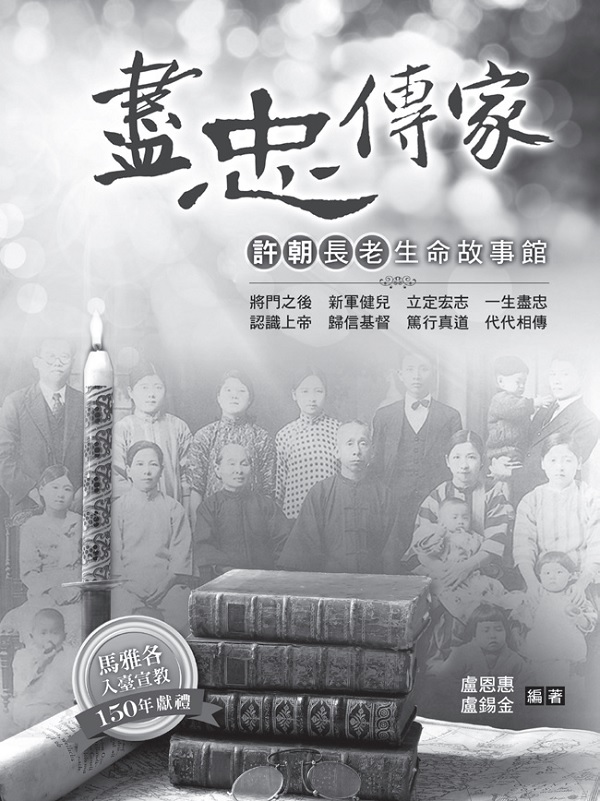
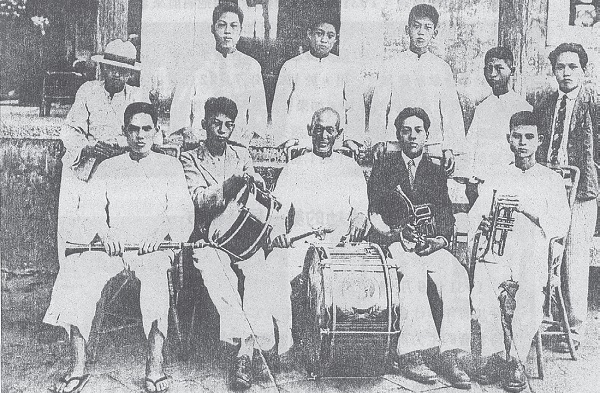
An Ordinary Person's Momentous Decision
This book centers on Evangelist Hsu Chao, yet it tells more than one person's story. It connects past and future, spanning from the Taiping Rebellion, Opium Wars, Russo-Japanese War, First Sino-Japanese War, Japanese colonial period, National Revolution, Marco Polo Bridge Incident, to the Sino-Japanese War and World War II, and the Kuomintang era—covering 175 years (see the book's "Years Flow On, the Lord Reigns: Chronicle of Major Events Corresponding to This Book"). The characters in the book lived genuinely and authentically in the great eras of their times, moved by the currents of history, rather than simply dwelling in the ivory tower of faith. They cared about everything around them, had to interact with relatives and friends whose values ran completely counter to their faith, and struggled through various decisions involving faith, family affections, and workplace choices. With blood and tears, sometimes victorious, sometimes defeated.
Hsu Chao, a marginal figure born into a military family in southern China, entered the stage of this great era in an ordinary role that was almost like a bit player. He came so close to remaining merely a supporting character for his entire life, yet because he made the right decision at the most crucial moment of his life, he ultimately took his final bow at center stage! He was born nearly half a century later than my great-grandfather, yet likewise, through his decision of faith, he changed his family's history and the lives of his children and grandchildren for generations to come.
The Ordinary Sage
Though this is the life story of an ordinary person, it stirred very deep emotions within me. After closing the book, many scenes continued to echo in my mind, making me feel as if I had witnessed those moments with my own eyes. He was an ordinary person, doing ordinary things, living an ordinary life, yet all this "ordinariness" revealed to me profound "extraordinariness." Only after his death did people suddenly realize with a start: Ah! There was a great man among us—he was a person of benevolence, and even more, a sage! He possessed incomparable wisdom from heaven.
The book does not portray Hsu Chao as a faith superhero. He had struggled on the margins of faith for many years, but he made his decision carefully, and from then on had no regrets. His life did not become smooth sailing because he believed in Jesus; in fact, it could be said that for the sake of his faith, he held more firmly to his principles, so much so that he did not pursue benefits he could have obtained, and even repeatedly gave up his own rights and opportunities for profit.
His love at first sight with his wife was enviable, and his deep love for his wife who had difficulty walking due to bound feet, his lifelong sacrifice and dedication that allowed a woman to live her entire life with such happy smiles—few men could accomplish this. This man was absolutely extraordinary! To put it in modern terms, he was the kind of man who "appears unremarkable at first glance, but reveals tremendous charm upon closer look"!
This Qing dynasty scholar who had received a good classical education, during the transition between dynasties, under the principles of conscience and faith, disregarded the dignity expected of intellectuals and willingly engaged in the hard labor of railroad construction, completely breaking free from the Confucian framework of the scholarly class.
He had six intelligent and beautiful daughters, but was the only one without a son, which was absolutely not enviable in the society of that time. Even believing in Jesus did not bring him the blessing of having a son, yet he remained faithfully devoted to serving the Lord. Not only that, even under such difficult economic circumstances, he always did his utmost to invest in his daughters' education!
Indeed, the fear of the Lord is the beginning of wisdom. We see Kingdom culture manifested once again in this family. And when we look far ahead, seeing who emerged from these daughters' descendants half a century to a century later in the present day, we cannot help but marvel and be filled with amazement! (See the book's "Glorifying God and Benefiting People Generation After Generation" image section and genealogy section).
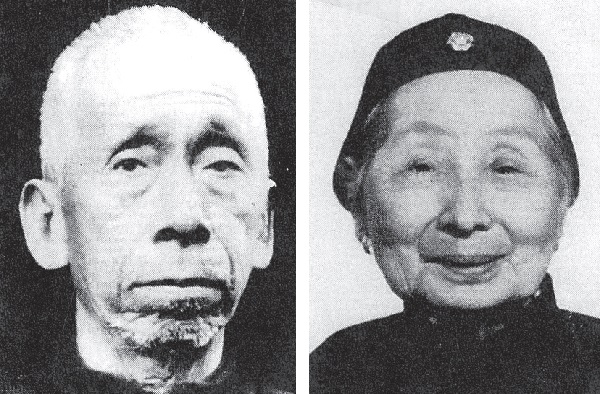
A Rich and Beautiful Authentic Nature
His life was so rich and beautiful, which absolutely could not be achieved through material possessions alone. The flowers he planted around the house according to the seasons were so beautiful they were breathtaking! His cultivation, cooking, and preservation of various vegetables made my heart yearn to follow and taste them.
His tender care and maintenance of possessions was deeply moving, and his sincere and meticulous attention to life was absolutely incomparable to those Christians today who talk about pursuing simple living but are merely getting by carelessly because they're unwilling to put in effort. Yes, he lived a truly simple life, yet one filled with infinite creativity and taste—completely without needing money to build it up! Oh, he truly was an all-around domestic man!
Elder Hsu Chao's character was so admirable and lovable! He never scolded anyone, and even toward behaviors he disagreed with, he responded with tolerance and respect. From the many examples shared by his now 91-year-old granddaughter Mrs. Lucky Tsay, we can see that he never manipulated or preached, but consistently treated those around him with truth and love, truly embodying Christ-like character.
Observing sections like "Faith Treasury Pavilion" and "Friends' Heart-to-Heart Studio" in the book, one can imagine that many details come from diaries or notes of the characters in the book. It can be inferred that the book's protagonist, Elder Hsu Chao, was a scholar who frequently engaged in self-reflection and careful record-keeping, allowing us three-quarters of a century later to still glimpse the people, daily life, street scenes, and social dynamics of that time. We can also deeply understand and learn from the faith life and teachings of the missionaries.
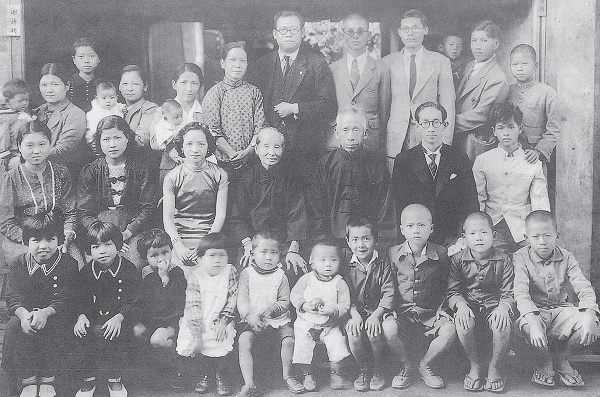
For me, this book has an additional layer of meaning. It records many people from my family, including Kao Zhang and Pastor Kao Jinsheng, as well as numerous other relatives and friends, and there are even photos of my family in the photo collection at the end of the book! In that era, believers truly were one family, frequently helping each other and sharing resources.
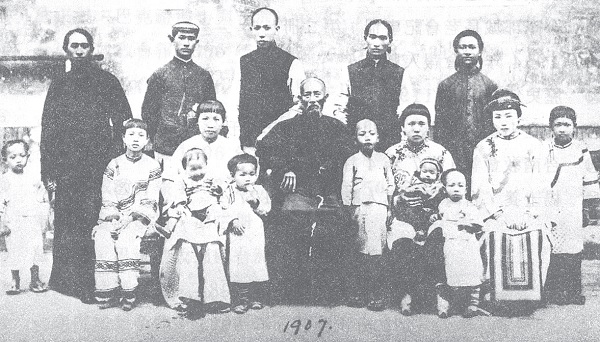
The Faithful God Will Surely Bless
In Hsu Chao's era, church members had many touching customary practices that had become established traditions. I personally experienced these when I was young. I remember my father served as pastor for a period in a quite impoverished farming village. Both the church and the parsonage were simple buildings with bamboo beams and mud walls. Most of the congregation engaged in farming or odd jobs. But we frequently received fresh eggs, vegetables, and rare meats (including snake soup) brought by the people. Whenever any family had something good, there was always a share for the pastor's family. Looking back now, I still feel deep nostalgia and gratitude!
What the book describes about Evangelist Hsu Chao's hardships in his later years is what many pastors are experiencing today! What can today's churches do together to ensure that those who labor for us can receive double honor and provision!
Recently, I have heard many times about the difficult living situations of retired pastors. To be honest, if not for faith in the Lord, I sometimes can't help but worry about my own future! A friend said: "Sigh, actually it's just that no one knows about it. If they spoke up, everyone would definitely help." But I must say, we shouldn't expect pastors to speak up themselves, because many pastors have the mindset of loving parents—they absolutely refuse to mention their own hardships.
On the other hand, from what I have witnessed with my own eyes, just as the Bible promises, the descendants of the righteous do not beg for bread. From Evangelist Hsu Chao's life, we see that it is God who provides, not man. He served God and fixed his eyes solely on God's provision, and God also miraculously led him through difficulty after difficulty. He is faithful!
I myself am a fourth-generation descendant of Kao Zhang. Recently I learned that several members of the seventh generation of our family have inherited the calling to serve the Lord and have even been ordained as pastors. This is the most gratifying and joyful thing, and it particularly makes me feel the wonder of God's grace. Someone asked me how faith can be passed down from generation to generation. Honestly, I have no answer and don't plan to provide a formula, because I truly believe this is completely God's grace. He remembers His covenant with Kao Zhang and with Hsu Chao, and therefore has blessed their descendants. I am truly completely unworthy to receive this grace, because being able to serve Him is itself His tremendous grace. All I can do is serve God and help people more faithfully, attentively, and wholeheartedly to repay the Heavenly Father's favor.
Finally, as Rev. Andrew Su, who supervised and edited this book, points out on page 380—"Even if one comes from a family that does not fear God, it is still possible for one member's sudden turning to Him at a certain moment in life's journey to drive and trigger a great reversal in the entire family's faith and fortune."
If you are a first-generation Christian, I believe your family will never be the same because of your decision, and God will likewise bless you and your descendants for a thousand generations!
Faithful Loyalty Passed Down Through the Family is the Path to a Family's Blessing
Yu Guoliang
June 16th of this year (2015) was a very special day, because it was the 150th anniversary of British missionary James Maxwell's arrival in Taiwan to begin his missionary work. For the author, this day was also especially blessed, because my mentor Rev. Andrew Su and his wife chose this day to inscribe and present a wonderful book titled "Faithful Legacy—The Life Story Museum of Elder Hsu Chao." I was overjoyed and felt deeply honored.
After receiving it, I deeply loved the book and have already reread it twice. Due to my limited knowledge and narrow perspective, I had never heard of Elder Hsu Chao's great name before, and only learned after reading the book that he was actually Teacher Su's grandfather. Fearing that readers might make the same mistake and miss out on this excellent book, I took up my pen to write this article to recommend it.
Most biographies describe the lives of great people, emphasizing the admirable aspects of their protagonists, but readers might feel inferior and find it difficult to relate. The book "Faithful Legacy," however, does not avoid Hsu Chao's shortcomings, while simultaneously emphasizing God's grace and mercy. Since God accepted and embraced his imperfections and still blessed his family, God will treat me the same way.
The book describes how Hsu Chao loved God's house, supporting and entrusting all his life's work and daily living through prayer. He also studied theology and dedicated himself to serving God. Even when encountering financial difficulties, he did not change his original intention to give, and God blessed him by enabling him to earn a living through beekeeping.
He maintained moral integrity throughout his life, treating people with honesty, loving his family and the Lord. He believed that God would bless those who fear Him for a thousand generations, therefore he valued his descendants' education and biblical teaching. He hoped his children and grandchildren would become citizens of the Kingdom of Heaven and do much of the Lord's work, constantly praying for them while also practicing what he preached by showing respect to missionaries.
The true God is the source of all blessings. God blessed him, allowing his descendants to include engineers, doctors, pastors, seminary presidents, writers, and other talents for the Kingdom of Heaven. Faithful loyalty passed down through the family is truly the path to a family's blessing.
Friendship in College
友誼的重要性 在舊約與新約聖經中,多處經文強調友誼在我們生命中的重要性。雖然友誼可以…What is a Deep Friendship?
愛德華・威爾奇(Edward Welch)描述深厚的關係,是指一個人的生命被另一個人…Make Grief Support a Church Ministry.
Oral narration/Zhan Zhang compiled by Yunnan/Yu Xiang gathers resources from churches. My husband Jay and I have been involved in church care services for more than 20 years. Mainly...