
"Let All Nations Hear — On the Ground at the 2025 Third Intercultural Missions Conference"
Text and Photos by Xiaoyin
People from every nation, tribe, and tongue
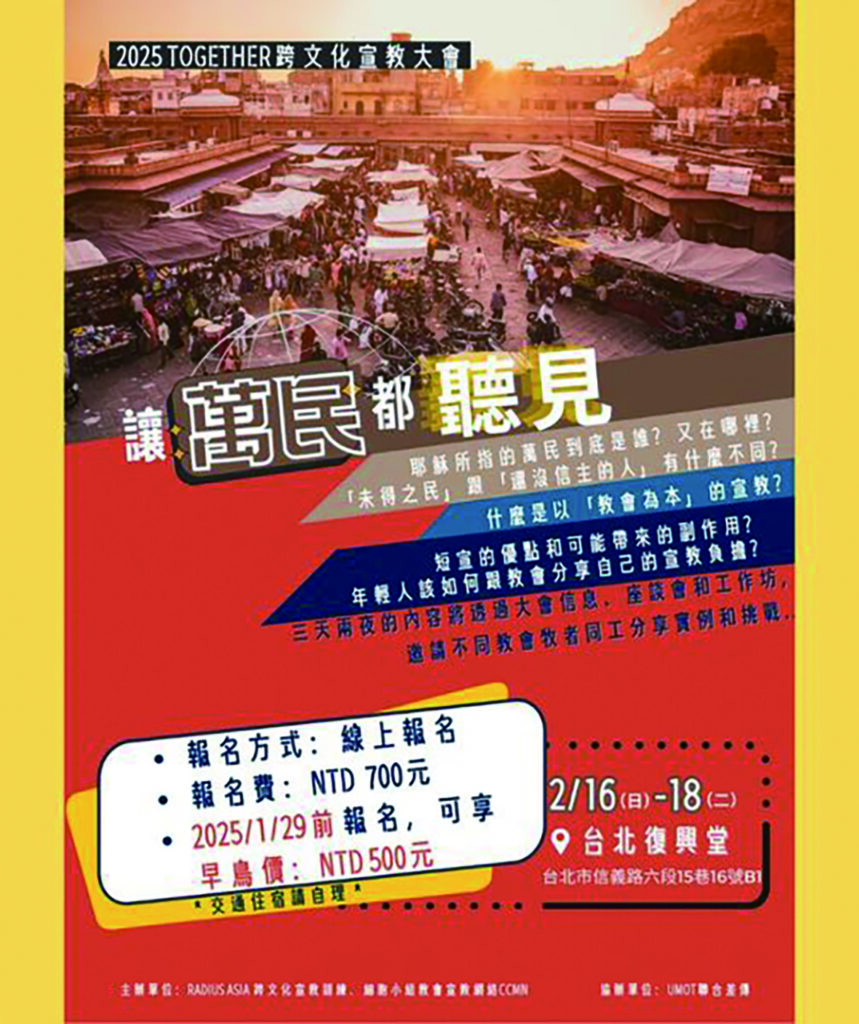
In mid-February 2025, more than 300 passionate participants from churches across northern, central, and southern Taiwan gathered at Taipei’s Revival Church. With great enthusiasm, they focused intently on hearing stories and teachings about cross-cultural missions, while also receiving training.
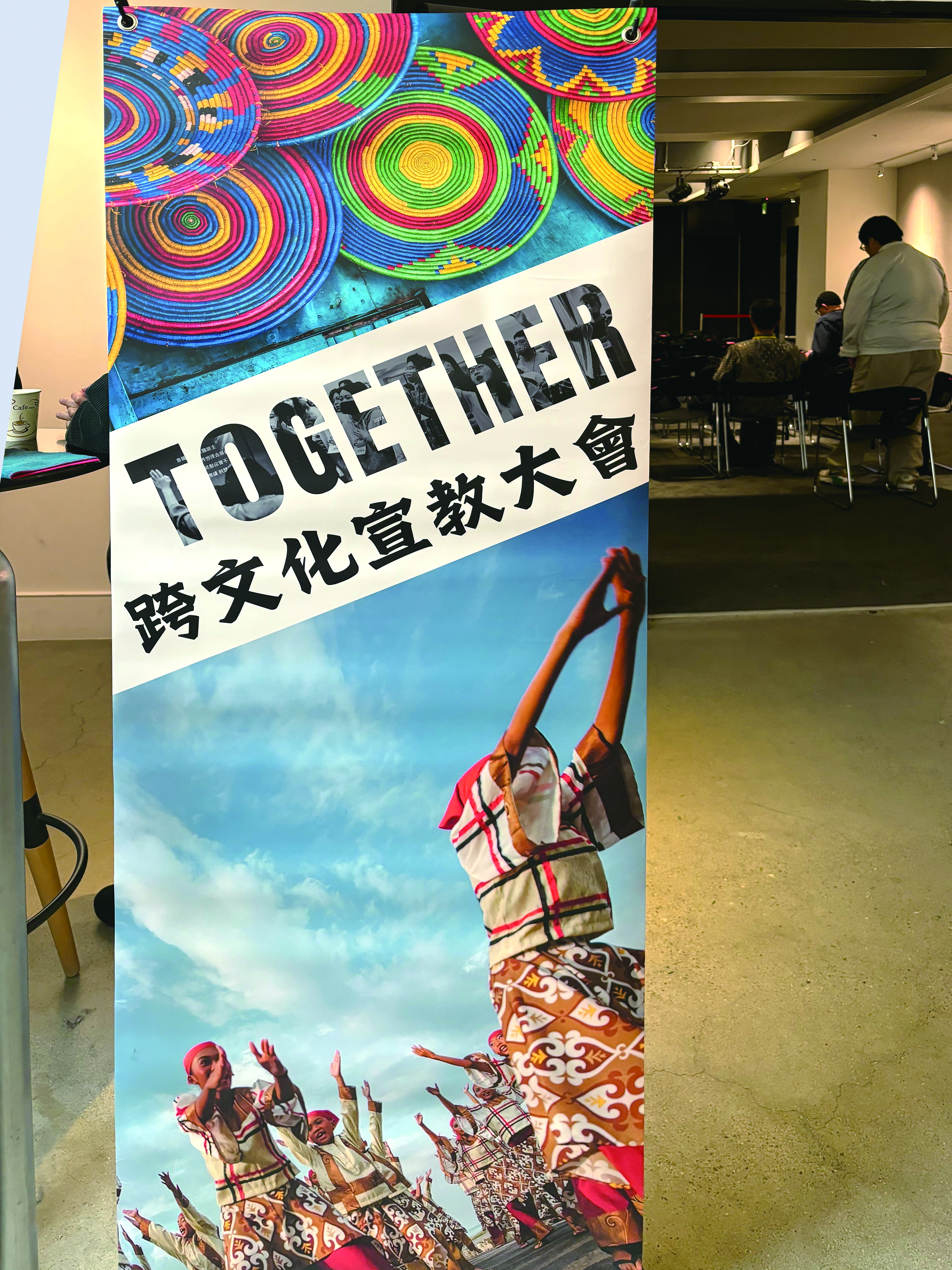
This was the scene of the third Intercultural Missions Conference. The small spark of cross-cultural missions seems to have been kindled within the Taiwanese church—and is slowly growing.
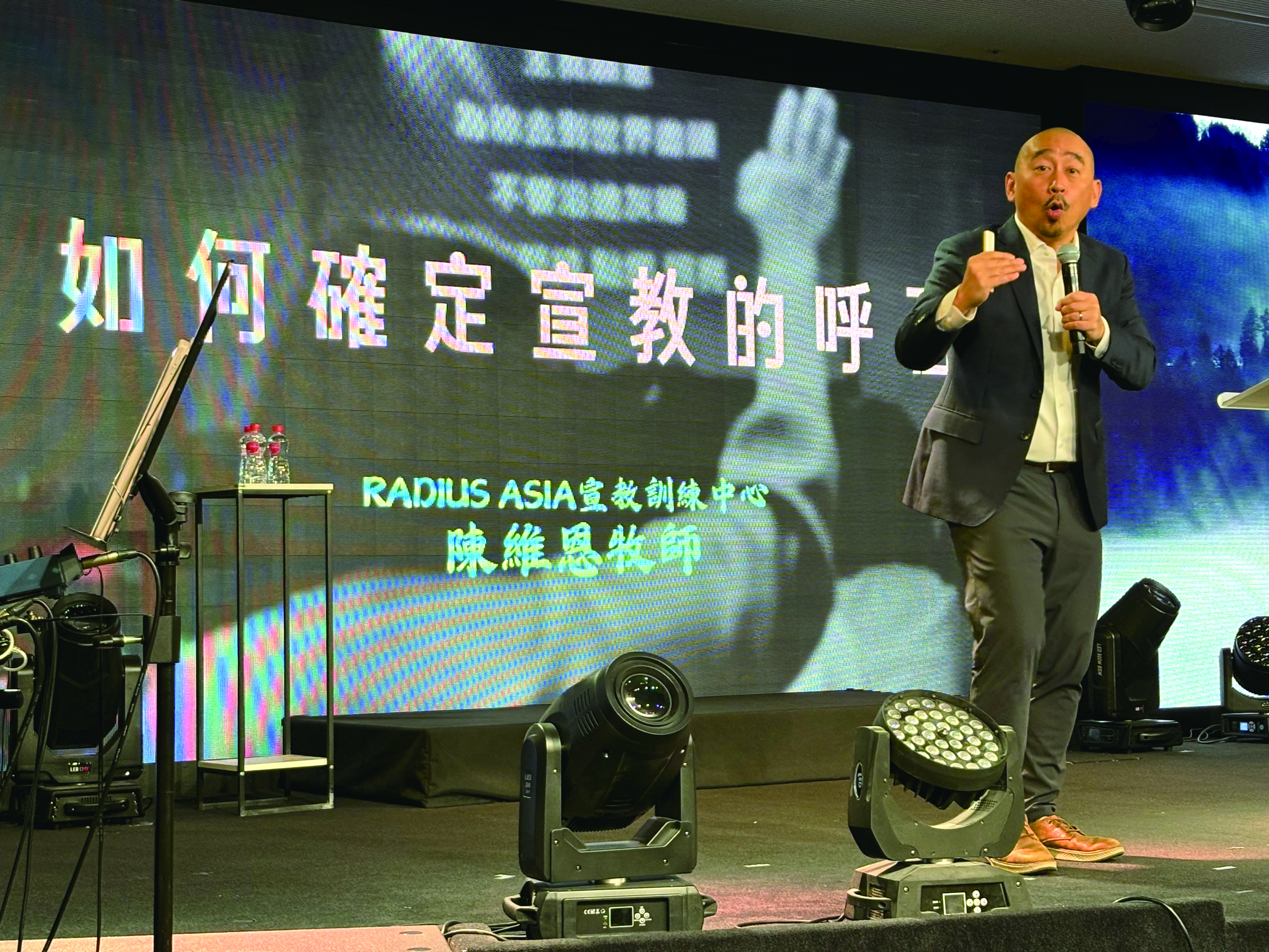
Rev. Wayne Chen, founder of the organizing body, Radius Asia Missions Training Center (RA), opened the conference with a clear statement: emphasizing the importance of cross-cultural missions does not mean that evangelism within one’s own culture is unimportant. However, if cross-cultural missions are not intentionally brought up, few churches will proactively address the topic. The purpose of the conference, he explained, is to build greater unity and participation among Taiwanese churches in the vision of cross-cultural missions—so that we may move forward together in one direction.
No Christian would deny the importance of the Great Commission in Matthew 28. However, the term “all nations” mentioned there may not refer to every individual, but rather to every distinct cultural and linguistic group across the world. This understanding aligns with the vision in Revelation 7:9: “After this I looked, and behold, a great multitude that no one could number, from every nation, from all tribes and peoples and languages...” From the perspective of cross-cultural missions, Rev. Wayne Chen offered this definition of “all nations.”
He pointed out that evangelism and missions are equally important, but evangelism is not necessarily the same as missions. Sharing the gospel with people of the same culture—such as unbelieving neighbors or family members—is a basic responsibility of every Christian. If evangelizing one's neighbor were already considered missions, then the early missionaries would have had no reason to leave their own people and homeland to bring the gospel to those of different cultures and ethnicities. If a church or believer insists that the gospel must first be fully preached in their own “Jerusalem” (their immediate context) before going to Judea, Samaria, or the ends of the earth (contexts beyond their own), is that not a blind spot?
Using a global religious demographics chart, Rev. Wayne Chen explained what an “unreached people group” is, and why sharing the gospel with them is both important and urgent. One-third of the world’s population are Christians. Another one-third are non-Christians who live near Christians—they have access to the gospel and the opportunity to hear it, but they choose to reject it. However, the final one-third are non-Christians who have no Christians around them. These people have likely never heard the gospel, simply because no one has ever shared it with them. They represent the group with the least access to missionary resources in the world today.
According to the recently released 2025 Global Missions Data by the Hong Kong Association of Christian Missions, there are nearly 450,000 cross-cultural missionaries worldwide. However, only 3% of them are sent to the 3.3 billion people considered unreached, while the remaining 97% serve in areas where the gospel has already been preached. In addition, of the total $130 billion given annually in Christian donations, only about 3.2% is directed toward missions. The apostle Paul gave clear teachings regarding cross-cultural missions:
"It has always been my ambition to preach the gospel where Christ was not known, so that I would not be building on someone else’s foundation." (Romans 15:20)
Becoming a Sending Church
For over twenty years, Wugu Gospel Chapel in New Taipei City has placed a strong emphasis on missions. Among the 19 church plants that make up the “Joshua Team,” the church has already sent out 26 cross-cultural missionaries. In the final session of the conference, Senior Pastor Tian-You Wang outlined three major reasons why workers are not being sent out.
Unwilling to go out
Because of human nature’s tendency to love ease and avoid hardship, even Christians—and even those already in the mission field—often prefer to stay in safe and comfortable places. In Matthew 9, Jesus said that workers must be “sent out” into the harvest, because they are not willing to go out on their own. Jesus Himself set the perfect example: He went throughout all the towns and villages. He did not remain in a place of comfort. Instead, He had compassion on the harassed and helpless—seeing them as sheep without a shepherd.
Pastor Tian-You Wang also referred to the example of Philip in the book of Acts. When the angel of the Lord said to him, “Get up and go south to the road—the desert road—that goes down from Jerusalem to Gaza,” Philip obeyed and went. In doing so, he left behind a thriving ministry in Samaria. On that desert road, he encountered an Ethiopian eunuch, a high official in charge of the treasury under Queen Candace. What followed was a beautiful cross-cultural mission story—and the gospel seed was planted in Africa. (See Acts 8:26–40)
The cost is high, and the return on investment seems low
“One cross-cultural missionary’s support cost could fund three local workers,” Pastor Tian-You Wang stated candidly. “Training and sending cross-cultural missionaries is expensive—not only expensive, but also unlikely to yield quick results.” When there is already a shortage of ministers within the local church, pastors may prefer to retain manpower rather than send it out. As a result, placing too much emphasis on cost-effectiveness (or “return on investment”) may be one of the biggest obstacles preventing many churches from engaging in cross-cultural missions.
Lack of cross-cultural training and vision
“Of course, we’re not naïve enough to think that cross-cultural missions is an easy task. But if even the pastors themselves have no cross-cultural experience, how can they lead their churches to step out?” said Pastor Tian-You Wang. This is precisely why this conference was born—to address the lack of training. RA (Radius Asia), serving as a driving force for cross-cultural missions, seeks to fill this gap. The vision of “fixing our eyes not on what is seen, but on what is unseen”—with an eternal rather than temporary perspective (cf. 2 Corinthians 4:18)—must be embraced and championed by church leaders together.
“The senior pastor must take the lead in casting the vision and stepping out!” said 63-year-old Pastor Tian-You Wang. As a personal expression of his commitment to missions, each of his children’s names includes the Chinese character for “mission” (宣)—a constant reminder of their family’s calling. With a smile, he shared that he is currently working hard to improve his English, while also preparing to pass on the baton of senior leadership. He plans to retire in two years, dedicating more of his time and energy to cross-cultural missions.
At the close of the conference, Pastor Wang shared the life testimony of Brother Shih-Feng from their church, to encourage the audience that investing in eternity is the wisest investment one can make. Near the end of his life, Brother Shih-Feng brought his entire family to Japan for missions—a powerful act of faith and obedience.
He sold all his possessions to purchase a base for the gospel—and it bore beautiful fruit. Whether or not a church chooses to send missionaries directly impacts people’s earthly well-being and their eternal destiny. What a tremendous privilege and calling this is!
“Let us become a church that sends out workers! No excuses, no justifications! Comfort zones must not be our excuse; cost-effectiveness must not be our reason—because this is the command of the Lord Jesus. The harvest is ready. All we need is a willing heart to obey!” Pastor Tian-You Wang’s heartfelt appeal stirred the entire audience.
“Being sent is a lifelong calling—it’s not just for one or two years.” As Rev. Thomas Wang once said, “Missions is not about being ‘moved emotionally’; missions is about ‘paying a debt.’ It is our responsibility.” Today, Chinese Christians enjoy the grace of the gospel because Western missionaries committed to cross-cultural missions over 200 years ago. Now, it is time—it is the season—for Chinese believers to take up the mantle of cross-cultural missions.
According to data from the United Missions of Taiwan, the current ratio of church members to missionaries in Taiwan is 3,170 to 1—a stark imbalance that highlights the urgent need for change. May this conference—and many more to come—awaken churches to value the cry from afar above the needs nearby. May every church have the vision to see, and the courage to act, so that all nations may hear—in fulfillment of the glorious vision found in Revelation 7:9–10.
————————————————————————————————————————————————————————
Missionary Care Workshop
The process of becoming a missionary involves long-term preparation, and once someone becomes a missionary, ongoing and regular care is even more essential.
How can we do this in practical ways? This conference's “Missionary Care Workshop” is designed to help participants learn how to provide more concrete care and support for missionaries.
[Preparation Phase]
- During the process of preparing to become a missionary, a budget has been allocated for various training expenses, providing care and financial support.
- Even before officially going to the mission field, one often faces spiritual warfare and can be regularly supported through prayer.
- If you know of good training courses or organizations, you can recommend them to missionary candidates or even sponsor their participation.
- If you know experienced missionaries, you can help connect them.
[How to Care for Missionaries More Practically]
- In order to remain on the mission field, missionaries often strive to obtain legal status or visas and work hard to build relationships within different cultures and ethnic groups. They invest great effort to be accepted by the local people. Pray earnestly for their needs in these areas.
- Missionaries spend a great deal of time and effort writing newsletters and prayer letters. Be sure to read them carefully, and if possible, offer feedback. Mutual communication lets missionaries know that people truly care and are praying for them.
- When communicating with missionaries, extra caution is needed. Be mindful of whether it is appropriate to mention mission work or use common Christian terminology based on the region they are in. If necessary, learn and use agreed-upon codes to communicate securely.
- Before preparing gifts for missionaries, it’s a good idea to first understand their needs or ask them for a “wish list.” Gifts that are lightweight and practical—such as tea or hometown snacks—are usually best.
- Care for the families of missionaries, especially their elderly parents. You can visit or call them regularly and keep the missionaries updated on how their loved ones are doing.
- If missionaries are asked to return home to assist with their home church or mission agency office, take time to understand the reasons behind it. They still need care and support during this period.
——————————————————————————————————————————————————————
Xiaoyin, a seasoned journalist, has participated in multiple short-term mission trips and is a graduate of the KRC Writing Camp. She graduated from China Evangelical Seminary North America in 2018 and, since 2022, has been serving in cross-cultural missions together with her husband.
The thing I’m most thankful for in my life
如果問我甚麼是此生最感恩的事,回答一定是:生命裡遇見許多寶貴的朋友。 這些朋友和我有許多美…Old Friends
感謝社群媒體強大的搜尋和連結功能,在與老同學失聯許多許多年後,陸續「被找到」。2025年初…Love to Hear You Speak
工作坊學員回應 一、手機短影音製作 學這個很有趣!這堂課上完,我把遺忘已久的照片都找出來,…