[Occasionally Away from the Editing Desk] When Art Is Tied to Money
「 然而藝術的本質並不是商品,也從不該是商品。」匈牙利國寶級鋼琴家瓦薩里(Tamás Vásáry)曾在接受訪問時這麼說。
As a content professional, I basically agree with what he said. After all, art is an expression of the creator’s soul, and it calls for pure motives and inspiration—the same goes for writing. But it wasn’t until the day I stepped into an exhibition that I realized: art being tied to money can actually be a very good thing!
Help that involves both financial support and hands-on effort
On a below-freezing autumn day in 2024, I found myself at the National Gallery of Art in Washington, D.C., hoping that, for a moment away from the editing desk, I could begin to learn a different language of expression. As someone immersed daily in black-and-white text, I was curious: what kinds of stories might creators from different eras and regions tell—through color, image, and the interplay of light and shadow?
Besides, admission to the gallery is free.
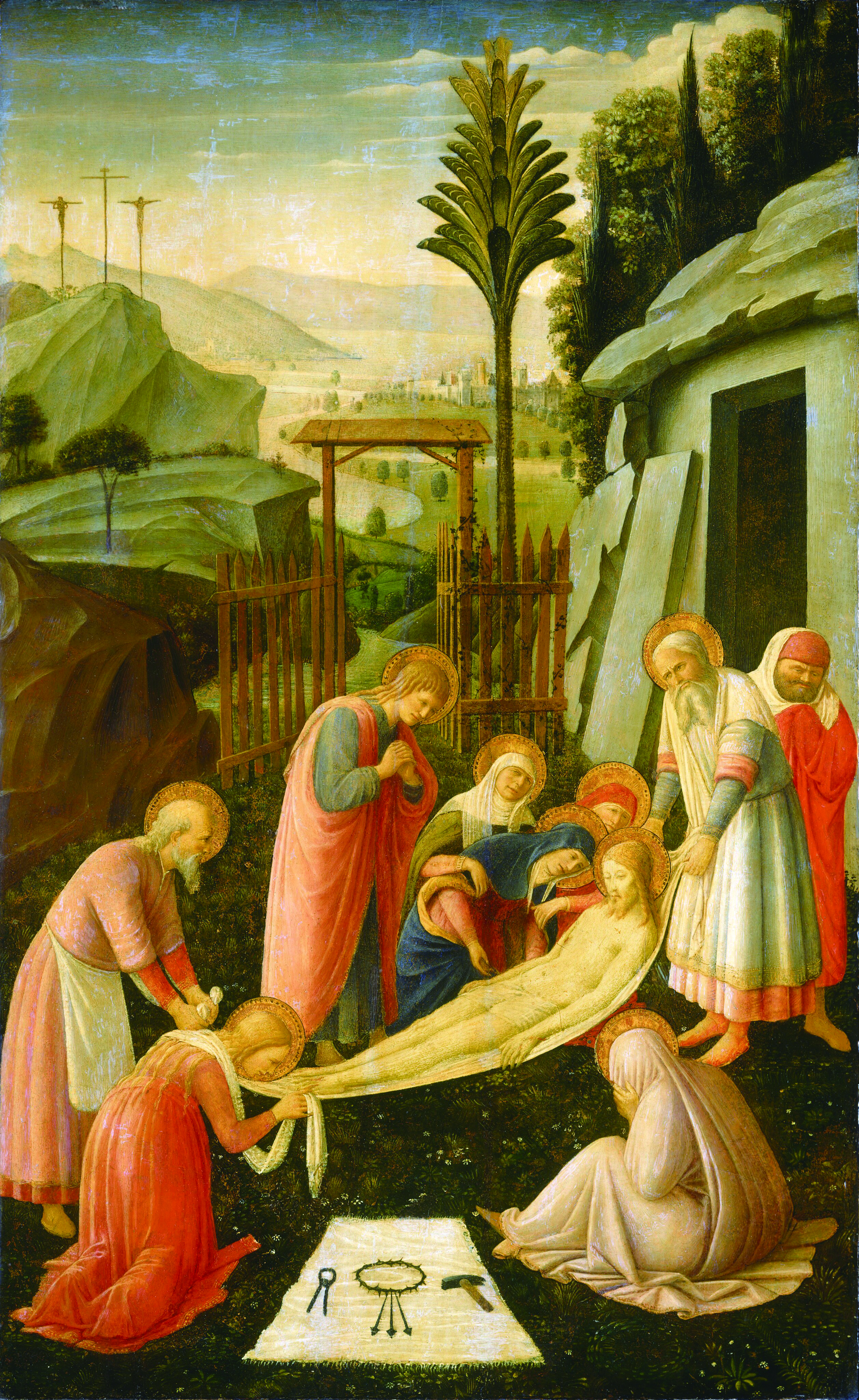
In the Italian galleries, I saw that since the Renaissance, even paintings rich in religious meaning had taken on a distinctly human touch, often incorporating landscapes familiar to the artists themselves. The Entombment of Christ (c. 1450) by Fra Angelico is one such example.
Though Christ’s suffering remains the visual focal point of the painting, the surrounding figures—clothed in strikingly vivid colors—display expressions of raw grief and anguish. Compared to the pale, expressionless body of Jesus, they almost steal the show. In the background, distant hills and winding streams unfold, making the crucified Lord—now laid on the ground, about to be placed in the tomb—appear utterly lowly. Towering behind them, the three stark crosses evoke a deep sense of gratitude: the Lord of heaven and earth took on flesh and gave His life for you and me. The cruel cross, astonishingly, has become the bridge of reconciliation between God and humankind.
Also during the Renaissance, there was a growing emergence of personal works—paintings simply titled Portrait of a Boy, Portrait of a Man. Who were these individuals? Judging by their clothing and bearing, they seemed to belong to a class of some means and influence. Could it be that they commissioned these portraits, hoping to leave behind an image of themselves for future generations? Much like the Medici family, who rose to power through banking and came to hold both wealth and influence, they also became generous patrons of art and artists.
A "patron," officially defined, is someone who supports a project or cause by offering help or financial backing. Put more bluntly—they’re the ones holding the purse strings. Thanks to these patrons who were willing to give both time and money—whether by commissioning works or purchasing them—artists were able to make a living and keep creating. As our magazine’s art director and professional painter, Chris Chou, aptly put it: “You need funds to grow talent!”
This truth was even more powerfully affirmed in another exhibition I saw that day.
Boundless Creativity
That day at the National Gallery of Art, I followed a guide into another exhibition—“Paris, 1874.”1
1874—more than 80 years after the French Revolution, with the Third Republic just beginning. What could have happened in the art world that year so momentous it warranted a special exhibition?
▲ Image source:https://www.nga.gov/collection/art-object-page.401.html,
Courtesy National Gallery of Art, Washington DC
▲ Image source:https://www.nga.gov/collection/art-object-page.46114.html,
Courtesy National Gallery of Art, Washington DC
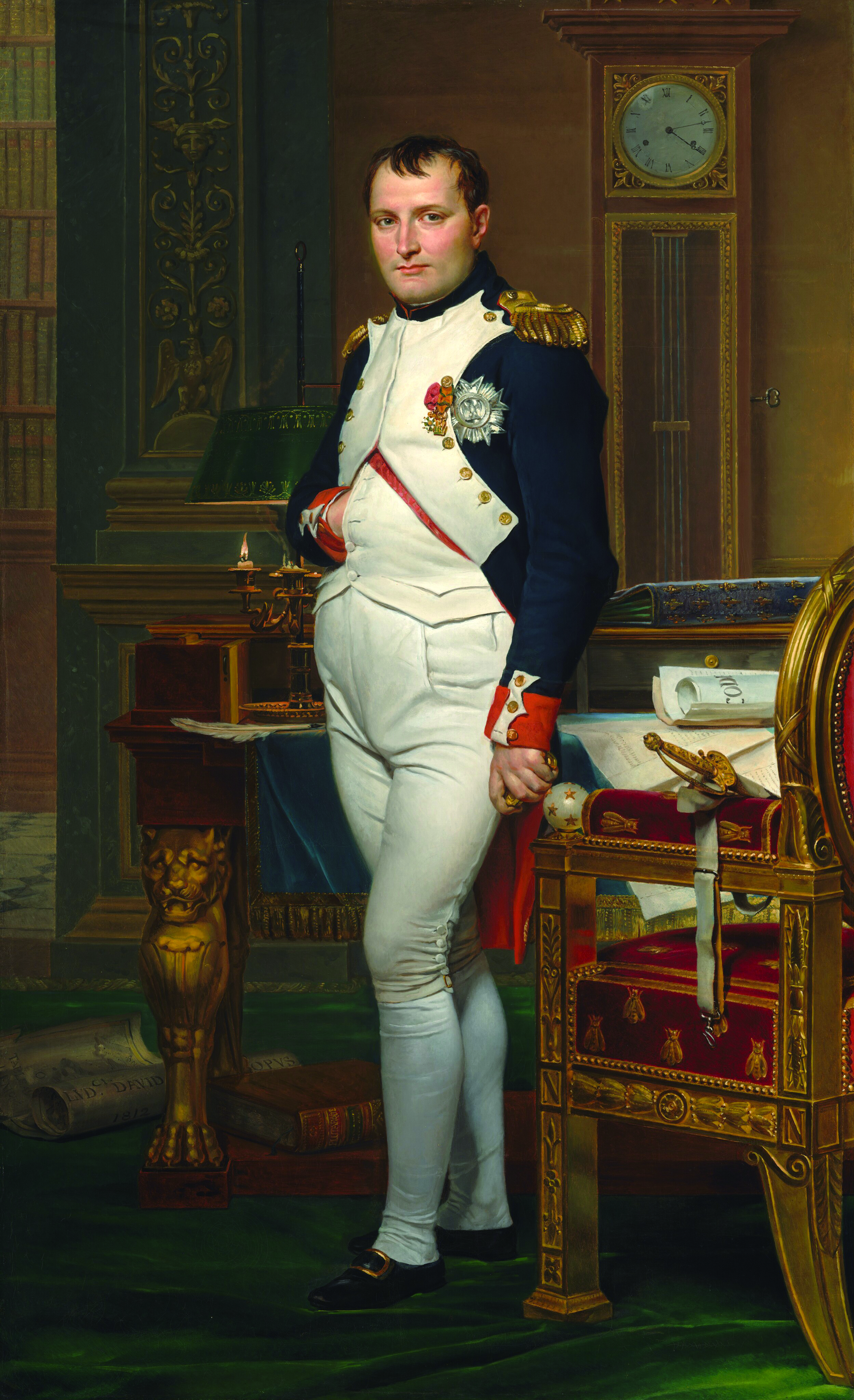
The guide pointed to a portrait—on the wall, the clock read 4:13; a candle still burned on the desk. Whether the poised figure had never gone to bed or had already risen and donned his full military regalia, he showed no sign of weariness. The title: The Emperor Napoleon in His Study at the Tuileries (Jacques-Louis David, 1812).
At the time, gaining a foothold in the French art world meant being accepted by the Salon. And the kind of paintings the Salon favored were just like The Emperor Napoleon—featuring prominent (and often grand) figures, elevated ideologies, and works that were thoroughly politically correct.
Once a painter and their work were accepted into the Salon, their reputation and value would instantly soar. But then, one has to ask: is such work truly art—or merely propaganda? Can genuine art really be confined within prescribed boundaries?
During that period, some painters were already seeking to break free—experimenting with layered brushstrokes to form images and capturing everyday moments. Women and children increasingly became central subjects. This marked the beginning of what would later be known as Impressionism. Such works defied the Salon’s standards and were, unsurprisingly, rejected time and again. So, led by artists like Claude Monet, Édouard Manet, Paul Cézanne, and Pierre-Auguste Renoir, they formed the Société Anonyme—the “Anonymous Society”—and held their own exhibition in Paris in 1874.
A Colorful Revolution
What’s truly unfortunate is that this bold, tradition-defying exhibition drew only around 3,500 visitors—many of whom were friends and family of the artists themselves. In contrast, the Salon that same year attracted over 500,000 attendees. The reviews were far from kind, and only a handful of paintings were sold.
As a result, the Société Anonyme disbanded.
Yet the artists did not abandon their original vision—they continued to paint what they truly wanted to paint. But if no one buys their work, how can an artist survive?
Now appeared Mary Cassatt—an American painter educated in Europe! Her work had once been accepted by the Salon, and later rejected. Deeply drawn to Impressionism, she joined this group of marginalized artists at the invitation of Edgar Degas.
Perhaps it was Mary Cassatt’s upbringing—her father a successful businessman and her mother from a family with a financial background—that gave her the savvy to sell art. She didn’t just sell her own paintings; she also connected her struggling artist friends with French art dealer Paul Durand-Ruel. Together, they opened up new markets beyond France—especially in the New World, where newly acquired wealth was seeking cultural capital.
This internationally minded “art broker” recognized the openness of the American spirit and their willingness to embrace what was then considered “avant-garde.” He began importing Impressionist works in large quantities. As he famously put it: “The Americans don’t laugh—they buy!”2
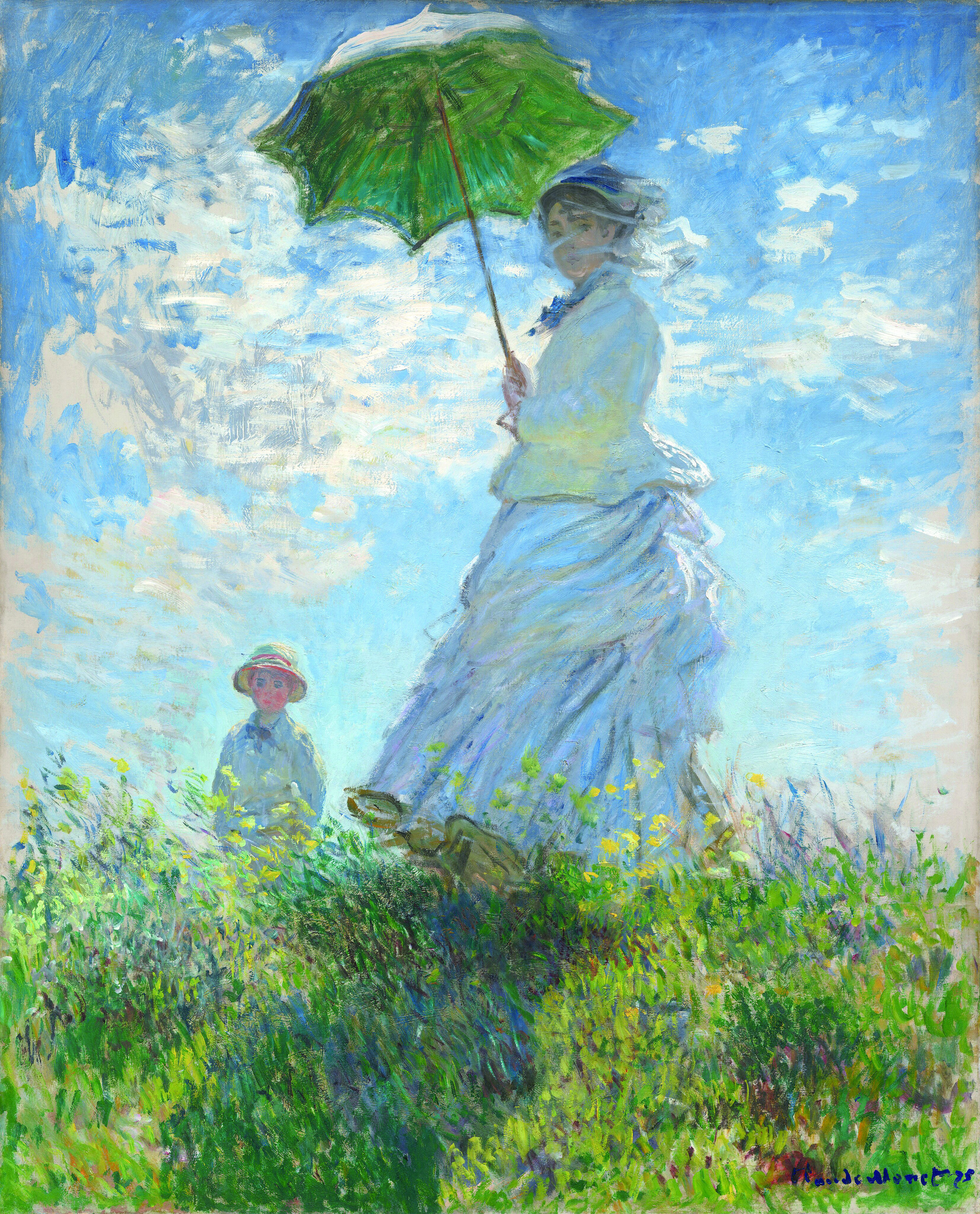
As a result, Impressionist, Realist, and Cubist artists managed to survive—and today, their works can be admired in major art museums across the United States. The National Gallery of Art alone holds an impressive collection of iconic Impressionist pieces, including Monet’s Woman with a Parasol (1875), The Japanese Footbridge (1899), and The Artist’s Garden at Vétheuil (1881).
▲ Image source:https://www.nga.gov/collection/art-object-page.61379.html,
Courtesy National Gallery of Art, Washington DC
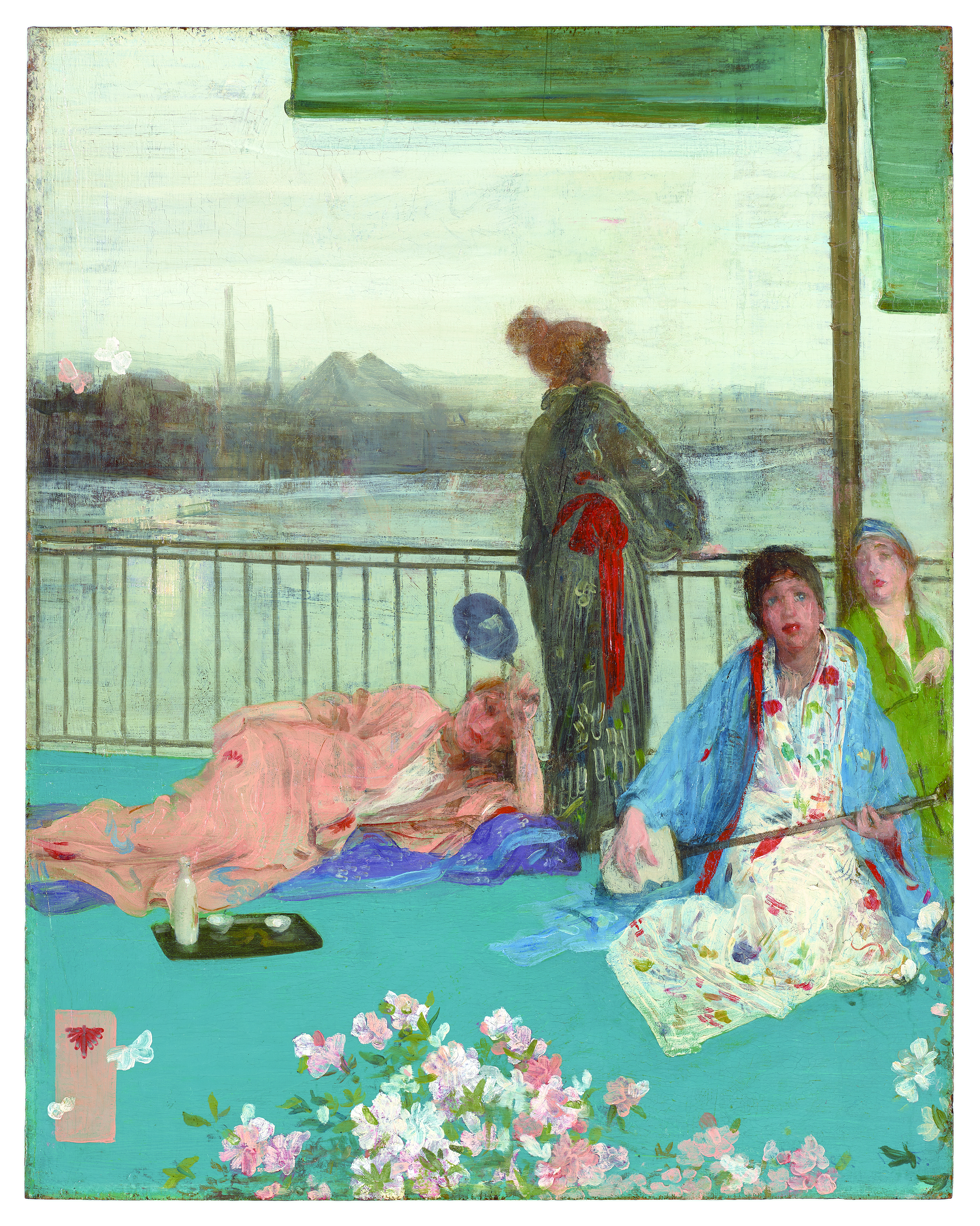
▲ Image source:https://asia.si.edu/explore-art-culture/collections/search/edanmdm:fsg_F1892.23a-b/,
Courtesy National Museum of Asian Art, Washington DC
Perhaps it was the American “spirit of revolution” that made them bold enough—or even determined—not to follow tradition. Whatever the motivation, we truly owe a debt of gratitude to those who chose to buy the art!
A Gilded Resistance
On a brilliantly blooming spring morning in 2025, braving the lingering chill, I continued my pursuit of visual delight and stepped into the National Museum of Asian Art, also in Washington, D.C. Once again, I joined a guided tour, first strolling through exquisite Japanese screen paintings, and then entering the gallery dedicated to James McNeill Whistler...
Wait a minute—what is the work of this American painter doing in a museum of Asian art?
According to the guide, many of the museum’s holdings came from American industrialist Charles Lang Freer. He not only donated his private collection but also funded the construction of the museum itself. And the one who introduced Freer to Asian art, encouraging him to collect it, was none other than James McNeill Whistler—who had spent much of his life in England.
Whistler was very much a rule-breaker himself. His paintings were often soft, atmospheric, and intentionally indistinct—titled with names like Nocturne or Variations in Flesh Colour and Green – The Balcony (1864–1870). Naturally, such works were far from what the mainstream Salon would embrace. The fact that Whistler could continue to make a living through his art was largely thanks to the patronage of British shipping magnate Frederick Richards Leyland.
As the story goes, Leyland was renovating his dining room and chose to place Whistler’s The Princess from the Land of Porcelain above the fireplace as the centerpiece of the entire space. The architect also designed numerous open shelves to display Leyland’s collection of blue-and-white porcelain. But Whistler wasn’t satisfied.
The artist took matters into his own hands—brush in hand, he transformed the entire room. Against a peacock-blue background, he painted intricate murals with gold leaf, leaving no surface untouched. The space became, quite literally, a gilded splendor. Unfortunately, when Whistler later requested payment, Leyland refused to honor it: Did I ever say I wanted something so extravagant? And just like that, the two parted ways—over money.
But one wall of the dining room remained bare. Whistler picked up his brush once more and painted two shimmering peacocks in brilliant gold—one with its feathers fully fanned, standing triumphantly atop scattered gold coins, screeching at the other. What a scene—an opulent quarrel of gold and glory! He titled the mural Art and Money. With that final stroke, Whistler walked away from the now-famous “Peacock Room,” and from his patron—no longer allies, but strangers.3
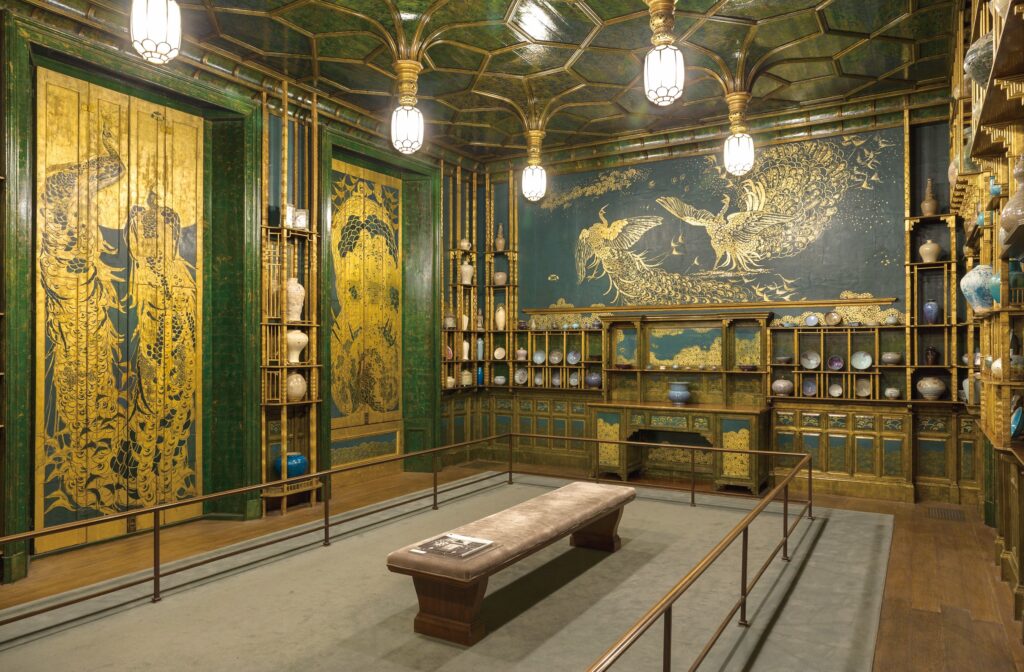
▲ Image source:https://upload.wikimedia.org/wikipedia/commons/4/46/The_Peacock_Room_%282%29.jpg
Patronage = Affirmation
It’s not just painters—musicians have needed patrons too. When composer Franz Schubert had no income from performances and little interest from publishers, a group of friends hosted small concerts and recitals in their homes, salon-style, to help raise his profile. They also supported him financially from time to time. These gatherings became so frequent that both the circle of friends and the events themselves came to be known as the “Friends of Schubert.”
When I occasionally step away from my desk—covered in black-and-white text—and walk into a museum bursting with color, I’m reminded of this: Artists, more often than not, are able to create beauty and preserve glimpses of nature and humanity because they receive financial support. It’s that support that frees them from worry and allows them to focus on their craft. When art is tied to money—when tangible resources become a catalyst for intangible creativity—it can, without a doubt, be a good thing. After all, patronage is also a way of saying: I believe in you.
That evening, as I stepped out of the National Gallery of Art, the city lights were already aglow. I caught the metro to Chinatown and shared a bowl of wonton soup with my husband.
Through the rising steam—rich with the scent of pepper and sesame oil—I looked at the man who had never once said, “Why don’t you find a proper job?” or “Wait until the kids are grown.” Even when neither of us knew what I would write, or how long I’d be writing, he simply kept supporting me.
And from the bottom of my heart, I said,
“Thank you for being my patron.”
Note:
- For more information about the “Paris, 1874” exhibition, please visit: https://www.nga.gov/exhibitions/2024/paris-1874-impressionist-moment.html.
- For more information about the life of art dealer Paul Durand-Ruel, please refer to:https://en.wikipedia.org/wiki/Paul_Durand-Ruel.
- For more about the story of the “Peacock Room,” please refer to: https://www.splendidtable.org/story/2017/07/06/betrayal-in-blue-the-story-of-the-world-famous-peacock-room, andhttps://asia.si.edu/explore-art-culture/interactives/peacock-room/making-the-peacock-room/.
The thing I’m most thankful for in my life
如果問我甚麼是此生最感恩的事,回答一定是:生命裡遇見許多寶貴的朋友。 這些朋友和我有許多美…Old Friends
感謝社群媒體強大的搜尋和連結功能,在與老同學失聯許多許多年後,陸續「被找到」。2025年初…Love to Hear You Speak
工作坊學員回應 一、手機短影音製作 學這個很有趣!這堂課上完,我把遺忘已久的照片都找出來,…