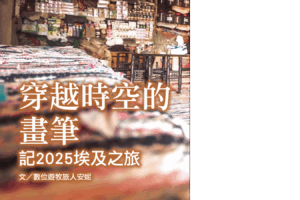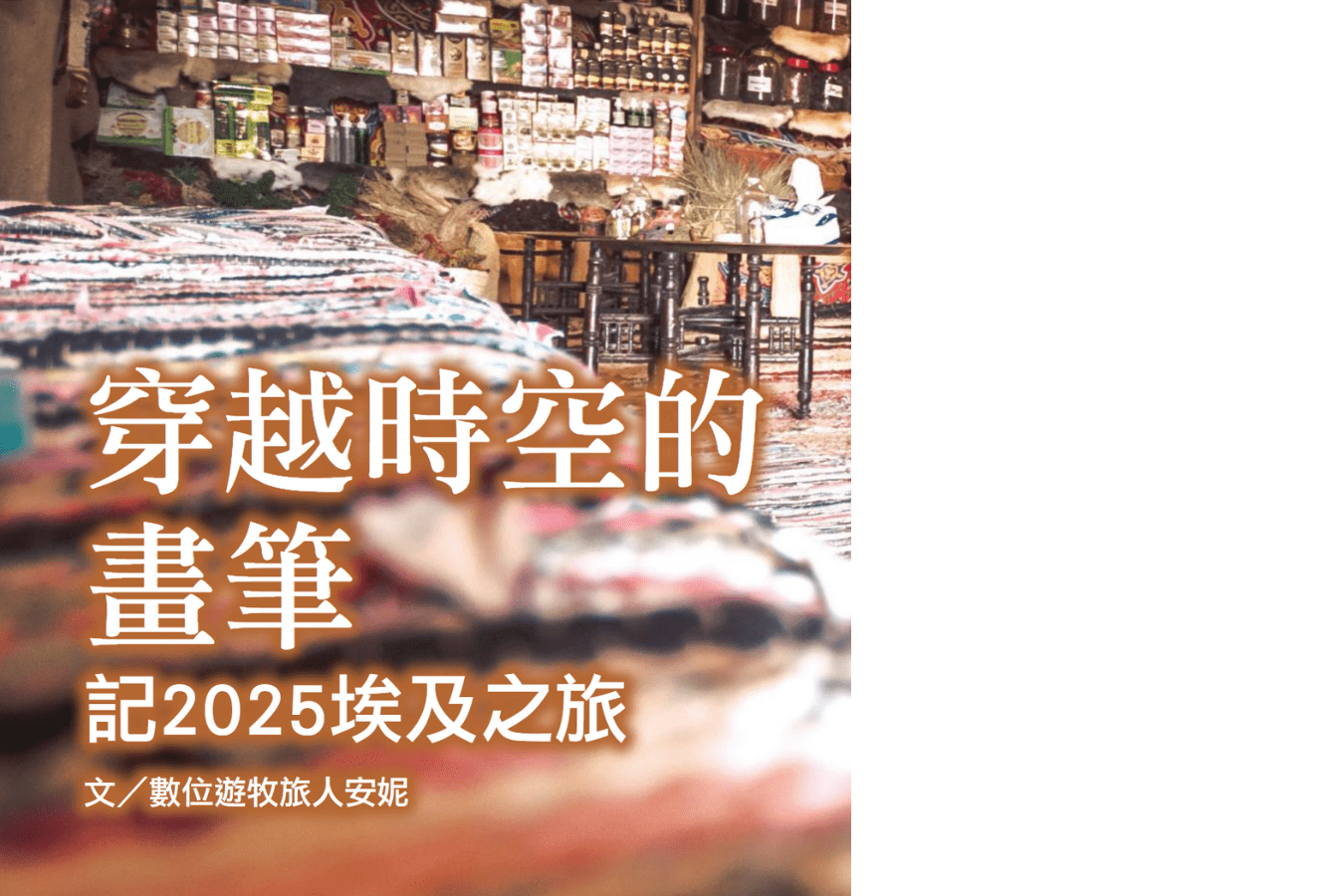
The Brush Across Time -- Reflections on My 2025 Journey to Egypt
Standing at the edge of the Giza plateau, I gazed toward the pyramids—familiar yet strange in the distance. As the setting sun poured down, their silhouettes trembled amidst the interplay of dust and light and shadow, like an unfinished painting. In that moment, what I felt was not merely grandeur, but an awe at being connected to history. At that moment, I was no longer just a tourist, but a soul touched by a five-thousand-year-old brush. My 2025 journey to Egypt was not merely a visit to ancient sites, but a dialogue with history, art, and faith—a deep gaze across time and space.
History's Whisper and Contemporary Hues
At Luxor Temple, the guide said: "These reliefs have existed for over three thousand years, but look—they are still speaking." What he meant was not just the imagery and colors of the murals, but the mythology, power, prayers, and aesthetics they contain. The postures of the gods, the gaze of the pharaohs, the gestures of the priests—every stroke is an imagination and interpretation of life. For example, people are all depicted the same way, eliminating individuality; they don't refer to specific individuals but rather to their roles in the world.

The most commonly used colors each carry symbolic meaning. Red represents power, symbolizing life and love, but also anger and flames; yellow symbolizes the sun and sacred importance, and is the color of the pharaoh; blue is usually associated with the Nile River or rebirth; green represents new vitality.
The reliefs on each stone pillar at Karnak Temple tell of the pharaoh's achievements, yet there's an oppressive feeling—does this suggest that the Egyptian concept of "God" was vast and fearsome?
The capital city of Cairo is a microcosm of a multifaceted society. Car horns, the rumbling of donkey carts, haggling voices, the call to prayer... all interweave into the city's rhythm. On street corners and in alleyways, graffiti art uses vibrant colors and bold lines to blend traditional totems with modern vocabulary. On the wall of a narrow alley, there's a painting of Tutankhamun wearing modern headphones, with the words "Hear Our Voice" written below—like a silent plea.
The Hariri market is filled with stalls displaying handwoven carpets and silver jewelry hanging overhead, with brass and ceramic items laid out on the ground; mingled scents of sweat, rosewater, spices, and tobacco fill the air; shouts and hawking calls rise and fall in succession. Creating art seems to be their way of life—hand-painted deities, handmade glass bead strings, silver plates being engraved with patterns...
I encountered a female weaver sitting quietly on a wooden stool, weaving bundle after bundle of cotton thread into a pattern; her movements were slow and steady, like a silent dialogue of souls. I bought a rug, and she smiled as she told me: "This is the totem my mother taught me, representing blessings and abundance."
Art, it turns out, is not only housed in museums but also hidden in the handcrafted objects of the marketplace and the murals of villages; it's also embedded in folk wedding dances. Perhaps the architecture, imagery, colors, and their underlying meanings left behind over millennia have been engraved in the Egyptian people's bloodline, surfacing in ordinary daily life, becoming a continuation of artistic and cultural history.
I wrote in my travel journal: "In Egypt, art is not decoration, but proof of existence."


Mysterious Yet Real, Magnificent Yet Contradictory
Egypt is not a perfect tourist destination: scams and traps targeting tourists exist; the sun is intense, the smells are strong, and the camels have quite the personality.
In Cairo, on one side are the ruins of ancient civilization and museums, while on the other is congested chaotic traffic and poorly planned urban development. In Egypt, history and reality seem to be two parallel rivers.
Beside the temple ruins, several children either squat on the ground or follow tourists, peddling souvenirs. There, the sacred and the mundane coexist, where ancient civilization and livelihood overlap.
I used my phone to translate Arabic and tried to converse with a young man wearing a headscarf. He showed me a pharaoh image he had created using AI: "I want to be an artist and tell my own story in a digital way." So culture is not just a static past, but a flowing future. He said: "We're proud of our ancestors; we're just speaking in new ways." So true inheritance is not about form, but whether the soul is still burning.
The view of the afterlife told by Egypt's golden masks and mummies reflects an understanding of life, death, and eternity. The ancient Egyptians held deep reverence for the "afterlife." They believed that after death, a person would enter the mysterious underworld called "Duat." By passing the judgment of Osiris, if one's heart was lighter than the feather of truth, one could enter the eternal fields. Preserving the body became key to the path to the afterlife. Mummification, burial goods, spells, and the Book of the Dead were all meant to allow the deceased to continue living in the afterlife, even possessing status and pleasures similar to those in life.
This embodies the Egyptian view of the afterlife: preserving the body and equipping the soul to return to another world; it is an extension and reproduction of the known form of life; it is both fear of death and longing for eternity.
This contrasts with the eternal life proclaimed in the Christian faith—two different views of the soul.
In the Christian faith, "eternal life" is not the continuation of the physical body, but being with God—a renewed life of the soul. Jesus said: "I am the resurrection and the life. The one who believes in me will live, even though they die." Eternal life is not achieved by building tombs or preserving bodies, but through faith and grace, entering that eternal kingdom that transcends time and space.
Eternal life is a hope "from now on," a destiny where the soul is united with the Creator.
That day I wrote: "They preserved hope with gold, while I face life and death through faith." This made me cherish even more that hope which requires no external forms like pyramids or preserved bodies, yet remains unwavering.
Let Art Keep Speaking

Egypt is not just a country, but a museum of time; it has not only preserved thousands of years of history and art, but continues ancient civilization in everyday life.
The colors of ancient Egypt were not merely pigments or decorations, but codes of faith and culture, telling of the Egyptians' understanding of life, deities, and cosmic order, while also constructing their imagination of the afterlife.
When modern people think of black, they might associate it with mourning or death. But in ancient Egypt, black (kem) didn't merely signify death—it also symbolized rebirth in the afterlife. The black soil left behind after the Nile's flooding was fertile earth, signifying the continuation of life. Therefore, while black was connected to the underworld, it also represented hope for the afterlife.
The Bible says God has placed "eternity" in the human heart. People feel helpless about the emptiness of this life and have an anxious longing for the eternal.
This Egyptian art journey could be said to be a voyage gazing into the human soul. I witnessed how history has been carved, celebrated, and graffitied, and I also witnessed creativity across time and space and the hope for eternal life.
Looking back on the journey, I know: what we call art is not merely images depicted by brushes, but the heartbeat that civilization leaves behind in the river of time. What I heard was a cry toward eternity.
Since childhood, I've been filled with imagination about the pyramids, and this time I finally set foot on this mysterious land. The moment the plane landed in Cairo, I knew: this was not just tourism, but a profound encounter with ancient civilization.
I also realized: as I immersed myself in art and history, it sparked a spiritual dialogue with God. What I brought back was not just photos and souvenirs, but a deeper humility—reverence for the past, composure toward the future, and cherishing of the present.
This journey taught me: art is not the distant echo of ancient civilization, but blood still flowing in life. With a brush that has painted for millennia without rest, Egypt depicts history and culture, and also inspires everyone willing to listen and gaze to seek the unchanging "eternal" and the "eternal life" where one can find rest.
At the journey's end, I was closer to myself, and also closer to God.
Emotions
【心情拼盤】系列21 表情,情溢於表 最近看了一齣描述檢察官的日劇,男主角的綽號是「能面」…Lessons I Learned From My Christian Communities (and how I'm revising my notes) (Project Arctos)
我一生都在基督徒群體中長大。從小,我參加過兩間印度正教會,之後上大學時又加入了一個福音派團…Love to Hear You Say
找到熱愛,職場轉型 我的職場生涯始於科技公司的軟體工程師,之後去英國劍橋大學工作。白天寫程…