

Serving God's Kingdom Through Legal Expertise
Narrated by Mingli Chen Compiled and Edited by Linda Pang
Whenever I mention that I am a lawyer, some people respond by saying, “I hope I’ll never need your services.” In a sense, they are right. Many people view lawyers as people you only encounter when trouble arises. Some even assume that lawyers defend wrongdoers and help criminals avoid justice or reduce the consequences of their actions.
Have you ever considered how often legal services are needed in everyday life? Whether it is drafting a sales agreement, signing a lease, preparing a will or trust, or establishing a business or nonprofit organization, legal matters are woven into many aspects of life. Lawyers are entrusted with helping their clients pursue and protect their legitimate interests. When documents need to be drafted and signed, legal language must be precise. A single word can significantly alter the meaning and legal effect of a provision. To ensure that documents are valid and enforceable, and that all parties to a contract are treated fairly and enjoy equal protection under the law, legal professionals provide essential services such as consultation, advocacy, and representation. Their expertise helps individuals understand, protect, and exercise the rights to which they are entitled.
In essence, a lawyer is a professional who uses legal expertise to protect, uphold, and advocate for the legal rights of clients.
Every Prayer Sows a Gospel Seed
Before coming to the United States, my wife, Yanfei Ran, and I were already practicing attorneys in China. We later came to the U.S. separately to pursue further legal studies. During that time, my wife began attending church with our eldest daughter. Influenced by their example, I started going as well. After only a month or two, I felt a tremendous spiritual passion growing within me—like a fire burning in the middle of winter. Before long, I was baptized and accepted Jesus Christ as my Lord and Savior.
As a non-native English speaker, the fact that I am able to practice law in the United States and appear in court is still quite remarkable when I stop to think about it. Perhaps I've always been a bit fearless that way. Whether in my profession or in ministry, however, I have learned that ability alone is not enough. Without the willingness to step forward, the faith to trust God, and the courage to act, even the most capable person may never take that first step.
Even more so, in His mercy, God has given us these gifts, talents, and professional skills—not merely for our own benefit, but so that we may use them to share His Word, spread the gospel, and reflect His glory.

Before appearing in court, I usually pray with my clients. On one occasion, after a long and difficult legal battle, we finally achieved an outcome that was not only highly favorable but truly the best possible result for my client. I was overwhelmed with joy—not only because of the victory itself, but because I knew the credit belonged to God. Filled with gratitude, I took my client, who had not yet come to faith in Christ, to the far end of the courthouse hallway. There, I knelt down and prayed for him. I do not know where he stands spiritually today, but I firmly believe that we should seize every opportunity, in every setting and circumstance, to plant seeds of the gospel in people's hearts. One person plants, another waters, but it is God who causes the seed to grow.
In a case I was entrusted with in 2025, my client was prosecuted by the state government, and the federal government was also looking into causing trouble. In fact, the client’s spouse had already hired a lawyer. Through someone else’s recommendation, the spouse also came to me for consultation. After several phone conversations, the spouse replaced the original lawyer and hired me to continue providing legal services. The client said that the previous lawyer was overbearing and did not explain things clearly when asking questions. When I explained matters, I tried to be as detailed as possible, conveying the different aspects of the law in language that ordinary people could understand.
Because we worked well together, we were able to reduce the bail amount during the process, easing the client's financial burden. Recently, the case concluded successfully, and all charges were completely dismissed. The client told me that they could sense the power of my prayers. I thought to myself, perhaps this was another gospel seed being planted.
I have also handled cases in federal court. It was through my faith that, clothed with the full armor of God and His glory, I fought on behalf of my clients and negotiated with prosecutors representing the United States government. In the end, the case was dismissed, and everything was resolved without consequence. The credit does not belong to me. It was not because of my knowledge, experience, or skills, but because of God's grace, God's glory, and God's power.
At present, public prayer or the preaching of Scripture is generally not permitted within the judicial, executive, and legislative branches of government in the United States. Nevertheless, I sometimes quote Bible verses in court. On occasion, opposing counsel has objected, but the judge has allowed it for the sake of legal argument. I do these things by the faith and courage that God gives me. As for the results, I leave them to Him. Who knows whether someone in that courtroom may never have heard the truth of Scripture before? Who knows whether someone may have drifted away from God? Perhaps, by hearing God's Word, they might be touched. I am simply a sower of seeds; the outcome is in God's hands.
Who Decides Guilt or Innocence?
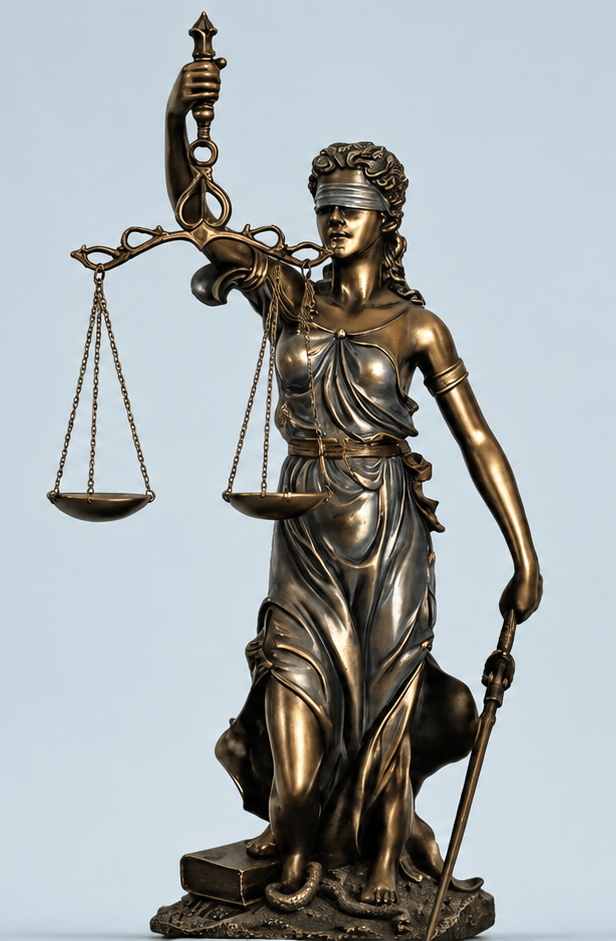
So how can a lawyer who is a child of God defend those who are considered “bad people” or sinners?
Let me first ask you to consider this: Who defines what is good and what is bad? Who determines guilt and innocence?
Suppose a judge goes to a supermarket on the weekend wearing ordinary clothes rather than a judicial robe. He personally witnesses A pull out a gun and shoot B to death. Then, on Monday, the judge puts on his robe, enters the courtroom, and finds that the defendant before him is A. At that point, A has every right to plead not guilty. Likewise, the judge, both legally and in terms of his thinking, mindset, and outward conduct, must not treat the defendant with contempt or assume that the defendant is immoral or guilty of a crime. First of all, the U.S. Constitution protects the accused and grants the right to plead not guilty. Whether a person's conduct constitutes a crime is not determined simply because a judge personally witnessed A shoot B. The fact that the judge saw the shooting does not automatically establish guilt. Did B provoke or threaten A first? What was the relationship between A and B? What conflicts existed between them? What events led up to the moment the gun was fired? These are matters that require evidence gathering and investigation.
A lawyer's duty is to advocate for the defendant before the judge, making full use of the facts and the law to protect the defendant's legal rights to the greatest extent possible.
Suppose A truly did, whether deliberately or at random, shoot and kill B with a single gunshot. Does he still have any rights? Yes, he does. He has the right to remain silent in order to avoid self-incrimination. He also has the right to have a lawyer actively defend him, ensuring that he enjoys the fullest extent of his legal rights under the law.
Judging people by appearances is unreliable, yet it is a natural human tendency. As recorded in the Gospel of John, when the people brought to Jesus a woman who had been caught in adultery, He said, **“Let any one of you who is without sin be the first to throw a stone at her.”** When I stand before a God who is perfectly righteous and perfectly holy, how dare I raise a stone against another person?
This reminds me of a case in California in which I represented a client. She had already been arrested, and the prosecutor was preparing a plea bargain. If she pleaded guilty, she would serve fifteen days in jail and have a criminal record. At the time, I discussed with her the option of taking the case to a jury trial. Even if we lost, the sentence would be only thirty days. But if we won, she would not have to serve any jail time, nor would she have a criminal record.
On the first day of trial, my client told me that she was too afraid to go forward and wanted to give up. I told her that she did not need to speak—that was her right. “Let me speak for you,” I said, “and be your advocate.” I also prayed for her.
During the trial, I relied on the skills, experience, and perseverance that I had developed over the years. For example, I asked a police captain on the witness stand how many years he had been in law enforcement. He answered, “Eighteen.” I then asked at what age he had become a police officer. He replied, “Twenty-three.” When I asked how old he was at the time, he answered, “Forty-five,” when in fact the correct age should have been forty-one. I immediately seized upon that inconsistency and challenged his testimony, leaving him unable to explain the discrepancy in open court.
After thirteen days of back-and-forth arguments with the prosecution, along with continual prayer with my client, we finally persuaded the jury, and she was acquitted. Later, I learned that it was precisely because she was found not guilty in this case that she was able to obtain permanent residency and continue living and working in the United States. My hope is that through this experience, she would come to know God's power more deeply and be willing to place her trust in Him.
As a lawyer, I deal with all kinds of cases. I do my best to defend and represent my clients, protecting their legal rights to the fullest extent possible. This does not mean that I seek to excuse those who have broken the law. Rather, it reminds me that I, too, am a sinner. The fact that I am still able to work with joy, share the gospel with joy, and live with joy today is entirely because of God's mercy and God's grace.
Maintaining Integrity
Of course, lawyers are often perceived as people who are good with words. I constantly need to remind myself not to follow the ways of the world and to guard against temptation.
For example, there are times when, in order to help a case go smoothly and achieve a satisfactory outcome for a client, I wrestle with thoughts like these: If something is black, can I describe it as gray instead? If I call it gray, I am not calling it black, nor am I calling it white. Yet it is closer to black, while not being completely black. Of course, I could easily justify it by saying, “I’m doing this for the benefit of my client!”
I cannot guarantee that every word I say or every statement I make can withstand the closest scrutiny. But whenever I am tempted to call something gray when it is really black, I feel uneasy inside. I do not want to say such things, and those words simply will not come out of my mouth.
I was not like this in the past. I believe God has placed a conscience within me, and I am grateful that He has made me a more authentic and truthful person.
In the course of practicing law, there are many temptations. For example, I may meet clients in public places such as coffee shops or restaurants for consultations. The people around us do not know that I am a lawyer, nor do they know that we are discussing legal matters. If a client pays me a consultation fee and I simply put the money into my own pocket, how would anyone at the law firm ever know?
Besides the temptation of money, there is also the temptation of the opposite sex. Therefore, when handling clients’ matters, I try to avoid meeting alone with a client of the opposite sex in a small room. Usually, I bring an assistant so that there are three of us present, or I meet with clients in public places such as coffee shops. When I do face moments of temptation, I rely on God’s mercy, my responsibility to my family, and the love and trust my spouse has placed in me. By God’s grace, I believe I am able to withstand them.
There are also temptations such as under-the-table deals, falsifying accounts, and exploiting legal loopholes. For example, a house may actually be sold for $1.5 million, yet the documents deliberately state a price of less than $1 million in order to avoid a higher tax rate and reduce the amount of tax owed. These are things I am not willing to do.
I hope there will always be an extra pair of eyes watching over me—perhaps the conscience God has placed within me, perhaps the reminders of fellow believers, perhaps the truth of Scripture, or perhaps the teaching of a pastor. May these eyes serve as my accountability, keeping me from temptation, delivering me from evil, and giving me the strength to overcome every challenge.
Empowered by God, Laboring Wholeheartedly
On August 5, 2025, a Christian sister named Zhang, who lives in New York, received a phone call from the police asking her to come in for questioning. She contacted me immediately, and I accompanied her to the police station. It turned out that the New York police had received an arrest warrant from the state of Louisiana, alleging that Sister Zhang had been involved in an illegal business operation there. After being questioned at the police station, she was taken into custody on the spot and held pending extradition from New York to Louisiana.
At that time, the entire church firmly believed that Sister Zhang was innocent. As a result, brothers and sisters in the church volunteered to take turns visiting her every day, encouraging her and praying for her. I also took the initiative to contact the head of the local District Attorney's Office to inquire about the details of the case. Through those discussions, I came to believe that the situation was very likely the result of identity theft.
On the day of the hearing, August 28, more than fifty church members and friends of Sister Zhang came to the courthouse to support her. Because the crowd was so large, not everyone could be admitted into the courtroom. Some had to wait in the hallways or outside in the courtyard, praying as they waited. In fact, the purpose of this court appearance was simply to address the upcoming extradition proceedings. Representing the prosecution was the District Attorney whom I had previously contacted. Even though the judge stated that there had never been a precedent for release in such a case, I strongly urged the court to release Sister Zhang. In fact, even the prosecutor softened his position and remarked that, given how persistent and determined defense counsel had been, he would ask the court to “consider releasing” her.
After further negotiations with the judge, Sister Zhang was released on a $40,000 bond, on the condition that she report to Louisiana within seventy-two hours. To our surprise, that very afternoon the District Attorney called and told me that he had reached an understanding with the prosecutors in Louisiana and had asked them to take another careful look at the entire case. In the end, the Louisiana authorities decided to dismiss all charges against Sister Zhang and remove the arrest record.
The District Attorney whom I had previously contacted added, “In over thirty years of my career, I have never seen a lawyer who fights as hard for a client as you do.”
I firmly believe that this result came not only from the hard work of a lawyer exercising professional diligence, but even more from the spiritual strength released through the united prayers of the church body.
Jesus' Perfect Intercession

Professional diligence ultimately requires dependence on God's spiritual power.
I encourage Christians to enter the legal profession. One reason is that the legal field often serves as a pathway into public office and government leadership. My sincere hope is that more Christians who fear God and follow His truth will enter these arenas and, guided by God-given conscience, help advance and implement public policies and governing principles that reflect justice and mercy.
Moreover, the more Christians there are in the legal profession, the greater their positive influence on their colleagues. As I mentioned earlier, this profession is filled with temptations and challenges. The more Christians who take their faith seriously are involved in the field, the more they can encourage one another, hold one another accountable, and maintain their integrity. For example, at the Annual Conference of the Chinese American Lawyers Forum (CALF) held in Seattle in May 2026, Christian attorneys organized a breakfast fellowship before the official meetings began. I also stay in regular contact with local groups of Christian lawyers. Through these various opportunities for fellowship, we seek to encourage and strengthen one another.
Lawyers are known by several different titles, each highlighting a different aspect of the profession. The term most familiar to the public is lawyer—someone who has received formal legal training, holds a valid license to practice law, and assists individuals or organizations with legal matters. A lawyer may also be referred to as a counselor or an attorney. Regardless of the title, the role remains the same: once authorized by a client, the lawyer provides legal advice, representation, and related services, while seeking to protect the client's legal interests to the fullest extent possible.
The legal profession requires lawyers to represent their clients wholeheartedly—not 99 percent, but 100 percent—even when, legally and factually speaking, the client appears to have nothing in his or her favor. Even in criminal cases, a lawyer must uphold professional standards and use every lawful means available to persuade opposing counsel and convince the court that the client is either less culpable than alleged or not guilty at all.

The Lord Jesus became human and came into the world as our Mediator. Before God, He intercedes for us; before humanity, He reveals God. The Holy Spirit, who is called the Counselor, is our Counselor and Advocate, seeking what is in our best interest.
Jesus knows full well that we are flawed, that we possess a sinful nature, and indeed that we are sinners. Yet He does not claim that we are without sin, nor does He simply excuse our guilt. Instead, He embraces us with His love. Because of His love, He cleanses us from our sins and enables us to receive forgiveness before God. It is not because we are innocent, but because He Himself paid the price for our sins in our place.
As a lawyer, my intercession for clients before a judge is, after all, limited. But Jesus, who is full of grace and truth, intercedes perfectly. For His love, His grace, His righteousness, and His holiness are without limit.
(Adapted from Attorney Mingli Chen's presentation, “Serving God's Kingdom Through Legal Expertise,” delivered at the KRC 2026 Spring Retreat.)

Attorney Mingli Chen graduated from the New York University School of Law and also holds a certificate from Harvard Law School. He is admitted to practice before multiple federal appellate and district courts. He previously served as a court attorney in the Queens and Manhattan divisions of the New York City Civil Court, where he gained extensive courtroom experience and valuable professional resources. He is among the very few attorneys in the United States qualified to appear before courts in more than thirty states nationwide.
Throughout his many years of legal practice, Attorney Chen has become known for using creative strategies to resolve complex legal challenges. He is skilled not only in negotiating with prosecutors and providing effective courtroom defense in a wide range of federal and state criminal cases, but also in advocating for clients' rights in civil litigation before numerous state and federal courts. Attorney Chen's areas of expertise include copyright infringement matters, trademark infringement litigation, and unfair competition disputes. His work has been featured multiple times by major international media outlets, including the The New York Times, BBC, and Reuters.