

An Author and His Life in Translation
A writer’s monologue
Definitely not my cup?
From enjoying writing, to being accustomed to writing, to being committed to writing—along the path of words, I have always identified myself as a native-language creator, not an editor, not a reading promotion marketer or multimedia worker, and I would not engage in translation.
Definitely not my cup?
Although I went abroad early and had the advantage of learning different languages, I am really not a very talented language student. I often feel that my brain has been divided into four separate spaces to hold four different languages, and they cross their arms over their chests, pouting and refusing to communicate with each other. I can only stay in one space at a time, thinking and speaking or writing in that space's language. Whenever I see those simultaneous interpreters who can move freely between different languages, I always admire them greatly, and then keep an even greater distance from the work of translation. I am completely self-aware and believe that translation has nothing to do with me.
That year I finally had the opportunity to enter seminary, to properly capture all those theories and doctrines from various schools and traditions—which I had learned about through books or from the pulpit and which had been flying around in my head—and bring them into the classroom to meet face-to-face under the guidance of professors.
Strangely enough, I usually write prose and don't write academic or argumentative analytical articles, yet I am interested in theories that are considered "very difficult," as if eating a plate of stir-fried crisp vegetables cannot satisfy me—I must take a few raw bites to feel I've truly tasted the original flavor of the vegetables.
When choosing courses in graduate school, while classmates around me were talking about how exciting the applied courses were and how much practical instruction they had received, I quietly shuttled between unpopular theory courses, discovering with delight time and again: Oh, so it's based on this doctrine and theory!
In those years, I had a different understanding of "translation" for the first time—not translating from one language to another, but converting principled, theoretical language into plain language that the general public could understand. Having gone to seminary with the calling of a pen to be equipped, I felt for the first time the possibility and need to do this kind of "translation" through writing. At that time, I even prayed silently, hoping to study for a few more years to deeply explore the profundity of theories.
Unfortunately, when I had only half a year left until graduation, I became pregnant with my first child, and a year later became pregnant with my second. In the transitions between putting down diapers to pick up theology textbooks, abandoning half-written papers to rush over and pick up a crying baby, I hastily bid farewell to the romance I had held in my heart for theological theory, and honestly returned to live in reality.
Living Out Truth in Daily Life
Time wrapped up three kids in a cloth bundle, shouldered it and rushed forward, while I chased along panting all the way. I no longer thought about translation, no longer pretentiously studied how to position my running stance—I just pulled out the keyboard and wrote. Only when I picked up some theoretical books in daily life, or listened to some lectures, then turned back to face real-life challenges and was suddenly enlightened, would I desire to share through writing, unwilling to dance and spin in circles alone—Have you read the book written by ××? Have you heard of ×××'s theory? Do you know that ××× has already explored this question, and his answer is like this...
When asking such questions in small groups or among sisters, occasionally someone would earnestly pull out a small note: "Say the book title again, I'll go look for it..."; "Who? Let me check."
More often I would get this kind of response: "Oh, I bought the book, but it's so profound! I really don't have the focus to study it." And there were even more direct answers: "Since you've already read it, just tell me directly!"
At first I didn't give up, saying righteously and sternly: "You have to read the book yourself in order to think for yourself and gain it for yourself. What I tell you is all secondhand." They nodded obediently and "went away sorrowful."
I still had unfinished words in my heart: "I'm not a genius. Reading these books also comes at a cost—if I don't understand it the first time, I read it a second time; if one book doesn't work, I read a second one, okay! How can there be shortcuts if you want to gain something?"
Life kneads a person's heart like dough, flattening it, kneading it again, until it achieves "three smoothnesses": no flour can be seen; no hard lumps can be seen; no water can be seen.
The thought of translation came back to find me again.
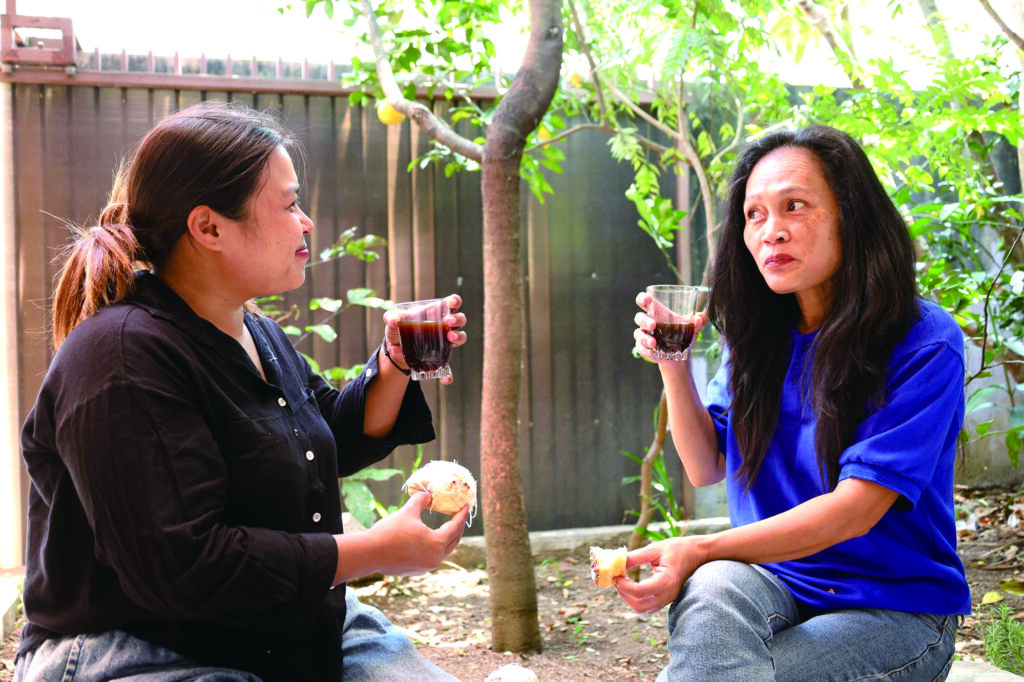
If there are worthwhile English books, those who don't understand English cannot read them, not because they are stupid or lazy. The best way to enable them to read is not to learn a new language, but to find a good translation. I thought of many sisters walking through life's troubles, saying to me with furrowed brows: "Can you not talk to me about theories? Just tell me what to do, okay?" Taking the truth written in that eternal great book, understanding it through its historical and cultural background and literary style, comprehending it through the Holy Spirit's personal guidance, and then converting it into a way that life can understand and live it out. Perhaps from principle to practice, truth is also a process of translation?
First understand and comprehend it yourself
In the past, my impression of translation was that it required a flexible mind, a talent for languages, and disciplined writing. If I knew that a translator could create their own work but was willing to spend time bringing someone else's quality work to fruition and presenting it to more readers, I would think they were remarkable. To me, this was the difference between having your own child and adopting one. Since it wasn't my own field, I rarely paid attention to translators' voices.
In a podcast program, a translator talked about her love for translation, which shocked me. Not a graduate of a foreign language department and having worked in public service for 30 years, she developed a desire to translate books into Chinese and share them with more people because of her love for books. For this, she lived a double life for many years, working in a government agency during the day and translating novels at home at night. After retirement, even during a downturn in the publishing industry, in order to introduce her beloved foreign mystery novels to the Chinese-speaking world, she started a publishing company with friends.
Li Ching-Yi, the Chinese translator of "The Kite Runner" and a translator who has translated over eighty books, says that before translating a literary work, she must first fall in love with that book, enter into that book, spend time with the characters, and experience the joys, angers, sorrows, and pleasures of every character within it. In simple terms, it means "getting into character."
So translation is not an exchange of languages. Before figuring out how to explain it clearly to readers, the translator must not only understand it intellectually, but also feel it emotionally, and even more so, be able to comprehend the concepts behind the words in their state of mind.
The most difficult novel she encountered to translate was the work of John le Carré, author of "The Tailor of Panama." At first, she only felt that this author used profound vocabulary, and it was difficult even to understand the literal meaning. It wasn't until she reached a certain age and had certain experiences that she comprehended the human entanglements depicted in le Carré's writing. Only after understanding through real-life experiences, after truly reading and comprehending it herself, could she accurately choose the language and narrative style to convey it to Chinese readers.


First love, first understand, first comprehend the book to be translated, and only then choose the language to use. Li Ching-Yi says: "Use their logic to understand and think, only then can you faithfully present their tone of voice and figure out the character's subsequent choices and actions."
As I listened, I suddenly realized: Ah! Isn't implementing truth in life exactly the same?
In the calling of the Word becoming flesh, the love, understanding, and comprehension of the "Word" must also go ahead, leading me to choose how I will use each day to translate what I believe in my heart.
In a Language Others Can Understand
For translators, the choice of language is still very important. Besides understanding two languages, they must also consider the audience who doesn't understand, who need expressions they can comprehend. Being too obsessed with linguistic precision while losing fluency and readability, thereby producing "translationese," is the most common mistake Li Ching-Yi sees immature translators make.
I remember when I first entered the youth fellowship from a family with no Christian background, I felt both envious and confused by this kind of translationese. Envious, because they understood another language I didn't; confused, because I understood all the individual words they spoke, but when put together they were extremely profound, leaving me half-understanding.
Moreover, I didn't even dare ask "What did you just mean?" for fear of exposing myself, revealing that not only did I not know the foreign language, but I couldn't even master my own language well.
After entering the faith, I was also once excited to become a translator of truth for my unbelieving parents, only to discover that my translationese was no less pronounced than others'. This translationese is sometimes due to not understanding thoroughly enough, directly copying dictionary formal language. I was always very frustrated—I had explained it so clearly, why couldn't they understand or accept it? Which word didn't they understand?
Once while cooking in the kitchen, I again used translationese to share my testimony with my mom. Just as I was speaking passionately, she gazed leisurely at the stove fire and replied: You all are saints, I'm very ordinary.
I was stunned on the spot—was my translation really that far off?
Not only did people not understand, they even misunderstood.
Gradually, I came to deeply understand my role among unbelieving family and friends—I am a translator. Everyone who reads that eternal great book is translating it through their own grounded life, helping those around them who haven't read it or can't understand it. My translation language is the words I speak and also the actions I take; it is my life testimony and also my relationship with the audience. Everyone has a language they can understand; I cannot translate an English book into Spanish for Chinese people to read.
Sincere Understanding and Cherishing of Readers
In the experiential journey as a word worker, I came to understand more deeply the translation mission between the language of heaven and the language of earth, discovering that besides understanding the original text and its author, I also need to have sincere understanding of and cherishing for the readers.
John D. Inazu is renowned for his research in the fields of law and religion. He is a distinguished professor of law and religion at Washington University School of Law in St. Louis, and has long engaged in dialogue between the realms of earthly law and heavenly principles. He also believes that his real work is translation.
I read the book he co-edited with Pastor Timothy Keller, "Uncommon Ground: Living Faithfully in a World of Difference".
After Pastor Keller was called home to the Lord, many articles and interviews reviewing his life often mentioned his willingness to dialogue with non-Christian intellectuals. When facing differences in faith concepts, Keller's approach was not to identify and attack the other party's weaknesses, but to find common ground between both sides to open dialogue.
With this concept in mind, in the book, he and Professor Inazu invited ten elites from different fields to join in, sharing how to live out their faith in their own fields, finding common ground within their field's scope with people of different faiths, and starting from there to spread the gospel both audibly and silently.
In the book, Inazu wrote a chapter titled "The Translator," discussing how he straddles between secular higher education institutions and the Christian faith, being both a law professor and a servant of Christ, feeling that what he does is translation. If he can find common ground between both sides amid many differences, he can not only establish mutual interests but also draw the relationship closer.
He also mentioned a principle that excellent lawyers are familiar with: the success of one's own argument depends on understanding the essence of the opposing argument. The opposing side's quality arguments are definitely not exaggerated expressions, but rather represent the most generous and complex articulation of thoughts within their viewpoint. Demonizing the opposing argument does not help a lawyer persuade the other side; only by letting the other side see that you recognize their strengths can you find common ground for communication.

He firmly believes that as a translator between the world and the church, this represents both a familiar understanding of truth and an in-depth understanding of the world's arguments; being good friends with university professor colleagues or students is just as important as being good friends with people in the church.
A Translator Between Heaven and Earth

In the joy of literary creation, I also exist between two kingdoms, bearing the translation mission. Regardless of what literary form I write in, I will be a translator standing between two kingdoms.
Translator Li Ching-Yi's "getting into character" with original texts allows her not only to understand the original language, but also to comprehend why the author tells the story in that particular way; her earnest reflection on her own life experiences further enables her to experience how those stories intersect with her own story. In her book "For You, a Thousand Times Over: Translation Notes from Quietly Reading a Book," she records how she fell in love with the books she translated, and how in her own reality, she continued to engage in profound dialogue with the content of those books.
God's workers also start from falling in love with that great book. Reading it over and over, it is all raw meat, waiting for reality to cook it. Professor Inazu and Pastor Keller remind me that respect and understanding for the audience, establishing life connections with them, and developing genuine friendships will help me know how to choose the language to articulate the original story I have understood and experienced.
Richard Mouw, former president of Fuller Theological Seminary, said this in his review of "Uncommon Ground":
"To love interacting with people who disagree with you is not easy for many who hold fast to the Christian faith. Timothy Keller and John Inazu not only do this and serve as role models, but in this excellent book, they also gather wise conversation partners and provide much-needed advice, offering necessary counsel on how to cultivate the spiritual virtues of humility, patience, and tolerance. These virtues are so important for how to love neighbors in a diverse culture."
Humility, patience, and tolerance are precisely the essential qualities for all translators of truth that Pastor Keller proposed; when they leave their desks and enter reality to interact with people, their lives become the manuscript most easily understood by those around them.
Authors sometimes use a pen or keyboard to write text books, yet every day, through their own lives, they read aloud the audiobook to those around them. A neighbor's translated life must be lived earnestly.
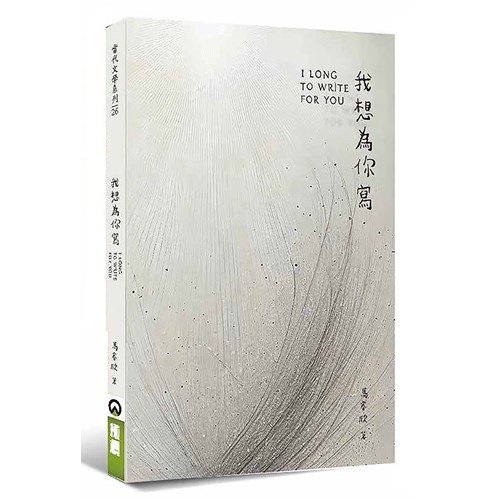
New book recommendations
I Want to Write for You by Ma Ruixin
Living for Him
is what makes a life of writing for Him possible.
He guides me, shapes me, allowing me to gradually transition from a word person talking to myself, to becoming accustomed to chatting with Him while writing, and then learning to see the readers on the other side of the words—from writing for the "You" who called me, to being willing to write for the "you" who reads. In Taiwan, distributed by Campus Evangelical Fellowship Press. For orders in North America, email gc******@***il.com.