
Film and Drama Essays: In That Sparkling Place
Review of Never Look Up
I remember when I was young in my hometown, Taiwan, there were often flyers posted on utility poles by the roadside, with religious slogans like 'The Kingdom of Heaven is Near' and 'Repent, for the Kingdom of Heaven is at hand.' As a child, I was filled with curiosity, wondering, 'What does this mean?
At that time, my father, who had not yet believed in the Lord, casually replied, 'It means the end of the world is coming, right?!' Then, probably noticing the shocked expression on my face, he quickly added, 'That’s just a lie!' After a brief pause, he said, 'Uh... at least it won’t come that soon.
What will the end of the world look like? Will it be that everyone on earth dies in an instant? Or will it be like a domino effect, with one person falling after another? What causes the end of the world? An international nuclear war? A global pandemic? Or a super comet from space?
Although the theme of 'the end of the world' in novels or films may not be new, in the past year or two, with the ongoing nightmare of the COVID-19 pandemic, the possibility and immediacy of the world’s destruction due to natural disasters or human misdeeds has become more real and imminent. Will people, therefore, start to take the issue of 'the end of the world' seriously?
The real world, so twisted and distorted
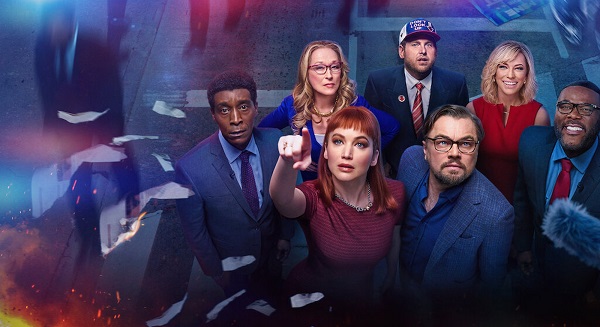
The American disaster film Don't Look Up, released in December 2021, presents an unflinching yet humorous critique of “unrealized true events,” wrapped in dark comedy. Released at the end of the year, it offers viewers both biting sarcasm and serious reflection.
Astronomy PhD student Kate Dibiasky and her professor, Dr. Randall Mindy, accidentally discover a massive comet. This shocking astronomical news comes with a major problem: the comet will crash into Earth in six months, causing the extinction of all life! Even worse, from the White House to the media, no one seems to care about this impending disaster. The "disaster star" is so massive, yet people choose to ignore it. What will Kate and Randall do to make everyone "look up"?
American literary master Don DeLillo, in his postmodern classic White Noise, mentioned: "The stream of information is relentless—words, photos, numbers, events, charts, statistics, microchips, waves, particles, grains... Only disasters can grab our attention. We want disasters; we need disasters; we even depend on disasters—as long as they happen somewhere else." To the politicians at the White House, the comet heading toward Earth is not a disaster; the midterm elections are. Although Randall and Kate appeal to the Director of the "Planetary Defense Coordination Office," Teddy, and are given the opportunity to report the unprecedented crisis directly to the president, the president dismisses them with a simple "Sit tight and assess," meaning "Wait and observe, and make further evaluations."
With no other options left, Randall and his team turn to the media for help, hoping that by leaking the information to the press, they can wake up the government and the public to the impending disaster. They appear on a news talk show, but the hosts and pundits treat this grave issue as a joke. Meanwhile, the viewers and online communities are most concerned with gossip about a pop star and her cheating boyfriend, completely disregarding the fact that the Earth is about to be destroyed.
In White Noise, DeLillo says, 'For most people, there are only two places in the world: the one they live in and the television. If something happens on television, of course, we have the right to be fascinated, no matter what the event is.' If we were to replace 'television' with 'the internet,' would it be more in line with the reality of the 21st century? The internet is boundless, and information is at our fingertips. People believe they are always up-to-date with the latest events, yet they fail to realize they are being 'nourished' by social media, which feeds their insatiable appetite for scandal and gossip, unable to be satisfied unless they are fed juicy celebrity dramas.
As the president's scandal escalated, 'saving the Earth' became the lifeline to turn around the election, and the White House decided to use a nuclear missile to alter the comet's course. However, unexpectedly, the rocket that had already been successfully launched had to return midway due to pressure from tech corporations who wanted to mine rare metals from the comet. Helplessly watching the political and business collusion unfold, Randall, unable to change anything, was forced to step aside. And just then, the seemingly distant comet appeared in the visible sky, dragging its long tail and leaving a dazzling streak of light. Randall and Kate desperately urged the public to 'look up' and face the truth, but the government and tech conglomerates continued to strongly promote the message: 'Don’t look up…'
"Don't Look Up" is filled with satire on politics, entertainment, media, and social phenomena throughout the entire film. The omnipresent sense of absurdity permeates the dialogue and scenes, making the audience both laugh and cry. It feels as though the viewers are looking into a mirror, seeing a reflection of the real world, but this mirror is a funhouse mirror, appearing both real and distorted at the same time.
What has happened to us?
Don't Look Up opens with a famous quote from American humorist Jack Handey: "I want to die peacefully in my sleep, like my grandfather, not screaming and yelling like the passengers in his car." — Why would people, knowing the dangers and the cliff's edge is near, allow an old man, already half-asleep, to grip the steering wheel? Why are they willing to just be passengers, entrusting their fate to someone else?
Perhaps, as DeLillo said in White Noise: "Knowledge is ever-changing, and people enjoy constantly reinforcing their beliefs... The truth of things and perceptions keep changing, but we fail to grow with them, and one day they suddenly become glaringly obvious. Therefore, people need authoritative figures to clear their doubts, to tell them what is right and what is wrong..."
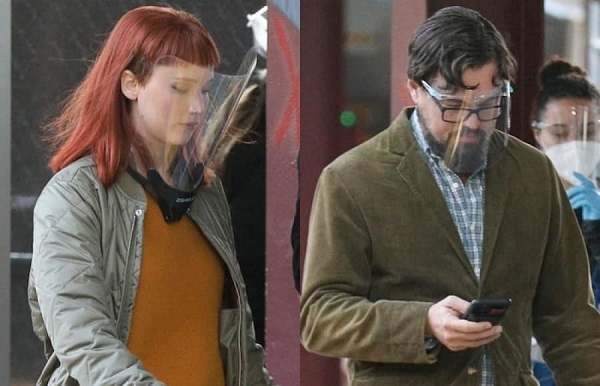
Randall and Kate’s serious warnings fail to resonate. Instead, Kate’s outburst in desperation in front of the camera becomes a laughingstock, with her frantic expression turned into a meme that spreads everywhere. Although Randall is portrayed as the "sexy astronomer," he still cannot get the public to take the impending disaster seriously.
In the end, Randall also breaks down in front of the camera, shouting hoarsely, "Can you please stop being so happy? Sorry, it’s not always about being witty, charming, or pleasing everyone. Sometimes we need to talk seriously with each other, we need to listen... We know the comet exists because we saw it... Please, we even took a photo. Do we need more proof? A massive comet the size of Mount Everest is heading toward Earth—it’s not a good thing! What is wrong with us? How can we still be talking like this?"
"I feel sad for humanity, and for the strange role we play in this disaster." The protagonist Jack in White Noise shares a similar lament. Perhaps it was Leonardo DiCaprio’s superb acting that fully brought out the protagonist’s helplessness and urgent pain, as Randall's words in this moment deeply touched my heart.
Look Up or Look Down
Disaster coming is terrifying, but what's even scarier is when people refuse to accept the reality that disaster is on its way. Sometimes, I can't help but wonder, as Christians, what kind of attitude do we have when facing the end times and disasters mentioned in the Bible?
As a Christian for many years, I sometimes reflect on whether my understanding of faith has grown and evolved compared to the person I was decades ago. After accepting Christ, have I continued to live with a “Don’t Look Up” mentality, like many in the movie, focusing only on my phone, immersed in fragmented information? Have I, under the guise of being “grounded,” become too secular, merely focusing on the daily grind—fueled by the worries of life—while neglecting to constantly lift my eyes to Jesus and set my focus on the eternal kingdom?
Have I lost my reverence for God's Word and my hope in heaven? Have I, like a politician, turned the Bible into a marketable product or a tool to manipulate, selecting only the pleasant and comforting parts to share—speaking of blessings and grace—while avoiding the talk of repentance and judgment?
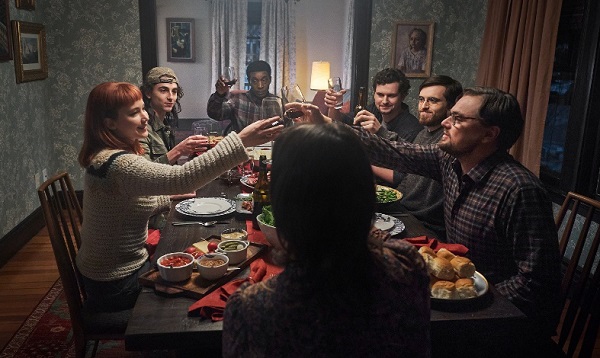
At the end of the film, Randall and Kate choose to spend their last night on Earth with close family and friends, gathered around the dinner table, holding hands, sharing things they are grateful for. Then, they face death together amidst the cataclysmic earthquake that shakes the world to its core. Meanwhile, the president and the elites board a space ark, traveling 22,740 years into the future to reach a new planet. However, as soon as they step off the spacecraft, the president is instantly devoured by an alien creature.
In the film, whether the characters choose to stay or escape, they cannot avoid death, and the story ends in tragedy. However, in contrast, before His departure, Jesus shared a different kind of message with His disciples at the Last Supper: "I have already told you, I am going to prepare a place for you. And if I go and prepare a place for you, I will come again and take you to be with me, that where I am, there you may be also."
At the end of the year, as we look back, can we awaken our hearts of gratitude? With the new year approaching, will we choose to lift our heads, or will we continue to keep our heads down? When we lift our eyes to look up, what is it that shines brightly there, bringing us hope?
Author Bio:
Zi En, a coworker at the "Genesis Literary Training Book Garden." I wrote essays as a child and articles as an adult. I used to write for myself, but now I surrender the pen to God. Cooking words to satisfy hunger cannot bring true spiritual fullness, but I hope to contribute the five loaves and two fish, baking word cookies that "appetize" readers, and thereby encourage them to engage with the truth of faith and taste the good flavor of God's grace.