

Iron Lady - Chun Hua's Story
Preface
According to the Collins English Dictionary, the term "Iron Lady" is commonly used to describe strong-willed female leaders, the most widely known of whom is Margaret Thatcher, who served as Prime Minister of the United Kingdom from 1979 to 1990. Over time, this title has gradually come to symbolize strength, determination, and an unwavering, indomitable will—qualities traditionally considered "masculine."
Iron Lady is a book that weaves together the stories of women who are survivors of domestic violence, sexual assault, and human trafficking. I chose this title precisely because of the inherent contrast it carries. A strong-willed woman does not necessarily need to be cold, harsh, or masculine; likewise, a man who is gentle or emotionally expressive is not thereby lacking in leadership. Since both men and women are created in the image and likeness of God, each person carries within them both gentleness and strength—men can possess sensitivity and intuition; women can possess firmness and unwavering resolve. These qualities are not contradictory; rather, they complete what it means to be fully human.
Scripture reminds us: "You, dear children, are from God and have overcome them, because the one who is in you is greater than the one who is in the world." (1 John 4:4) The strength of these women in this book does not obscure their gentleness, nor does their gentleness diminish their strength. For with God all things are possible—the broken are restored, the weak become strong, and the impoverished become rich. Their strength comes from within—not built upon the world's expectations, but rooted in the power given by the Lord who dwells in their hearts.
These women's stories are all based on real people and real experiences. To protect their privacy, I have changed their names and adjusted certain details.
To me, they are true heroes who have faced challenges that would crush most people. Once victims, they are now victors. Through faith in Christ, they have not only survived but grown stronger; lives once deeply wounded are now being restored and flourishing. Their stories deserve attention and a listening ear, so that we may learn compassion and respect for them, witness the loving Lord's salvation and redemption, and give glory to Almighty God.
Perhaps someone close to you—a friend, colleague, fellow church member, mother or sister, or even yourself—is going through hardship. It may be domestic violence, sexual assault, human trafficking, or simply a difficult season in life. I hope these women's stories will encourage you to keep moving forward and remind you that hope is real and restoration is possible.
A Gentle Companion Becomes a Broken Home
Chun Hua dared not lift her head to look at the cold body in the coffin.
"You worthless b*! I'm calling immigration right now to get you thrown out of this country!"
The vicious words still echoed in her ears, and nightmarish memories flooded her mind like a tide. Just two and a half years ago, she had left this man with their one-year-old son and fled to New York seeking refuge. Now, he was gone forever...
Here's the English translation: Chun Hua met him online while she was still attending language school. She had left China because she had always believed that life shouldn't be confined to a small town—there was a wider world out there waiting for her to explore. She wanted to learn a new language, meet different people, receive a better education, and hopefully earn more money to help support her family. She also quietly hoped that perhaps one day she would meet someone who truly valued her, and together they would build a warm home.
After chatting online for about six months, they decided to meet in person. He was gentle, kind, and considerate. The first time he brought her to meet his family, his mother, though seriously ill, insisted on getting up to greet her. He told Chun Hua that he had been living with his mother to care for her as she battled cancer. This made Chun Hua feel he was filial and loving—qualities far more valuable than any family background or status. So after six months of dating, when he proposed, she agreed without hesitation.
They didn't have a grand wedding, only his family and a few friends attended. Chun Hua's family was in China and couldn't be there in person, but they sent their blessings over the phone. After the wedding, the newlyweds lived with his mother in a small town in Connecticut, caring for her until she passed away.
His sister and brother lived nearby and often came to visit and spend time with their mother. Chun Hua felt very fortunate to have married into such a loving family and believed she was living the American dream. After marriage, she always hoped to share family responsibilities with him. She worked as a nanny and at restaurants—she was willing to try any job if it would lighten his burden. She also cared for her mother-in-law wholeheartedly, treating her as if she were her own mother.
Just when everything seemed perfect, the family seemed warm, and there was care among the siblings, one day the three of them got into an argument over their mother's prescription medication. Chun Hua didn't understand—why argue? Why not just ask the doctor to prescribe more? It was only painkillers, after all.
After her mother-in-law passed away and their son was born, life began to change.
Her husband slept all day and didn't want to do anything. At first, Chun Hua thought this was his way of grieving. Gradually, he stopped following through on things he promised, even lied, and became increasingly irritable. Not only toward her, but even toward his own siblings, often quarreling over trivial matters.
His sister and brother's attitude toward her also changed from before, often making hurtful remarks: saying that Chun Hua had only married him to use him for a green card. Every word pierced her heart like a blade, leaving her at a loss, able only to cry silently.
"Where is that loving family I married into? What happened to that gentle, considerate man?" she asked herself, and told herself: "They're just grieving..."
However, one month, two months... six months passed, and not only did things not improve, they got worse. There was no food in the fridge, bills piled up like mountains, and the baby still needed care. Reality bit her hard.
Chun Hua realized she needed a steady income because he had no intention of earning money to support the family. Every time she went out to look for work, he promised to take care of the baby; every time she came home, she found the child crying in the crib while he slept. Again and again, there were always excuses and lies to cover up his failures.
"I'm tired, truly exhausted. I can't listen to these lies and empty promises anymore. I have a child to raise; I can't let him continue growing up in this environment. What should I do?" Chun Hua cried out in her heart.
When she confided her difficult situation to her friend Xiao Cai, Xiao Cai urged her: "You have no future with him, and his family won't help you either... Take your child and go to New York. There's a Chinese organization with a shelter that can help you temporarily until you figure things out." Xiao Cai gave her the organization's phone number.

That morning, she looked at him sleeping as usual, and at this "empty house"—no food, no love, no interaction, no laughter, no future... The broken home filled her with despair once again.
She mustered the courage to call the number Xiao Cai had given her. The organization told her they had a room for her and her child and she could move in anytime. She packed a few simple changes of clothes for herself and the baby, left a note saying she was taking the child to New York but would stay in touch, then walked out of that empty house, that broken home, and took a bus to New York.
He called several times, hoping she would come home, promising he would change, find work, and take care of them. Chun Hua wanted to believe him, but she had heard these words too many times before.
"Give me some time. Let me see you change; otherwise, I won't believe you," she told him firmly.
There Was a Reason, But No Answer
This organization not only provided safe housing and stable meals for her and her child, but also offered counseling to walk with her through her emotional lows. At the same time, the organization provided parenting education and support, helping her rebuild her confidence, learn how to care for her child, and reconstruct a new direction for her life. She was very grateful for this support.
Although the place she lived in was fairly comfortable, with a spacious room filled with everything she and her child needed, every time her child cried, Chun Hua's heart felt like it was being pricked by needles. She often asked herself: "Did I do the right thing? Was it too selfish to take the child away from his father? He'll change, won't he... I should have stayed by his side, shouldn't I..."
But the thoughts that followed immediately contradicted her: "He never did anything for the child. I've been in New York for so long, and he hasn't even said he'd come find me. Always lying, sleeping all day—he's no longer the person I married." Guilt and reality pulled at her heart day and night.
His calls became fewer and fewer, and when she called him, no one answered. Anxious and helpless, she called his aunt who lived nearby. "He was hospitalized a few weeks ago for a drug overdose and almost died!" The voice on the other end was sharp and angry.
"Drug overdose? What illness does he have that he needs to take so much medication?" Chun Hua was confused.
"He started taking the pills when his mother was still alive. And it's not just him—his sister and brother were all taking their mother's painkillers! You didn't know?" His aunt continued, "Those painkillers are prescription drugs, addictive poison that affects nerve cells. When the drugs are in the body, you not only don't feel pain, but you get a high, so it's very easy to become addicted. Even if you want to stop, the brain craves more, leading to overdoses that can even be fatal!"
After listening to his aunt's explanation, Chun Hua was still shocked, but finally understood—the siblings had been fighting over the drugs; he was always sleeping, and even when awake, his mind wasn't present with her. These were all symptoms of drug addiction.
"Why was he taking the drugs? Was he unhappy with our marriage? Did his mother know? Why didn't she stop him? Why didn't he tell me? If I had known earlier, maybe I could have helped him!"
Countless questions hammered at her like heavy blows—no answers, only pain.

The only thing she could be certain of was that taking her child and leaving that home, leaving him, was the right decision. She had to close this chapter of her life in order to move forward. Her child and her new life urgently needed her to think calmly, and even more, needed her to stand tall and give it her all.
Things Were Bad, But at Least There Was Someone to Lean On
New York was a city with an extremely high cost of living. The place she was staying was only temporary housing; she needed to find work and a permanent place to live. But when she went to work, who would take care of her child?
Responsibility became a heavy burden, squeezing out loneliness and discouragement. She thought about returning to China, but how could she tell her family that not only had her marriage fallen apart, but her husband was also a drug addict?
She often held her child and cried herself to sleep.
Through a referral from the organization, she learned she could apply to move into public housing in New York, but the condition was that she had to first live in a homeless shelter. What kind of place would that be? Was it safe? For the sake of a more stable life, she anxiously mustered the courage to move into the shelter. Living there with a one-year-old child was extremely difficult—all kinds of people were there. Soon after, the COVID pandemic broke out. She was very worried that she or her child would get infected, anxious about an unknowable future. "Isn't there supposed to be a way out? Could things get any worse?"
In that moment, she remembered that when she was at the temporary shelter, a female pastor had told her: When you feel helpless and alone, you can talk to Jesus. He will listen and He will help you. She wasn't sure if Jesus cared about her situation or was truly willing to help her. Chun Hua prayed sincerely: "Jesus, if You really exist, please help me!"
Gradually, things began to turn around. She made friends at the shelter and no longer felt alone; she seemed able to see the light at the end of the tunnel. A year and a half passed, and she finally received a permanent apartment provided by the New York City Housing Authority, located near the Chinese organization that had initially helped her, so she could visit the people she knew anytime.
Perhaps this Jesus really did exist, and He really had helped her. Through a friend's introduction, she brought her child to church, wanting to know more about this Jesus. There were many people there who cared about her; mother and son finally had a new family.
One day, the phone rang. On the other end was her father-in-law, whom she hadn't seen or spoken to in years. Without any greeting, he delivered a thunderbolt: "He died last night from a drug overdose. As his widow, there are some documents you need to sign. When would be convenient for you to come?"
In shock, she couldn't help but cry out loud.
"Mommy, what's wrong? Why are you crying?" her three-and-a-half-year-old child asked innocently.
Chun Hua used the simplest words to tell her child that the man in the photo—the father who had been completely absent from his life—was gone. Mother and son were now truly orphan and widow.
After the funeral, Chun Hua finally told her family back in China everything that had happened over the years. She also told them: "Now, my child and I have our home in New York. This is where we're working hard to build our lives. I'm actively preparing to get my license and plan to open a daycare at home to help mothers who want to work but have no one to care for their children." She deeply understood the hardships of single mothers, knowing how difficult it was to care for children while working to make a living.
After another year or so, Chun Hua finally opened a daycare in her own apartment. Life became stable, and she helped many single mothers. She would also share her story to encourage single mothers facing various challenges: don't give up, bravely seek a path, forge a path, and keep moving forward. Even without saying it explicitly, she proved through her own experience—lean on Jesus, and He can heal and restore wounded lives.
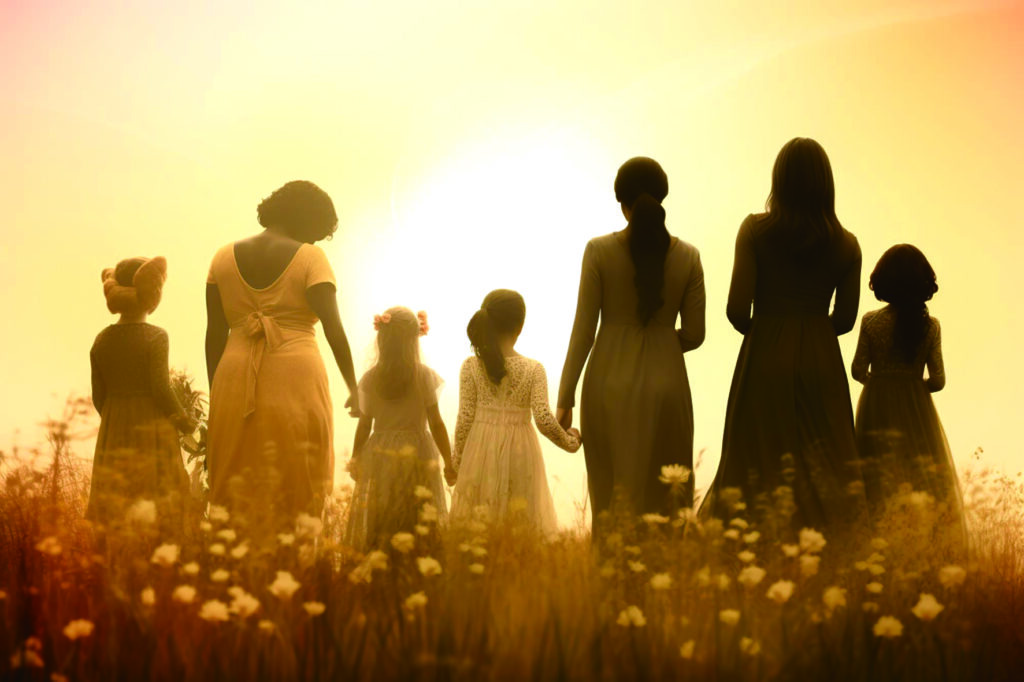
Chun Hua's story has not ended; she is still writing a new chapter for her life. Chun Hua is an iron lady because the God who is in her is greater than anything in the world. (This article is excerpted from *Iron Lady* and republished with the author's permission. To protect the privacy of the individuals in the book, the stories may not be modified or distributed without permission.)
Reflection and Action
"Religion that God our Father accepts as pure and faultless is this: to look after orphans and widows in their distress and to keep oneself from being polluted by the world." (James 1:27, NIV)
Throughout the Bible, we see God's care for orphans and widows again and again. Chun Hua and her child became widow and orphan long before her husband's death—through his emotional neglect and financial abandonment. How many such orphans and widows are there around us? Or perhaps you are one of them? God sees you, and He sees them; God loves them, and He loves you. I invite you to see their stories and draw near to them.
If you know someone who may be experiencing domestic violence, sexual assault, or human trafficking,
you can do the following:
✅ Ensure personal safety;
✅ Tell a trusted person nearby;
✅ Contact your local Family Justice Center;
✅ Call the National Domestic Violence Hotline;
✅ Go to the nearest police station; refer to a shelter organization where professional social workers can assist in finding public resources.
But do not do the following:
❌ Blame the victim for their weakness, saying: "You should have left that situation long ago";
❌ Urge reconciliation, saying: "The Bible says to submit to your husband";
❌ Use the children as a reason, saying: "For the sake of the children, don't leave—you must endure";
❌ Prevent them from seeking outside help, saying: "Don't air dirty laundry in public; don't tell outsiders".
Please remember:
There are people in this world who will support you, and there are people willing to reach out and help. If you or your church would like to learn more or get involved in this ministry, please contact the author: sh*********@***il.com.
The continuation of *Iron Lady* will be published on the *Kingdom of God* magazine website (https://e-krc.org/krc-magazine/). Please stay tuned.
—————————————————-
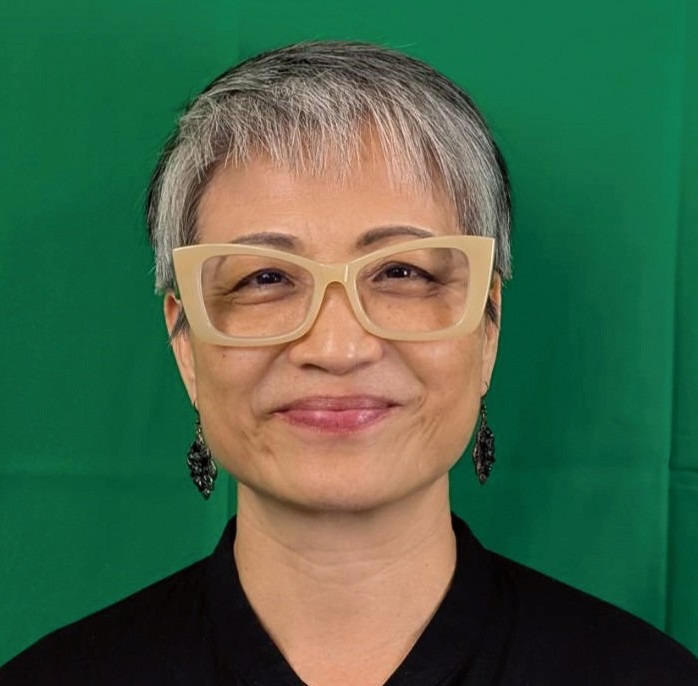
Pastor S. J. Kitty Soto was born in Taiwan and, in obedience to God's call, left her homeland for New York City. After being ordained as a minister by the International Pentecostal Holiness Church (IPHC), Kitty has served in New York communities for over 25 years. She works for a non-profit organization serving victims of domestic violence, sexual assault, and human trafficking, dedicated to teaching, caring for, and counseling those in need.
Additionally, her concern for orphans, widows, the poor, and marginalized groups has led her to engage in missions around the world, including Mexico, the Philippines, Indonesia, Japan, and Taiwan. She is passionate about equipping local churches, helping people live purposeful, God-centered lives, and reach their fullest potential as given by God.
Kitty's deepest desire is to be a voice for those who cannot speak for themselves, to walk alongside those who feel hopeless spiritually or in life, making Jesus's faith, hope, and love tangible and real in their lives.