[Kingdom Treasures] Series — Life Is a Hymn of Praise
Interviewee: Rev. Chuemay Li
Interview by Lily Kao · Compiled by Shirley Lee · Photos provided by Lianhe Media
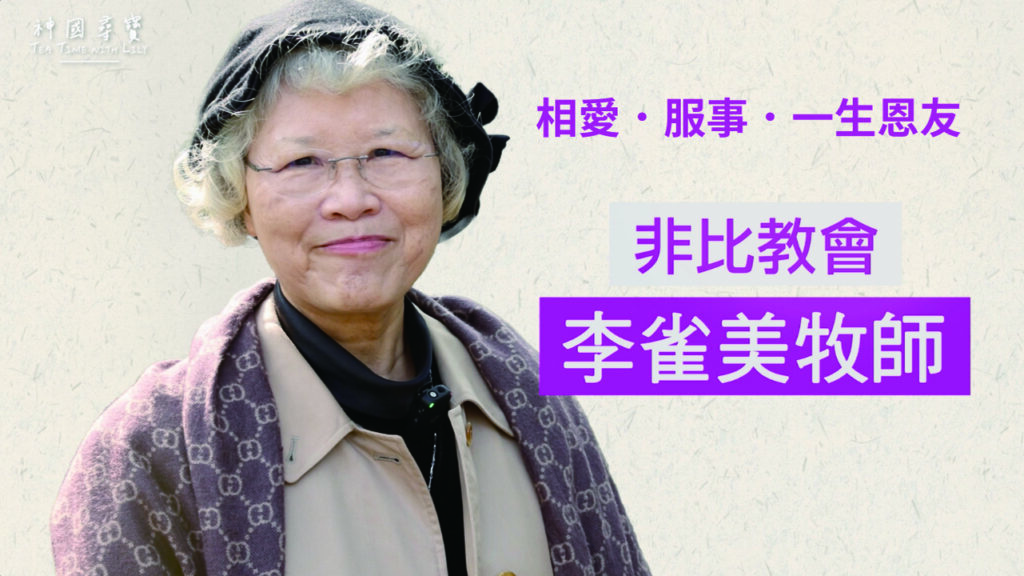
Rev. Chuemay Li is the senior pastor of Pheobe Church, a Quaker congregation in Taiwan, and a longtime supporter of the Kingdom Resources for Christ Association. After the passing of her husband, Rev. Cheng-Long Li, she continued not only pastoring the church but also took on the ministry of serving the poor through the Christian Grace and Love Association. In this exclusive interview with our founder, Lily Kao, in Beitou, Taiwan, we invite you to discover: What life experiences have shaped who she is today? What core convictions drive her in ministry? Listen as this faithful pastor offers a hymn of praise to God—through her life.
A “Free Person” in Christ
Lily: Before coming to faith, you were already known as a “good person” who found joy in helping others. Could you share how becoming a believer has changed what it means to be a “good person”?
Pastor Chuemay: Before I became a believer, I was determined to live in a way that honored my conscience and benefited society. When I wrote, I aimed to convey love through my words. But was my conscience truly good? Who can truly define what is good or bad?
In the Bible, there are no “good people” or “bad people” — only sinners and the righteous. After believing in Jesus, my standard became what is written in Psalm 86:11: “Teach me Your way, O Lord, that I may walk in Your truth; give me an undivided heart to fear Your name.”
To fear the Lord does not mean to be scared when we see Him; rather, it means to live with righteousness and justice as our foundation, while delighting in His steadfast love.
Back in the days when I worshipped idols, I lived in constant fear—afraid that if I did something wrong, I would bring a curse upon myself or lose my family’s possessions. There was no real peace, only anxiety and sorrow. But when I came to believe in Jesus and turned my eyes to God, I saw in Christ the orderly love of God. The fear vanished, and I found true freedom. At first, God's righteousness seemed like a restriction, a loss of freedom. But now, within His righteousness and love, I experience the joy of true freedom in Him.
Do good people and good deeds always help society grow? Not necessarily. Take helping the homeless, for example—giving handouts isn't always truly helpful. Unlimited giving can actually increase their dependency and appetite for begging. Real help means guiding them out of a marginalized state and supporting them toward independence and self-sufficiency. That is genuine help.
Lily: You are an outstanding children’s author, and your husband, Pastor John-Lee Cheng-Long, was a distinguished architect. Were you both strong-willed individuals? How did you maintain a balanced relationship in your marriage? And how did you make major decisions as a family?
Pastor Chuemayi: Married life is like dancing the waltz—when one steps forward, the other steps back; then you switch. It’s in this rhythm of advancing and yielding that true grace emerges. My husband did have a stubborn personality, but he also had a very gentle side.
One night, he didn’t come home and didn’t call to let me know. I was filled with fear and worry, unable to sleep the entire night. It wasn’t until the next day around noon that he finally returned. It turned out he had seen an elderly woman who was sick, so he bought her a meal and took her to see a doctor. After bringing her back to her place, he stayed by her doorstep all night to watch over her, and only after preparing lunch for her the next day did he come home.
Through our life together, I learned that while we must never compromise on truth and what is right, it’s important to avoid unnecessary conflict—discuss things patiently and communicate gently. He also gave me a lot of freedom and trusted me completely when it came to financial matters. Mutual respect and reliance were what sustained our marriage.
Cheng-Long was an architect with a substantial income. He wanted to open a clinic to help the poor and was deeply committed to social activism—determined to fight for freedom and give a voice to the people. He was worried that such pursuits might frighten or endanger his family, and he didn’t want to have any burdens holding him back. So when he told me he didn’t want children, I accepted it.
Later on, Cheng-Long began serving at the Christian Homeless Friendship Center, reaching out to impoverished families and the homeless. He hoped to support them in a way that would prevent others from exploiting or inciting them to become a source of social unrest. His vision was “saving the nation through the gospel”—placing the priority on sharing the gospel, with poverty relief as a supporting mission.
The quality of a caring heart
Lily: From what I’ve observed, you have a remarkable ability to care for others—not only in your ministry, but also in how you treat those around you. How did you develop this quality?
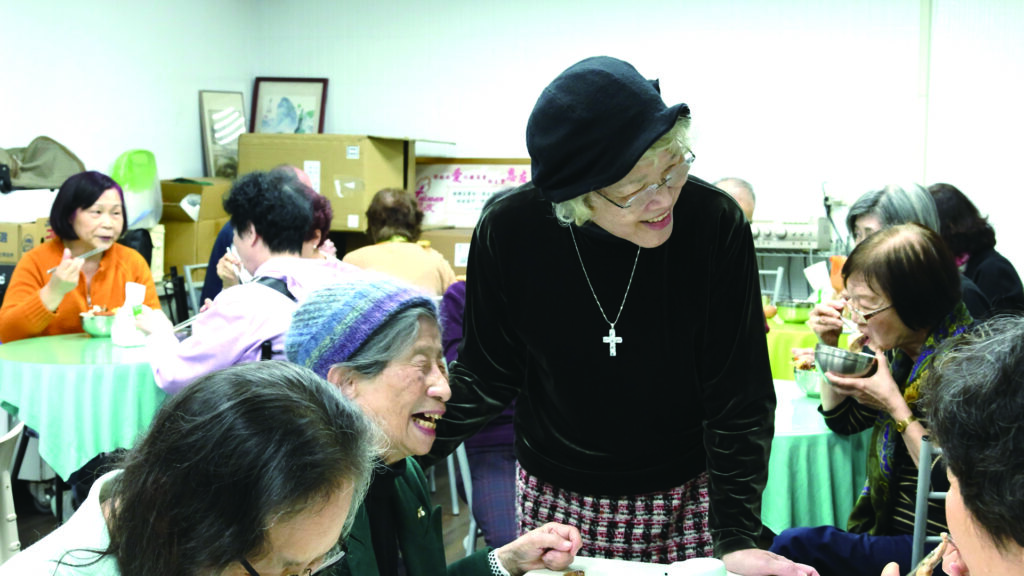
Pastor Chuemay: It mainly comes down to family upbringing. I learned how to care for others from my mother and from being cared for by my older sister. My mother came from a well-off family that employed farmhands and housemaids. Ever since she was young, she was taught by her elders that if she saw beggars, wanderers, or lonely people passing by—no matter how late it was—she should invite them in and offer them a hot, filling meal. The next morning, she would also prepare food for them to take with them on their way.
Ever since I was little, I watched my mother cook two meals every morning—the first was for those who had no breakfast to eat, and the second was for our family. From her, I learned that we shouldn't only show hospitality to the vulnerable, but to everyone God brings into our lives. Even though my father passed away when I was very young, my mother continued to show compassion and help others. She actually lived a joyful and long life.
I was about seven years old when my father passed away, so I have very few memories of him. My mother told me that he was a structural architect and a student of the direct disciple of Yoichi Hatta—the civil engineer who, during the Japanese rule of Taiwan, designed the Chianan Irrigation System and built the Wushantou Reservoir. I admired him deeply.
At my father’s funeral, I asked my mother, “Why doesn’t Daddy, who’s lying in the coffin, come home?” With teary eyes, she smiled gently and said, “Daddy has died, so he can’t come home anymore.” She added, “If people don’t take good care of their bodies, they get sick.” She explained it in words I could understand, which helped me not to fear death—and inspired me to pursue a path in medicine.
Lily: But you majored in Chinese literature in college and later went to Japan to study children's literature. So how did your early aspiration to study medicine eventually shift to literature?
Pastor Chuemayi: My Chinese literature teacher in senior high school was a very graceful woman—she was actually a Manchu princess. She told us not to think that only studying medicine could heal people; healing the heart is just as important. Literature, she said, has the power to heal the soul. When the heart is well, the body often follows.
After taking the college entrance exams, I tried writing a children’s book titled The Mischievous Little Brother Mouse, and it won first prize in the 6th Hong Chienchuan Children’s Literature Award. After that, I began writing novels for young readers.
A Christian professor in college, Professor Shih Chang-Hua, told me that children’s education is a broad field, and it includes children’s literature—especially picture books. Stories like Andersen’s fairy tales or Aesop’s fables offer young readers a wealth of wisdom. So she encouraged me to pursue further studies abroad in children’s literature and picture books.
Once, I came across a passage by historian Arnold J. Toynbee, who wrote that reading history brings wisdom—through studying history, one can catch a glimpse of life and death, and even gain insight into the direction of the future. That sparked my interest in history. While I was studying children’s literature at the University of Tokyo, one of my professors noticed the breadth of my interests and encouraged me to apply to the Institute of Historical and Philosophical Studies.
Lily: Could you share your thoughts on the importance you place on humanistic care?
Pastor Chuemay: From Genesis to Revelation, God has always desired for people to enjoy Him, experience Him, and bear witness to Him. This is God's wisdom—He wants us to have times of rest.
Taiwan is actively developing its leisure and tourism industry, with a particular emphasis on culture and history. For example, here in Beitou District, Taipei City—where today’s interview is taking place—you’ll find not only beautiful natural scenery with mountains, rivers, and trees, and a famous hot spring area, but also museums and libraries that are well worth visiting, both for their architecture and collections. I often come here for walks and to breathe in the fresh air.
I believe that without a sense of humanistic cultivation, life can easily become nothing more than the stench of alcohol and the lure of money. My husband’s profession was dedicated to preserving cultural industries and architecture. In the past, he spent many years studying and preserving temple culture. After coming to faith, he turned his focus to researching Taiwanese history, especially aspects connected to the outdoors.
Buildings may not speak, but their external and internal structures tell stories and connect us to history. My husband and I often drove around to visit historical and folk architecture, hoping to find ways to connect them with Christian culture.
To honor others with five-star-level service
Lily: You are currently involved in supporting the Homeless Friendship Foundation, where you reach out to and serve those considered the lowest in society. At the same time, you are also someone who values refinement and taste. Could you share how you balance these two aspects of your life?
Pastor Chuemay: I enjoy the goodness and provision that God gives. Before indulging in good food or drink, I set a budget—whatever I enjoy, I also give in proportion. I believe that the freedom we have in Christ means trusting that it is God who gives and God who takes away, so I do not fear running out of money. As long as my life is pleasing to God and there are no breaches in my spiritual walk, I can peacefully submit to whatever He allows to happen.
My lifestyle pursues precision, refinement, and vibrancy—living this way leads to a truly fulfilling life. I also carry this conviction into my ministry.
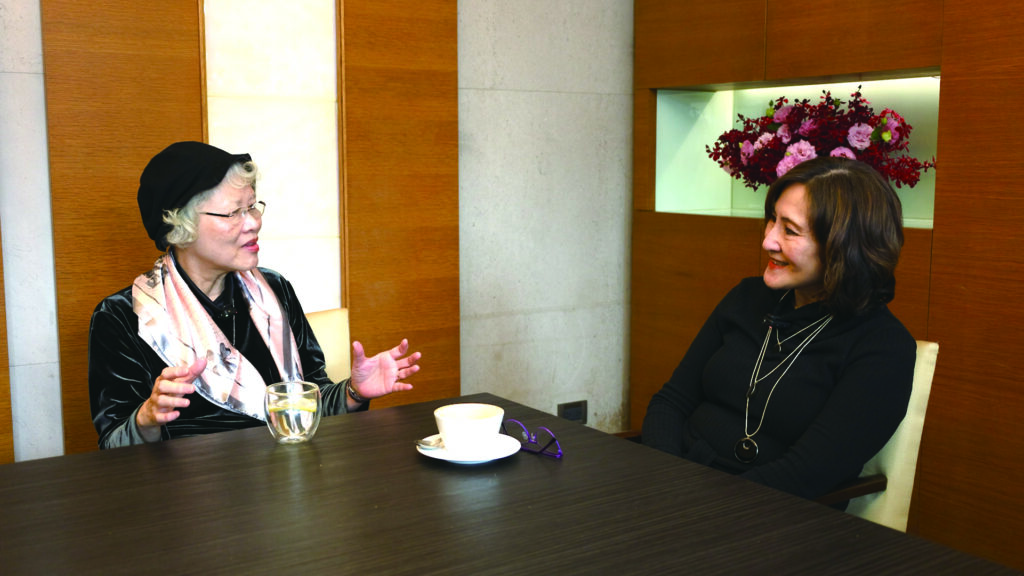
My husband, Cheng-Long, believed that those who serve should dress in a way that matches the people they’re serving—as if bending down to meet them where they are. But I see it differently. Even a splendidly dressed king can humble himself to serve others.
God is a God of abundance, not of poverty. If we are dressed in rags, I don’t believe we can truly draw others into service, nor can those we serve see the richness of God through us. Because of God’s abundance, we have the freedom to balance both giving and enjoying. I believe God delights in seeing us enjoy life. This is not prosperity theology or blind optimism—it’s about understanding that we must take good care of ourselves in order to serve long-term, and to serve with excellence that goes beyond the ordinary.
When people donate to the Homeless Friendship Center, we use the funds with simplicity and frugality. But when the budget allows, I tell the coworkers in charge: someone wants to honor you—go stay at a nice hotel for three days and two nights, so you can have the opportunity to experience enjoyment. I often say: if you’ve never tasted a full imperial banquet, you won’t be able to prepare one to serve others; if you’ve never stayed in a five-star hotel, you won’t know how to serve others with that same level of cleanliness and excellence.
Holding firmly to this belief, we begin by taking everyone who comes to the Homeless Friendship Center to shower first. By helping them clean and care for their bodies, we take the first step in gradually raising the living standards of our homeless and impoverished friends.
When it’s time to serve, serve with all your heart and strength; when it’s time to enjoy, enjoy fully in the Lord. After Pastor Cheng-Long passed away, I continued to encourage our coworkers with this mindset. Over time, their outlook and demeanor changed—they now serve those who come to the Homeless Friendship Center with greater humility. And as a result, the homeless themselves have begun to shift their attitudes toward life.
I don’t raise funds for the sake of personal enjoyment—everything I have is by God’s grace. As it says in Genesis 33:11, “God has been gracious to me and I have all I need.”
Lily: I completely agree! Your philosophy aligns perfectly with KRC’s vision. Many Christians forget that we are in a Father-child relationship with God. If we live with a beggar’s spirit, we will have nothing to give. “Love your neighbor as yourself”—but if you don’t know how to love yourself, how can you possibly offer the best to others?
Pastor Chuemayi: Speaking of loving others as yourself—many of the homeless have ended up in deeper poverty because they’ve given up on themselves. So we gently teach them how to care for themselves. With God’s presence and God’s glory in their lives, they are called to live a life that reflects His glory. This isn’t about flaunting wealth—it’s about guiding them toward a clean and orderly lifestyle, teaching them manners in eating, drinking, and interacting with others. From learning to love themselves, they begin to learn how to love others.
Turn the memorial service into an evangelistic gathering.
ChatGPT said: Lily: You seem to have a special burden for memorial services—you help families write obituaries and even publish memorial collections for the departed. What is the motivation and driving force behind this ministry?
Pastor Chuemay: The Bible teaches us to rejoice with those who rejoice and weep with those who weep. Ecclesiastes also says, “The heart of the wise is in the house of mourning.”
While accompanying grieving families, I’ve found that in facing life and death, people often begin to reflect on the meaning of life. When there are unsaved family members, a memorial service becomes an opportunity to share the gospel. That’s why our whole church treats memorial services as evangelistic gatherings. The choir, service leaders, and administrative staff all take part in the preparations—designing beautiful service programs and compiling memorial booklets with care.
A memorial service lasts only a few hours, and once it’s over, it’s gone. But when family members and church friends write short reflections or tributes, we can compile them into a booklet—allowing words to become an outlet for grief and remembrance. Later, when they miss their loved one, they can take it out and read it again.
I once compiled a memorial booklet for my mother. Twenty years after her passing, a friend called me and said that after reading that booklet, she was deeply moved and wanted to believe in Christ and be baptized. A memorial collection can also preserve family traditions, memories, and reflections—allowing the faith of those who came before us to continue. This, too, is a form of passing down the faith.
The Lord Jesus Christ said, “Go and make disciples of all nations.” That means we must be willing to “go” at all times—even in moments of sorrow. When an elder in our church passed away, I stood beside him, gently placing my hand on his forehead and praying, as if he were my own family. His unbelieving younger brother was astonished and asked, “Even our own family members wouldn’t dare to do that—why aren’t you afraid?” Many who do not believe in Christ are bound by taboos and superstitions around death. I simply told him, “We believe that the Lord gives peace.” Jesus Christ has already conquered death, and He gives us His love and grace.
A vessel of salvation, a base for the culture of the Kingdom of Heaven.
Lily: Your conversations always seem to revolve around ministry and the church—it’s clear you genuinely enjoy serving. Do you have any plans for retirement?
Pastor Chuemay: For me, life and work are not burdens. I approach my work with a continual attitude of resting in the Lord. It’s just as Jesus said: “Come to Me, all you who labor and are heavy laden, and I will give you rest... For My yoke is easy and My burden is light.”
Jesus ascended to heaven at the age of 33, so our mindset can always remain 33. I often pray, “Lord, may I be 33 forever!” It’s not that I’m unwilling to retire—it’s more of a commitment, a burden I carry in my heart.
When I was sent by the Quaker church to plant Poebe Church, it was both a commitment and a burden. Pastor Cheng Hsin-Chiao said to us, “Though you are few when you go out, and your beginnings are small, in the end you will flourish greatly.” After I was ordained in 2013, I embraced a twelve-character motto: “Commitment and responsibility, calling and grace, love and the flock.”
While I hold this position, I treat it with honor and reverence. Now, it’s time to raise up younger, more capable pastors to serve at Poebe Church. I believe what the Bible says about bearing good fruit—thirtyfold, sixtyfold, and even a thousandfold. Truly, God is a wondrous and generous giver of blessings!
I was once part of Tzu Chi, which describes itself as a vessel for universal salvation. I believe—and I pray—that in Christ Jesus, there is a Noah’s Ark prepared to save Taiwan. I believe this ark will become a base for the culture of the Kingdom of Heaven in Taiwan, as well as a center for the transformation and renewal of Taiwan’s cultural heritage and historical sites.
Looking back on the past and looking ahead to the future, I continue to live with a heart of reverence, constantly reflecting, worshiping, and serving God with joy. To me, life is a hymn of praise. I hope that on the day I see God, I can say to Him, “Lord, I have not failed the calling You entrusted to me.”


Further reading:
- Regarding the testimonies of how Pastor Cheng-Long Li and Pastor Chuemay Li came to faith, please refer tohttps://good119.org/story/colleague/2004-8?language_content_entity=zh-hant.
- Regarding Pastor Que‑Mei Lee’s use of memorial services as a channel for sharing the gospel, please read the article in Issue 53 of this publication titled “Bringing Hope into the Lost.” (https://e-krc.org/article/bring-hope-to-loss).
Issue 79 - Turbulence - Letter from the Editor
親愛的讀者們, 2007 年,金・克萊門特(Kim Clement)曾預言唐納・川普(Do…Old Friends
感謝社群媒體強大的搜尋和連結功能,在與老同學失聯許多許多年後,陸續「被找到」。2025年初…Walking Together in Hope — On the 20th Anniversary of the South Asia Tsunami and the 14th Anniversary of the 3.11 Japan Earthquake and Tsunami
楔子 2004年12月26日,聖誕剛過,清晨的陽光和煦地撒在印度洋的海面上,閃爍著粼粼的波…