

People in the Mission Field — Profile Feature
Looking back on these years in the harvest field, the author and her husband experienced a journey of grace. They look forward to continuing to walk with the Lord and seeing the harvest reaped.
"How can there be free salvation?"
When I first arrived at the Muslim harvest field, as a novice missionary, the first challenge I set for myself was to invite Muslim friends to my home for tea and meals within three months. The first hurdle to pass was gaining their trust and letting them know our kitchen was "halal."
My definition of "friend" is: mutual exchange, being able to have tea and meals at each other's homes. However, for Hui Muslims, they would never casually have tea at a Han Chinese person's home, let alone eat there, because they don't trust that a Han Chinese household's kitchen would be halal.
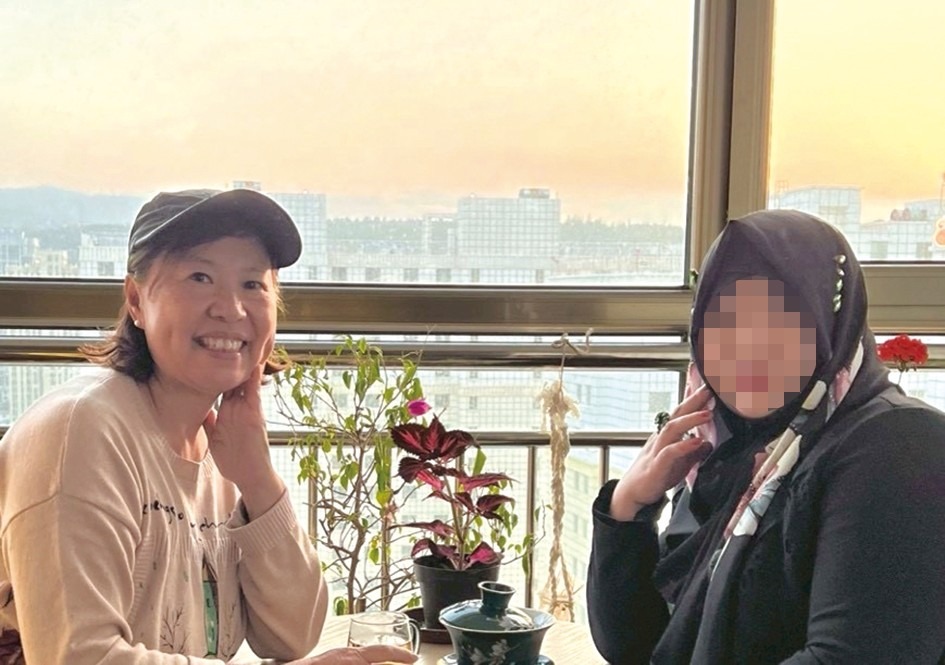
We arrived at the harvest field in early October 2022. During the semi-lockdown period of the pandemic, I met Mali while waiting in line to buy groceries—a widow in her forties, warm and forthright, with two children.
She was the first to teach me to say "salaam" (Arabic meaning peace); teach me to drink covered bowl tea; the first to invite me to her home for a meal; the first local Muslim friend to come to our home for a meal. I was Mali's first non-Muslim foreign friend and also her first Christian friend.
As a devout Muslim, Mali didn't necessarily have a clear understanding of the Quran and its teachings. Although she only had an elementary school education, her common knowledge about life was no less than mine. Mali said her grandfather had been an imam who once traveled on foot and by camel, spending over a year to reach Mecca thousands of miles away for pilgrimage.
Cross-cultural workers in a new environment immediately face the challenge of "credibility." Why should local friends listen to us or be friends with us? How much do we understand about the local language, culture, situation, or even their difficulties?
The field team leader reminded us from the start: approach locals with a learner's attitude; when you're willing to learn from them, they may be willing to learn from you in the future. "Listen more, then ask questions back"—know yourself and know others, don't rush to "preach," spend time with locals, and become a contextualized "insider."
Mali proactively invited my husband and me to eat at her home. After a few times, I said: "If you consider me a good friend, there should be reciprocity—come eat at my home." Mali thought this made sense and accepted the invitation, with the condition that she would prepare the food.
My friendship with Mali developed quickly. On one hand, Mali had a proactive personality; on the other hand, I actively and deliberately learned, listened more, asked more, was genuinely curious about her culture and faith, tried to resonate with her, and even worked hard to participate in her life. For example, tutoring her children with homework; accompanying her to buy materials to repair the ceiling and painting together with her; accompanying her to visit her sick mother. She even brought me to her cousin's wedding and proudly introduced me to relatives and friends.
Each time we ate together, we naturally discussed each other's faith. I shared my testimony and heard Mali's firm declaration: "Born a Muslim, die a Muslim." We agreed that since we both valued faith, we must discuss faith, asking each other one faith-related question at each meeting.
"The imam says your triune God is the Father, the Son, and the Holy Mother?"
"Was it really Isa (Jesus) who was nailed to the cross?"
"How can there be free salvation? We're all sinners. Others cannot and should not bear our sins—we can only bear the judgment ourselves!"
This was Mali's understanding of the Christian faith. She had never read the Bible, never had contact with Christians, and never heard the truth. I tried to share some truth and answer questions at each meeting, but knew this wasn't something that could be accomplished in a short time.
The Identity of a Gospel Messenger
Through knowing Mali, I came to understand and adapt to the local culture. Once we arranged to meet, and Mali said she'd meet me downstairs at my place in about 15 minutes. I deliberately went down 5 minutes early to show I valued her. I ended up waiting alone in the freezing zero-degree winter for 40 minutes, and she didn't answer her phone either. When we met, I asked why she was so late. She casually replied that she had just been at prayer. She also said that when locals say "coming right away," they might arrive hours later.
From then on, when meeting local friends, I no longer used my previous concept of punctuality, but followed local customs. When attending weddings, if they say 11:00, arriving after 12:00 still isn't considered late!
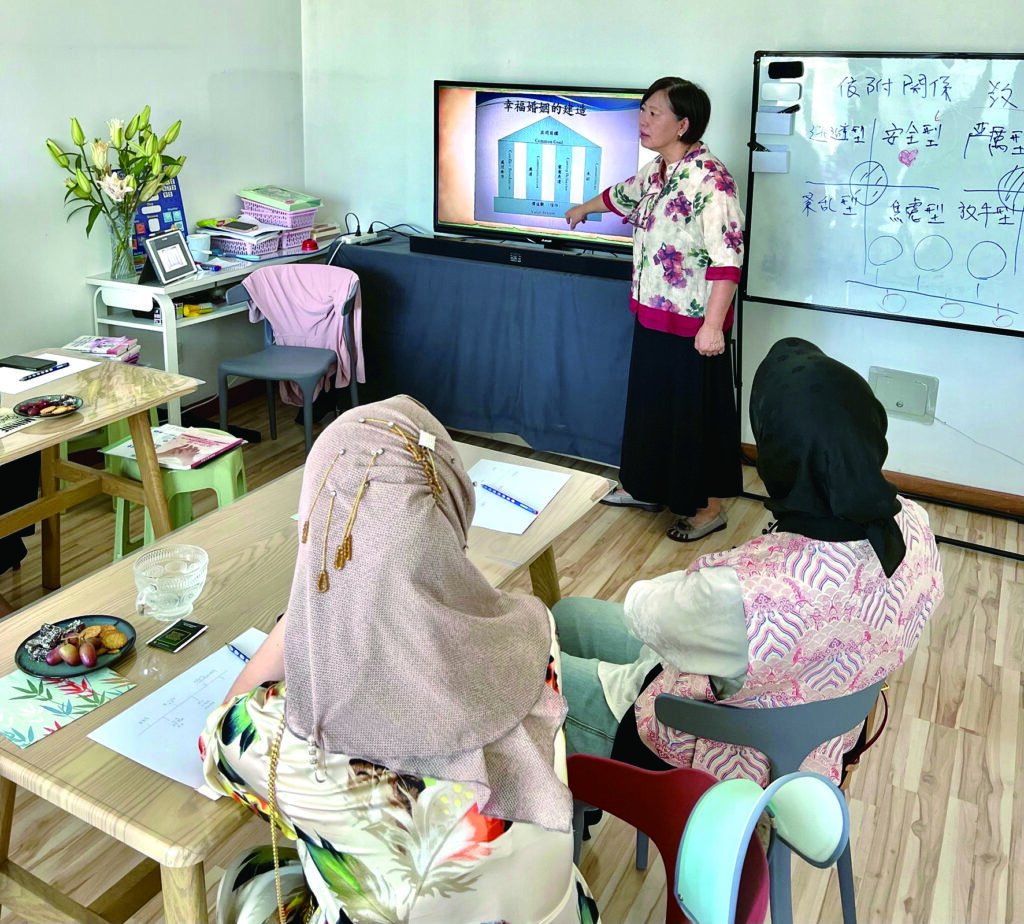
Friendship is indeed important, and following local customs is necessary, but after all, we are still "missionaries"! We also need to "spread the gospel"!
"We're not here to make friends, nor are we here to debate faith with them... But to make disciples. Our attitude is one of love; we're here to share good news. Our identity is as messengers of the gospel!" The words of Roland Mullery, a senior German cross-cultural missionary, in his book *The Messenger, the Message, & the Community* helped me greatly. He doesn't advocate friendship-style evangelism or debate-style evangelism, but Bible teacher-style evangelism, because what a teacher says carries authority and power.
"Of course, never think you can make someone become a Christian—only the Holy Spirit can guide." Muller believes that "mission is not just proclaiming truth, but dialoguing with culture. You must understand the worldview of the other culture to truly convey the gospel."
This was my profound realization in my friendship with Mali.
"How can one inherit eternal life?"
My enthusiasm for "spreading the gospel" gradually declined—not because I didn't know what to say, but to whom should I say it? After my husband unexpectedly became ill in the second year, we had to relocate to a new place. The Muslims here weren't as concentrated as before; many were hidden, even secular Muslims.
I told myself: Time in the harvest field is limited, don't beat around the bush, get to spiritual topics quickly! You don't know if there will be another opportunity. I also educated myself: Follow the Holy Spirit's leading, starting with natural and sincere life testimony; it's not about performance or verbal skill, but acting according to the situation and the relationship.
1 Peter's teaching—"Always be prepared to give an answer to everyone who asks you to give the reason for the hope that you have. But do this with gentleness and respect"—constantly reminded me.
A few months after settling in the new place, I met Xiao Li, an intellectual who loved to read.
He was the parent of a student in our free English class, a secularized Hui person. He lived in the same residential community as us, and after eating together twice, he agreed to study the Bible together.
Perhaps he was just curious about the Christian faith, or perhaps the younger generation wasn't bound by Islam and family constraints. My husband and I didn't use the contextualized approach we had before, but directly used scripture—from God's creation, human fall, Christ's redemption, to eternal new life—trying as much as possible to use questions and discussion. Unexpectedly, Xiao Li quickly accepted the problem of sin and nodded affirmatively that he was willing to accept eternal life. However, when asked if he was willing to accept Jesus as Savior, he shook his head wordlessly with a troubled expression, like the rich young ruler in the gospels seeking eternal life.
I guessed what troubled Xiao Li might be his rationalism, philosophical thinking, and the knowledge he took pride in.
Fortunately, after a few weeks, we continued to contact him and gave him a Bible, saying: "'Eternal life' is a big topic. Let's talk about other topics first." He agreed and scheduled another time to study the Bible together.
Cross-cultural mission is indeed not easy—one must overcome differences in language, culture, climate, food, customs, and more. One must also step out of the comfort zone: going out to meet friends many times on cold winter nights, going out for prayer walks on hot summer afternoons. The Lord Jesus once left the 99 sheep to search for the one that was lost. Haven't we crossed oceans to come among unreached peoples precisely for this?
Reflecting again, my husband and I are quite likely the only two Christian friends Mali, Xiao Li, and many Muslim friends will have in their entire lives. When the rich young ruler left sorrowfully, Jesus's words "What is impossible with man is possible with God" continued to echo in my heart like a bell.
Xiao Bai was born in Taiwan in the 1960s and established her family and career in New Jersey, USA. An early participant in KRC's writing camp, she has been a long-term contributing writer for *Kingdom of God* magazine. A graduate of China Evangelical Seminary North America, she and her husband both retired early at age 56 and served as missionaries in a Muslim region of East Asia for nearly four years. They currently reside in East Asia. Her life motto: "Action is the answer."