
To succeed, always stay in the truth
Translated by Lin Yu
[Successful Kingdom Business] Series 6

Where do lies come from?
To bring the "Kingdom of God" into business, there must be a paradigm shift in order to see the Kingdom at work in our lives. You must bring who you are and all you have into the Kingdom; live out love and obedience, honoring God and others; discover the Kingdom mission for both yourself and your business; and steward things according to God’s way. This article invites you to see the importance of biblical truth through the lens of the Kingdom—because if we do not remain in truth, we cannot remain in Jesus Christ.
What I learned from my own Irish family is this: every story should be embellished. You should know that the word “blarney,” which means excessive or insincere praise and the embellishment of facts, originates from Ireland. In my family, this was never seen as a problem—certainly not considered lying.
Dad used to say that when he was a kid, he had to walk uphill five miles in the snow—both ways—to get to school. I later found out his house was only four blocks from the school. Yes, it was uphill, but only one way. Interestingly, the law actually permits salespeople to embellish descriptions and claims about a product, as long as they’re exaggerated enough that “no reasonable person would believe them to be true.” This means that if a company overstates a product or service just a little, it’s considered fraud—but if the exaggeration is blatantly dishonest, it can be acceptable.
From my experience, asking Christian business leaders to uphold truth and speak honestly is one of the greatest challenges to having an intimate relationship with the Lord Jesus. Lies and deception come from Satan; he is the father of lies. If we live in lies and deceit, we cannot remain in Christ. Christians in the business world must recognize that we cannot live in truth and lies at the same time.
In a previous article (see Issue 64), I mentioned that my former boss, Witt, told so many lies that he eventually believed them himself. This highlights one of the dangers of lying: when people hear the same lie enough times, they start to believe it’s true. This is also the essence of Nazi Germany’s “Goebbels effect” or the “big lie” tactic.
Witt often encouraged employees to lie about previous contracts, finances, employee résumés, or anything that might help secure the next deal. He didn’t write proposals or marketing strategies himself, but he directed his subordinates to fabricate facts. That way, if anything went wrong later, he could claim ignorance.
Witt never thought he was lying or falsifying; he even believed that, to some extent, the lies he told were true. He had lost his sensitivity to distinguish between truth and falsehood. Even when he knew he was deviating from the facts, he rationalized that everyone did the same and that he was just trying to do good business.
He selfishly viewed everything from his own perspective, never considering how his lies might affect others’ businesses or lives. Those who lie rarely see things from others’ viewpoints. The lies led Witt’s company to decline year after year, ultimately resulting in its closure.

What is truth?
"What is truth?" This was the profound question posed by Pilate during Jesus’ trial before the governor’s court. It came after Jesus declared that He came into the world “to bear witness to the truth,” and said, “Everyone who belongs to the truth listens to my voice” (see John 18:37-38). This question was asked by the learned Roman governor.
As a local governor educated in Greek and Roman traditions, Pilate defined life through philosophy and knowledge. To him, truth was merely a concept based on personal philosophy, knowledge, and experience—always open to debate; it could be an idea, a state, a fact, or a belief. Pilate could not comprehend that truth is a person. Even today, many fail to realize that truth is not subjective, has no gray area, and is not merely an option but a person—Jesus Christ. Many claim to know the truth, but only one declares Himself to be the only “Truth” (see John 14:6).
Falsehood should be obvious, yet lies and deceit have caused many to lose sight of what is real. Instead, truth and falsehood have become hard to distinguish, with few absolutes of right and wrong. From the perspective of fallen humanity, Pilate’s question is entirely reasonable.
What exactly is “truth”? In the Bible, the original Greek word alēthia means “not hidden,” “cannot be ignored,” and “not an illusion”—in other words, what we call “real” or “genuine.” The Greek opposite of truth, pseudos, means falsehood or lies. In English, words beginning with “pseudo” refer to something counterfeit or not authentic.
The Greek word apataō means to deceive, to mislead, or to create a false appearance. In the Bible, deception is equated with lying—there is no distinction between the two. If someone provides information with the intent to mislead others, that is a lie.
Deception often appears in the form of partial truths. It involves telling facts but only revealing part of the whole story to conceal the truth, creating a false impression that people believe to be true. This too is falsehood.
Neil, of Irish descent, is the owner of a technology services company and can tell stories with great exaggeration, fully embodying the Irish flair for embellishment. He is also very shrewd. From him, I learned the importance of ensuring that the person signing a contract actually has the authority to do so.
Whenever Neil conducts a deal that he might later regret, he instructs a vice president who does not have the authority to represent the company to sign the contract. This way, if necessary, they can back out. He does not consider this deception; after all, it's the other party's responsibility to do their homework before signing. He creates the illusion that the person signing the contract has the authority to do so.
Knowing Neil’s trick, at the very start of negotiating a contract worth over 70 million dollars, I required the other party to provide proof that they had the authority to represent the company in signing the contract.
After failing to find any document proving his authority to sign on behalf of the company, he said to me, "Mr. Ai, I’ve signed so many contracts with government agencies and contractors, and no one has ever asked me to provide proof that I have the authority to sign." I told him, "After dealing with Neil, anyone would be this cautious."
Eventually, Neil’s actions caught up with him. As Jesus said, “There is nothing hidden that will not be revealed.”
Why do we lie?
To break the cycle of falsehood, we must understand the reasons behind lying. Fear and deception are the driving forces behind nearly all sin—falsehood is one such example.
Let’s take a look at the reasons Christians deceive in the business world.
Marketing:We fear losing business to competitors, so we exaggerate our qualifications and experience to meet customer expectations. But in truth, every company has its strengths. Walmart became the world’s largest retailer not by aiming to be the best, but by offering the lowest prices. No one goes to Walmart looking for the highest quality—they go to find the cheapest products. We need to understand how to honestly present both our strengths and weaknesses, trusting that God will guide us and grant us the business He intends through our genuine strengths.
In fact, we can learn to explain things to customers in a different way: “We may not meet every single one of the criteria you're looking for, but let me tell you why hiring us is still the wisest choice.”
Loans:We fear that if we report the company’s actual size truthfully, we won’t get financing. So we fill in projected rather than actual revenue figures. We need to understand that while we need loans from the bank, the bank also needs our business. Perfect loan applicants are very rare. As long as God permits, without falsifying, He will pave the way for us to obtain funding.
Paying Taxes:Taxes are generally calculated based on the company’s revenue and number of employees. We try to make the company appear smaller because we fear not having enough funds to pay both taxes and salaries. As a result, we keep two sets of books: one for the tax authorities, and another for the bank and shareholders. If all revenue and profit belong to the Lord, and all expenses also belong to Him, then trusting in God’s provision means He will take care of the taxes that need to be paid.
Employees:Lying in business is not always related to finances; it can also stem from pride or embarrassment. When writing performance reviews for outstanding employees, people tend to exaggerate their achievements and downplay their weaknesses; the opposite is true for underperforming employees. We take pride in ourselves and the company, and fear that employee mistakes will damage our reputation, so we shift all the blame onto them.
Eli is the owner of a small management consulting company who faced a challenge that many small business owners secretly wish for — explosive growth in sales. Business owners also know that a significant increase in new business can negatively impact the company’s cash flow. Eli found himself in a situation with plenty of business but a shortage of cash.
Seeing that he couldn’t even pay the salaries, Eli applied for several lines of credit at the bank. However, the approval took longer than expected, forcing him to delay the payroll. Although he could have concealed the situation by various means, he chose the path of honesty. Two days before payday, he explained the situation to the entire company. He apologized repeatedly, took full responsibility, and announced that this week’s payroll would be delayed by one day. He also offered financial assistance to any employees affected and promised to take measures to prevent such a situation from happening again.
During that period, no employee complained about the delayed payroll, indicating that they understood the situation and trusted their boss’s sincerity. Since then, Eli never faced similar difficulties again, nor did he have to bear the heavy burden of being exposed for lying. As Jesus promised, His yoke is easy, and His burden is light; if we accept the truth, the “truth” will set us free.

To abide in the truth is to abide in Him.
Jesus wants us to abide in Him, and He abides in us; Jesus is "the Truth," and we should also be in the truth. When we depart from reality, we are no longer in Him. If born-again Christians think they can still be in the Lord while lying, that is self-deception. We should repent in order to always abide in the Lord, and when facing challenges, we should let go of falsehood and embrace truth.
The Holy Spirit is also called the "Spirit of Truth," who leads us into all truth. The Holy Spirit is to be our Helper, Guide, and Comforter. He guides us daily and reminds us of Jesus’ teachings. John 16:13 says:“When the Spirit of Truth comes,He will guide you to understand (the original text says “enter into”)all the truth; becauseHe does not speak on His own authority, but tells what He hears, and will declare to you the things that are to come.”們。」
Since the Holy Spirit guides us into the truth, if we leave reality and speak falsehoods, we are not being led by the Spirit but by the spirit of the father of lies. We are children of the Most High King, walking in truth and abiding in Him, as Romans 8:14 says:“For all who are led by the Spirit of God are children of God.”
Does honesty cause you to lose business, freedom, or family? Of course! We can see that in many countries, including the United States, the broader environment forces Christians to choose between their faith and the values and justice of the world. Jesus said not to fear those who kill the body but cannot kill the soul; even when on trial, the Holy Spirit will guide us in what to say. There will be temporary losses on earth, but we have already received eternal life. He has overcome the world!
Shamefully, even as a Christian, I have lied many times in business. Avoiding lies and falsehoods and walking in the truth is truly not easy. I deeply understand that the reasons behind lying and deceit almost always stem from fear—fear of people, fear of failure, fear of lacking, fear of embarrassment, fear that past lies will be exposed, fear of this and that... The enemy uses our lies to control us, preventing us from living the abundant life Jesus promised. Satan points to a shortcut to success through falsehood, but in the end, it leads to failure.
Once, I had the opportunity to become a major contractor for a Fortune 500 company. While filling out a thick stack of service agreements, I noticed that they required me to carry several types of large liability insurance policies, and these had to be from highly rated insurance companies. I estimated the annual premium would be about $17,500 USD.
I didn’t manipulate the situation in any way; I simply told them that I didn’t have that insurance, and even if I wanted to get it, it would take some time to arrange. I knew they wanted me to start work immediately, so telling the truth likely meant I would lose this great opportunity. After a long pause, they said, “I’ll get back to you.” In contract negotiations, that usually means the chances aren’t good.
The next day, he replied and asked me to leave the insurance section blank on the agreement and just send him the rest of the completed form. Surprisingly, I ended up becoming the main contractor without needing the insurance they originally required. Over the next three years, they never brought up the insurance again, saving me at least $17,500 annually. When competitors asked how I became the general contractor, I always said, “It was entirely by God’s grace.”
I have also heard many stories of people who were promoted and companies that benefited because they were tempted to falsify qualifications, experience, or assets but chose to tell the truth regardless of the cost. In the end, their honesty was rewarded.
Be brave to live in the truth! There’s no need to create false impressions for yourself or your company. Whether applying for a loan or bidding for a contract, honestly present your revenue and asset shortages, while also highlighting your company’s strengths without exaggerating qualifications or experience. Let the other party know the benefits you can bring to them. Stay in the "truth," and let the Lord help you with what’s beyond your control.
The spirit of fear will continuously tempt us to lie and drift away from the presence of the Lord. Yet, when we remain constantly in Him, His perfect divine love drives out all fear. In the next article, let us explore how to break the chains of fear and learn to courageously and fearlessly walk in the Kingdom’s mission, just as the Lord did.
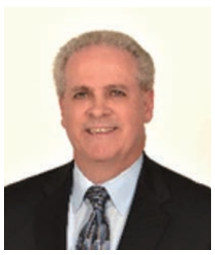
Jeff Ahern,A former naval officer, he has provided management and business process improvement consulting services for Fortune 500 companies and government agencies for over 20 years. He is the author of Kingdom Business Success (Chinese working title: 《成功的天國企業》). As one of the founders of the spiritual consulting firm Sozo Services, he helps business leaders implement Bible-based, Spirit-led solutions to achieve both personal and corporate goals.