
Crime Scene Sketchbook
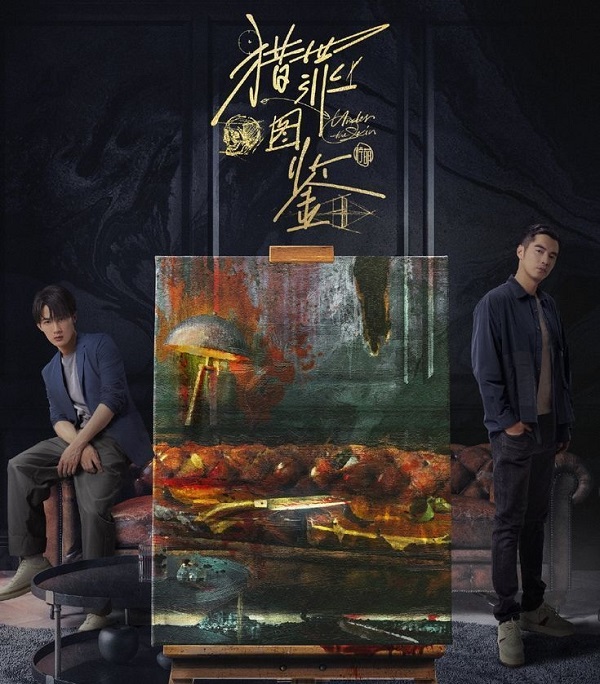
https://weibo.com/7571082223/LijAelxP0, fair use, https://zh.wikipedia.org/w/index.php?curid=7913253
"This painting is The Death of Marat (Marat’s Death), an oil painting created in 1793 by Jacques-Louis David, the founder of the French Neoclassical school. In your hands is his autopsy report. In an era without cameras, the painter’s brush was the only tool to document a scene. They were expected to be faithful to reality and restore the truth. However, in this painting, the artist concealed three lies. Find them within ten minutes..." This was what Professor Shen Yi said to his students during a class at the police academy training ‘portrait artists.’
Getting to Know the Genius Painter
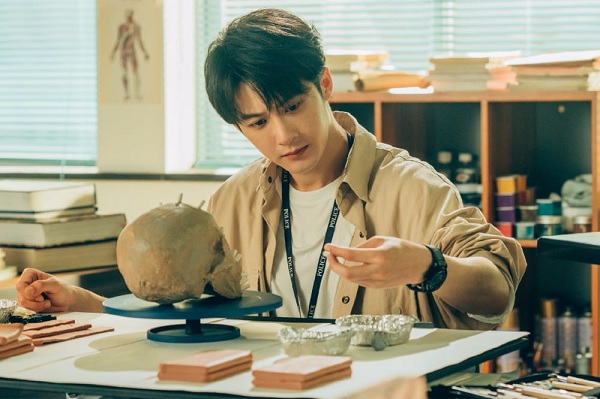
Shen Yi is a genius painter with an extraordinary ability to recognize human facial features, expressions, and forms. During a video call, based on a witness’s vague description of a suspect — “A man, probably in his thirties? Wearing a hat… couldn’t see the top… eyebrows, brow bones, they were high, but the eyebrows weren’t very clear…” — he immediately picked up his pencil and explained to the witness as he drew: “You were crouching and looking back, so you were looking upward… that’s why the man’s face seemed wide, and his eyes looked small — that’s a perspective distortion. If you were looking straight at him, his face would look like this (thin, long, oval-shaped)…” He then quickly sent the sketch from his paper through the video. The head of the criminal investigation team received the updated portrait and immediately sent it to the officers in the field for full-scale pursuit… Case solved!
Shen Yi walked into the precinct office, and as he walked, he began to "read" the information exuded by the people around him. For example—
A criminal walked past him, and he immediately "read" from appearance: history of drug use, hasn't slept for at least twenty hours.
A woman brushed past, and from her profile and back he "sniff-read": green bamboo perfume, a job requiring long hours of standing, just finished a night shift, perfume used to mask the smell of corpses, pressure marks on her face—she is a forensic pathologist.
Shen Yi’s main job is to create portraits of “suspects described by victims or witnesses.” Based on observations and inferences of facial contours, proportions and angles of features, bone structure, eye movement, skin tone of body parts, tone of voice, and so on, he sketches an image closely resembling the person. This serves as a basis for criminal investigators in their searches. Sometimes, those “already judged to be suspects” see the “key portrait,” and after understanding the reasoning of the interrogating officers, are compelled to confess. He is precisely a “criminal investigation sketch artist” from the “criminal investigation mystery drama” — Crime Scene Illustration.
ChatGPT said: Seven years ago, Shen Yi was still a student, sketching on the street when a stranger woman handed him a photo of a three-year-old child and asked him to draw what the child might look like as an adult. He did, but it led to a detective being killed. Five years later, he joined the local police department’s criminal investigation unit as a “composite sketch artist,” paired by his supervisor to work alongside the detective team leader on cases. The tight plot, flickering sketches, and elusive clues reveal hidden truths and untold stories.
In the cases they investigated, watching him sketch and listening to his analysis, I found myself gaining some knowledge, adding fresh insights to my otherwise ordinary life—
Basic Approaches to Observing Portraits
The human face has 36 main bone points, which are inevitably related to each other. Like constellations, these 36 points are the stars; by connecting them, one can deduce the structure of a person's face.
Among all primates, humans have the largest visible sclera (the white of the eyes). Humans were the first to use the visible sclera to express emotions. The size of the visible sclera can convey fear, anger, and sadness. Portrait artists need to capture not just similar faces, but the different emotions expressed.
• Average-looking means that this person's facial features are proportionally balanced, which is very important information for portrait drawing.
Facial expressions: Normal expressions are easy to imitate, but when emotions are intense, the subtle changes in facial muscles are delicate and difficult to replicate. Everyone has unique micro-expressions, which are conveyed through the facial muscles. Unlike animals, humans express nuanced emotions such as joy, anger, sorrow, and happiness through different combinations of facial muscles working together, pulling the skin—especially the muscles around the eyes and mouth.
• Observing the eyes: A person's gaze is involuntarily drawn to things they are familiar with.
• Observing color: Identifying colors is a fundamental skill for an art student. For example, freshly painted nails appear shinier than those painted some time ago, and between the nail polish and the natural nail, there is a tiny gap—this is the trace of nail growth (which became a flaw in a certain suspect's story).
• Disguised skin: Konjac contains a large amount of gelatinous substance. After being treated with alkali, it forms an elastic gel. When combined with gelatin boiled from pig's feet, it can replicate the color and texture of real skin. If boiled thick enough, it can even retain the original skin tone of the animal.
This knowledge provides essential elements for observing people in the future: facial structure, the whites of the eyes, gaze, subtle facial expressions such as joy, anger, sorrow, and happiness, as well as distinctive colors on the body. It is also important to respect those with average appearances, as their facial features are proportionally and evenly distributed. As for “disguised skin,” even if one does not practice disguise, it can still be treated as useful knowledge.
A thought-provoking wake-up call.
A forensic doctor once said: "The dead also have a way of expressing themselves—often, their expression is more trustworthy than that of the living."
It made me ponder deeply: When a person dies, and the head, neck, and limbs all lie completely still—does this kind of "body language" signify total silence, or is it still speaking?
Shen Yi said: Great paintings often capture states that transcend normal human conditions. Therefore, great painters often have the strange habit of going to prisons to sketch death row inmates. Because only there can they depict the most intense human emotions when staring death in the face. We can imagine what kind of expression a person might wear when confronted with death.
It led me to ponder: Indeed, what kind of expression does a person have when facing death? Even those who often proclaim, “I’m not afraid of death,” or “I fear no blades or bullets”—when death is imminent, are they truly unafraid?
Shen Yi said: The faces of murderers often become sinister and terrifying—that's because from the moment they killed someone, they lost their humanity. What remains on their faces is only the ferocity of a beast. You (the death row inmate) can choose to live like a cowering beast in prison, merely surviving. But you can also choose to end the cycle of sin and torment, and reclaim your true nature.
It made me reflect: When a person’s conscience is completely deadened, can they truly choose to end sin and torment and regain their true nature? And can a person’s “true nature” really end sin and torment?
Seeking the soul’s truth
When a person commits crimes against national or societal laws, they inevitably leave flaws in their facial contours, eye movements, tone of voice, as well as the proportions of their features and bone structure, allowing a skilled portrait artist—through precise observation, inference, and depiction—to create an image nearly identical to the individual.
And when a person sins against the truth on the level of the soul, what kind of "image" does that leave behind? Who is the "portrait artist of the soul"?
I pondered for a long time and also prayed. The Holy Spirit allowed me to follow the line of thought below—
The soul is the deepest part of a person. The words spoken, the breath exhaled, the expressions on the face, and the body’s reactions are all closely tied to the emotions within the mind. “Thought” is the earliest and original “cause,” while “emotion” is the “effect” temporarily stored in the heart. The expressions and movements that “leak out” or “burst forth” from the face and body, along with the words and breath “spoken” from the mouth, are a “vivid and living image in motion.” The “image” reflected by the soul is “dynamic.”
Matthew 12:34 says: "For out of the abundance of the heart the mouth speaks."
Since the Holy Spirit dwells within the soul of a Christian, and Romans 8:26 describes howthe Spirit Himself intercedes for us with groanings too deep for words, then the Holy Spirit is the one who is closest to the depths of the soul. Thus, having the Holy Spirit serve as the "portrait artist of the soul" is most fitting and rightful.
When people sin, the Holy Spirit "paints" vivid and living images of their thoughts, emotions, facial expressions, bodily movements, and spoken intentions and tone while in sin. Even the "forensic portrait artist" himself is subject to having his own "soul portrait" drawn by the Holy Spirit and submitted to God the Father for examination.
Tracing the Origin of Good and Evil
The theme song of Crime Sketch describes the vocation and mission of the "forensic portrait artist." As I carefully observe and ponder each word and phrase, I realize the Holy Spirit does the same work with our "soul portraits"—observing, discerning, and revealing.
The lyrics say: “The abyss spreads—who is lost in the darkness? Regret or betrayal—has the answer been buried and forgotten?” The Holy Spirit searches daily in the depths of our souls: Are we lost in darkness? Regret or betrayal in our relationships will not be allowed to remain sealed without an answer.
"In a chaotic world unfolding, black and white, right and wrong, all entangled—no one is spared." This is indeed a portrayal of each person living in this world.
"Let the brush in our hands thread the needle, unraveling the confusion and entanglement of the worldly realm." The Holy Spirit has an even more marvelous brush, threading the needle to unravel the confusion we face in all kinds of relationships.
"The tip of the brush is silent, yet it unveils the false masks of human nature, seeking the soul's truth and tracing the source of good and evil." Although not everyone can hear the Holy Spirit’s voice, He can reveal the false masks of human nature. The Holy Spirit cares more deeply and earnestly than any human about seeking the "true truth of the human soul" and tracing "the true source of good and evil as judged by Jehovah God."
"Evil and lies, no matter how distant, cannot drown out the deeply hidden truth." No matter how far or how much one tries to conceal the sin and lies within the soul, they cannot overwhelm the deeply buried truth.
"The scroll is a compass; it clears away deep grievances and longstanding resentments, painting a catalog of sins and tracing the source of good and evil..." The scroll in the hand of the Holy Spirit is a compass that can dispel all buried grievances and resentments, paint a portrait of the soul, and trace the origin of good and evil...
The true "source of good" is the Lord God. When Jesus was on earth, He said, "No one is good—except God alone." (Mark 10:18) The true "source of evil" is the Lord God's "betrayer"—Satan. 1 John 5:19 says, "The whole world lies under the control of the evil one." People, including the "forensic sketch artist," if they do not recognize the true "source of good," will remain under Satan’s power their whole lives.
Moreover, no matter how talented the "forensic sketch artist" is, they are merely using the "effect"—the "portrait"—to passively deduce the motive behind a person's crime. What they can draw is only the outward appearance.
The Holy Spirit can penetrate into the deepest part of a person’s soul, examining the very first and original "cause" — the thought. Psalm 139:1-4 says: "O Lord, You have searched me and known me. You know when I sit down and when I rise up; You understand my thoughts from afar. You scrutinize my path and my lying down, and are intimately acquainted with all my ways. Even before a word is on my tongue, O Lord, You know it completely."
Punishment After Sin
In the laws of a nation or society, “capital punishment” or “death penalty” is determined by the certainty of taking a human life; but the holy God’s judgment on the “sin of the soul” is that everyone must die. This is why all people experience physical death. When a person’s limbs become completely still, they are all speaking the same message: “No one can escape this kind of death.” Whether one fears it or not, everyone must one day face physical death.
The death sentence of the soul has been fully borne by God the Father’s beloved Son, Jesus Christ; and because of Christ’s resurrection, the prison of the soul’s death sentence is broken. Those who accept Christ as their Savior are called righteous and can receive eternal life.
If a person truly wants to choose to end the sin and torment of the soul—including the “criminal sketch artist”—they must come before the cross of Christ to confess and repent; otherwise, there is no other way.
Those who reject Christ and never confess or repent of their sins—including the "criminal sketch artist"—will one day be cast into the lake of fire and sulfur.
Recommended Viewing
The drama series The Crime Sketch Artist is worth recommending because it allows us to directly confront the raw nature of humanity and the complex issues surrounding crime. Its most compelling highlight lies in the soul-centered role—the "criminal sketch artist."
In the mechanism of criminal investigations, the role and duties of a "sketch artist" already exist. However, this drama places special emphasis on how the sketch artist observes, makes deductions, and puts pencil to paper. The perspective it takes is exceptionally precise and nuanced, making it truly unique in its approach.
Another noteworthy point is that, in the eyes of the screenwriting team of The Crime Sketch Artist, this project was a particularly unique journey. Due to the novelty of the subject matter, there were no existing dramas to directly reference or model after. The writers drew inspiration from famous paintings, searching for crime scenes within these masterpieces. They amassed a vast collection of simulated sketch references and art history materials, and then combined them with real-life cases and social issues to craft a distinct and original crime investigation drama. One such example is the oil painting The Death of Marat, which was mentioned at the beginning of this article.
Those who are interested—whether art students or general viewers—are welcome to step into the storyline, to follow the sketch artist Shen Yi in The Crime Sketch Artist, to depict the portrait atlas of crime, and to journey with the Holy Spirit in seeking the truth of the soul and tracing the source of good and evil...
Note
The Crime Sketch Artist – Plot and Background Information Source: Baidu Encyclopediahttps://baike.baidu.com/item/%E7%8C%8E%E7%BD%AA%E5%9B%BE%E9%89%B4/53625749?fromModule=lemma_inlink
2. Theme Song of The Crime Sketch Artist《獵罪圖鑑》 https://www.youtube.com/watch?v=T5bR-BE4sqI
Author Bio:
Li Huaiwen developed a strong interest in literature and writing during middle school; however, he only seriously began practicing writing after 2014. From 2014 to 2017, he participated in four consecutive KRC cultural camps, gaining much encouragement and motivation. Starting in 2016, inspired by mainland Chinese dramas, he began considering how writing and drama could be combined to create greater impact.