
The Voice of Silence
There is such a person in my life...
He often sat at the table, his gaze passing over the street and dust outside the door, looking into the distance. There was no poetry there, only hazy indifference. The present could not enter his eyes; all the light and shadow, scents, and sounds seemed not to exist. Flowing time, flickering sunlight illuminated his silent solitude.
This person is my father.
The Silent Tribe
As an observing child, the detachment in my father that couldn't integrate into the present always gave me a strange sense of alienation. He retired early, sometimes sitting at the table for entire afternoons, like an old tree mistakenly planted in the wilderness—silent, desolate, yet full of tenacity and endurance. As I gradually grew up and began to understand something of human affairs, I turned my attention to the group similar to him: that group of veterans drawn by the flames of war, involuntarily becoming strangers in a foreign land; their life stories always subtly pierced my heart.
People like my father are a group washed away by the currents of the times, pushed into the distance. They aren't even waves, just gravel swept into the riverbed by the torrents of war—without names, not remembered, at life's estuary, with the remnant of their value, accumulating into sandbars where later generations can settle and establish themselves. Beneath history's enormous noise, they had no voice; in society's distorted ideologies, they had no right to speak. Accent became an indelible label; no matter how much they wanted to integrate, they were marked as outsiders.
When I look back on the loss and pain that my father's generation endured throughout their lives, what should it be attributed to? In their era, besides being forced to leave home, war brought massive population migrations and conflicts; there were also the historical wounds of 2-28 and the White Terror; and the subsequent ethnic divisions caused by political power imbalances... all of which stirred social emotions, causing them to be criticized as "plunderers." Even today, some still use political language to mock the ethnic group that migrated in 1949 as refugees and beggars.
Did their suffering end with the passing of this group? No, I have seen similar suffering extend to "new residents"1and the "new second generation"2, I have also seen that ghostly shadow in the immigration phenomenon in America.
"Border-Crossing" Sojourners
When I was young, we lived on the outskirts of a small village in Taichung called "Wu Zhang Li" (Five Plows). A few steps from the door stood a large banyan tree that would take six or seven people to encircle. Occasionally when running errands for my parents in the village, unfamiliar villagers would curiously ask: "Whose child is this?" When answered with "so-and-so's," the most common response was: "The mainlander's child from under the banyan tree." The villagers were kind, but over the long years, it was difficult for us to enter their lives. The reason, besides our home's remote location, was perhaps due to the influence of early political events—the villagers treated our family with politeness and distance, or rather, with cautious observation.
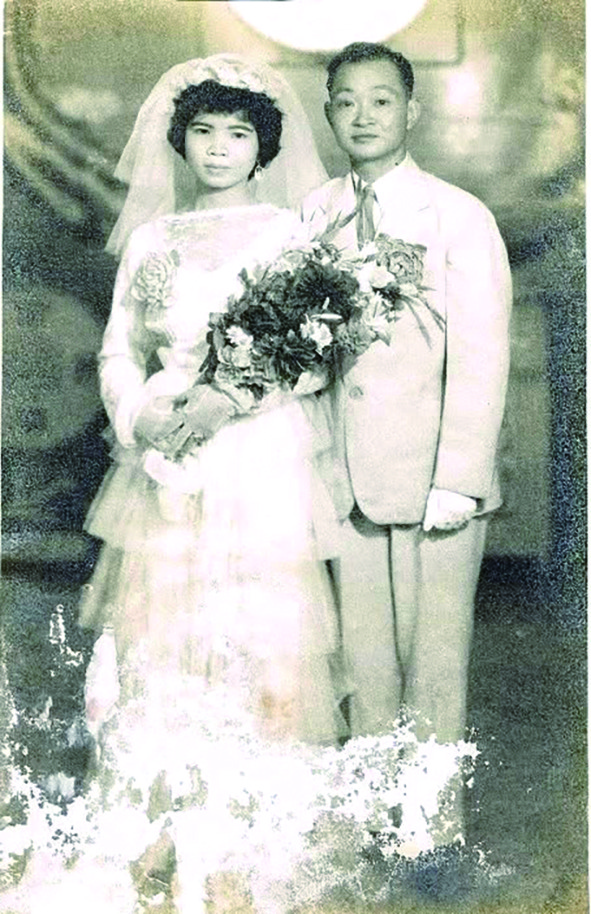
In fact, my mother was a native Taiwanese, and her union with my father was also a product of the times. I only learned later that to stabilize military morale, there had been a so-called marriage ban in the military back then.3By the time the authorities accepted reality and gradually allowed marriage, more than ten years had passed since the war. The once young and strong soldiers were no longer young; they couldn't return to their hometowns, and wanting to settle down and have families in Taiwan was extremely difficult.
The prevailing whisper in society was: these people would leave Taiwan one day; they would abandon their wives and daughters, or take their families far away to mainland China, never to see their Taiwan relatives again. Daughters from "good families" marrying mainlanders often drew sidelong glances and even brought shame to the family. I remember my father had a comrade, Uncle Liu, with deep-set eyes and a broad face, tall in stature, with features resembling a Westerner—even as a young child I thought him extraordinarily handsome. I once heard my parents mention that he had a deeply devoted Taiwanese girlfriend, and the two worked hard to seek her parents' consent to marry. However, it ultimately went against their wishes due to the mainlander label, and a few years later the girlfriend was forced to marry someone else.
My last impression of Uncle Liu stopped in junior high school, when he brought his newlywed wife to visit my parents. I'm not sure of Uncle Liu's age at the time, but he was certainly past forty, and his wife was a woman with severe intellectual disabilities. I watched him at the dinner table feeding his wife like a young child, and at night helping her change clothes and wash... I couldn't understand what depth of loneliness and longing for a home drove him to accept such a marriage.
However, Uncle Liu was not an exception. Among my father's peers, many had Taiwanese wives who, if they didn't have congenital defects, came from disadvantaged groups; some were indigenous, or like my mother, came from poverty. My mother was an adopted daughter, and her adoptive father married her to my father partly to ease the pressure of many mouths to feed, and partly to receive the bride price. Therefore, a Taiwanese woman who married a mainlander also became marginalized within her own ethnic group.
In recent decades, I've seen a group of people who are similar to my mother in certain ways; they are called Taiwan's "new residents."
Undeniably, since the late 20th century, many single men who were unsuccessful in the marriage market turned to Southeast Asia or China to seek spouses, creating many so-called "foreign brides." They bore and raised children in Taiwan, injecting labor force, productivity, and vibrant diversity into Taiwan. However, because most came from poorer countries, coupled with media's negative coverage of foreign migrant workers and foreign spouses—such as "foreign spouses are all monetary transactions"; "foreign workers occupy social resources," etc.—the public formed stereotypes about them and they inevitably suffered discrimination. Consequently, their children, the so-called "new second generation," also struggled in seeking identity, even deliberately hiding their mothers' backgrounds to avoid prejudice.
Mainlanders who relocated to Taiwan after the war, their Taiwanese spouses, contemporary new residents... driven by historical context, became border-crossing sojourners. As an impure "mainlander second generation" with a Taiwanese mother, I, like the "new second generation," am a "border-crossing child" who must find self-positioning amid multiple cultures, political manipulation, and prejudice.
Who Am I Really?
In many regions of the world, due to natural disasters, man-made calamities, political and economic fluctuations, and various interacting forces, sojourners continuously emerge and move about. Each person has reasons for leaving their homeland, even stories too difficult to share with outsiders.
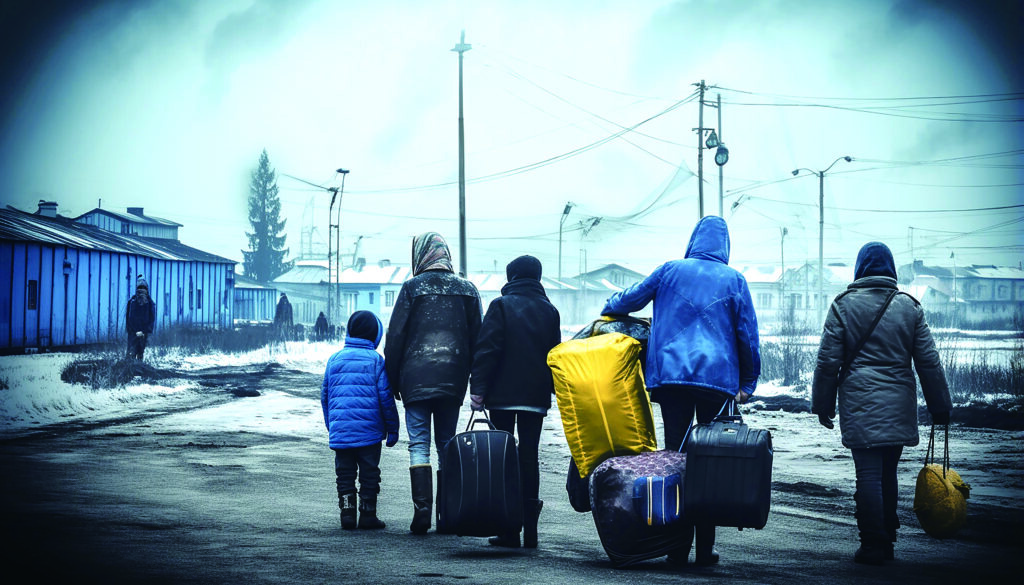
Through circumstances, I came to North America, labeled as a first-generation immigrant, becoming a sojourner in another country. I see many people's children who, as first-generation native-born Americans, even though speaking fluent English, are often treated as outsiders due to their skin color and appearance. They inherit dual values from their families and mainstream society, seeking self-positioning in the gap; between assimilation and preserving ethnic culture, gradually finding their own path. Of course, some still experience the in-between feeling of "Who am I really?" In recent years, as immigration issues have become more acute, the next generation may also have to face intensified ethnic fears and anxiety over resource distribution.
A most representative example is Arizona’s SB 1070 law, passed in 2010.4 It is both law and institutionalized anti-immigrant sentiment: projecting economic anxiety onto competition from illegal immigrants; blaming immigrants for public safety pressures; amplifying anxiety over resource distribution. The law authorized police to check people's immigration status when there was "reasonable suspicion." However, so-called reasonable suspicion had no clear standards, and "appearance" could become an illegal cue.
Recently, Immigration and Customs Enforcement (ICE) raids targeting illegal immigrants have further highlighted this issue. A friend of mine took her child to the park on the weekend and happened to encounter an ICE inspection. Because she was the only one present with an Asian face, she became the focus of the inspection, making her feel deeply humiliated.
As a multiracial, multilingual, multicultural country, the United States has long received immigrants from different places, whose religions, languages, lifestyles, and cultural values can all form group boundaries. Between old immigrants and new immigrants there exist competition and adaptation challenges, also bringing economic and security pressures. Immigration conflicts easily escalate into hate crimes and social security issues. The riots in downtown Los Angeles in 1992 and 2025, though triggered by different sparks, both had deep roots in anxiety over fairness, dignity, safety, and resource distribution.
As an ordinary person, I cannot provide a macro perspective; nor can I offer profound insights from a sociological angle. I can only attempt to understand the predicament of contemporary "immigrants" and continue to ponder: What is God's definition and heart for "sojourners"?
All Are Strangers and Sojourners
From Genesis to Revelation, the Bible consistently demonstrates God's concern for sojourners, strangers, and the vulnerable. Among its clear and repeated core teachings is: to treat sojourners with compassion, love, and justice.
God clearly tells us, “You are foreigners and exiles” (cf. 1 Peter 2:11). From Abraham in the land of Canaan to Jacob’s family in Egypt, the Israelites, across their long history, experienced repeated and prolonged dispersions, knowing well the sorrow and vulnerability of living as sojourners. Since we too are pilgrims on this earth—and at certain stages of life may walk the path of migration—we ought to put ourselves in others’ place and treat immigrants of different peoples with fairness and respect.
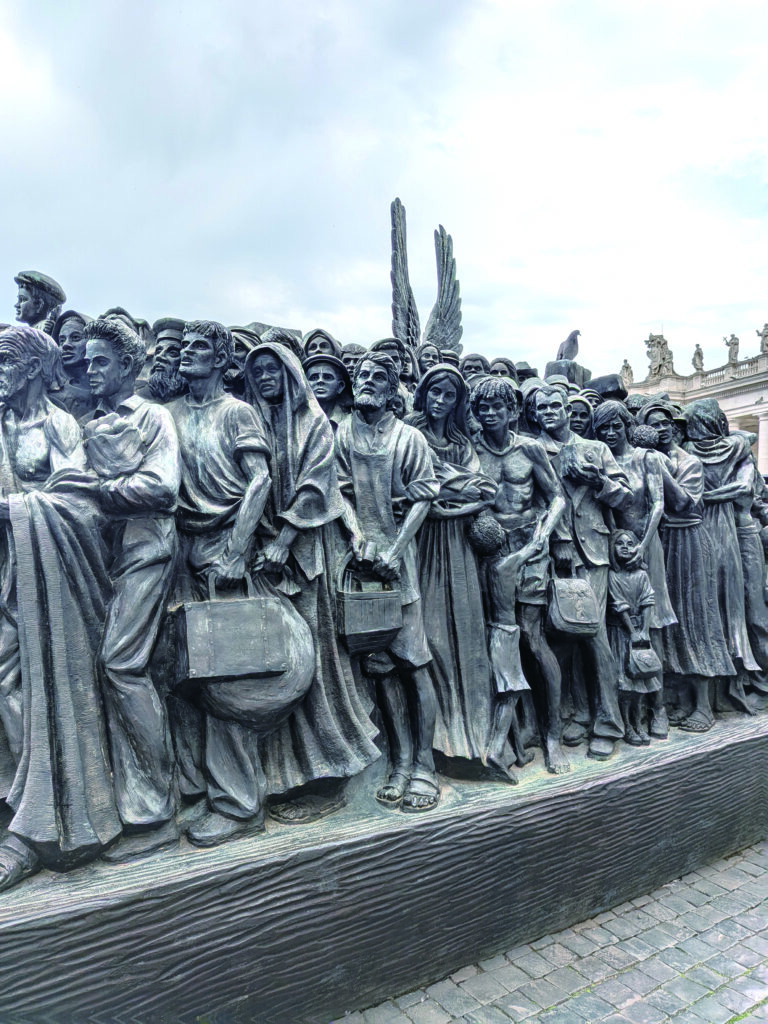
(Angels Unawares), among migrants of different generations, a pair of wings is hidden, just as Hebrews 13 says, when showing hospitality to strangers, we "entertain angels without knowing it."
▲ Image source:https://commons.wikimedia.org/wiki/File:Angels_Unawares-Wings.jpg

Jesus mentioned in Matthew 25:35-40: "I was a stranger and you invited me in... Truly I tell you, whatever you did for one of the least of these brothers and sisters of mine, you did for me." The Lord views caring for sojourners as a true expression of loving Him. The Bible also encourages and reminds us:
"Do not forget to show hospitality to strangers, for by so doing some people have shown hospitality to angels without knowing it." (Hebrews 13:2)
We should care for immigrants with empathy and show hospitality to the vulnerable with love; but love is not without boundaries or principles. Countries have immigration policies and border management that must be respected; while providing humanitarian aid, we should balance love with justice; while seeking resources, we must avoid injustice and abuse. In recent years, certain immigration ecology issues have been criticized, such as: various forms of welfare fraud, medical abuse, reselling of relief supplies and food stamps, etc., which are frequently reported. This not only loses the meaning of helping the weak and poor, but also easily triggers dissatisfaction, hostility, and rejection toward immigrants, leaving many immigrant families in need in difficult straits.
As Christians, if we can promote understanding and reconciliation among different ethnic groups in the community, provide help based on respect for truth and law, and assist them in legal integration, I believe this balances justice with compassionate love. Building new relationships of coexistence and sharing in mutual understanding, transforming the principles of loving God and loving people into concrete care, maximizes the healing of loss and pain in the integration process.
The Predicament of Immigrants Across Generations
Most of my father’s generation have now taken their final bow from life’s stage. After the passing of decades, the provincial divisions in Taiwan have gradually blurred. Yet even today, whenever partisan conflict arises, they are at times dragged back into public contention. When politicians cling tightly to the historical wounds of the February 28 Incident and the White Terror—accusing early regimes of massacring Taiwan’s elites and ruling the people with brutality—who is willing to acknowledge that people of that same era, whether native Taiwanese or mainlander, were bound by a “shared fate on one island”? The purges of the White Terror did not target only Taiwanese elites. Were not people of that entire generation, in different ways, victims? Taiwan’s present stability and development—have they not also grown, in part, from their sacrifices, as flowers and fruit borne out of the evils of history?
People in a great era are truly specks of dust; no one pays attention to the suffering of insignificant individuals. The collective image of my father's generation of veterans, in my heart, is mostly humble and silent. Caught in the whirlpool of history, their personal lives, youth, families and kinship were dismantled and dissolved, yet they were "unable to speak."
In Taiwan’s new era, the question of immigration has come to rest upon another group in need of understanding and acceptance. Though new immigrants and veteran soldiers are not the same, both have been politically marginalized and often unable to speak for themselves; for each, the journey toward integration is long and arduous. Society is burdened with entrenched prejudices—skin color, culture, economic status, language—binding them like tightening bands. The second generation of new immigrants frequently wrestles with questions of identity, some even described as “strangers in their own homeland.”
Compared with Taiwan, immigration issues in Europe and North America seem far more complex and difficult to resolve. One major difference is that ethnic boundaries in Taiwan may gradually soften over time through social change, whereas in the West they often appear more rigid and deeply entrenched. Coupled with wars and deteriorating social conditions that drive large-scale population movements, many countries’ immigration systems have struggled to cope. What follows are various social tensions and pressures on public resources, leading to divisions in public opinion. Immigration has become a bargaining chip in political polarization. How to balance humanitarian responsibility with national interests remains a profound challenge that Western societies must grapple with and seek to resolve.
Humanity may not be able to find true or timely solutions to these dilemmas. Yet I believe that God’s thoughts are higher than human thoughts. Having placed us at this moment in history, He surely has His purposes and intentions—and each of us also bears a personal responsibility and role within them.
A Silent Echo
Chiang Hsun mentions the “Wuxu Coup” in his essay5, quoting what Tan Sitong said to Liang Qichao: “…If no one escapes, there will be no one left to carry on the revolution; if no one stays behind, there will be no one to make the sacrifice.” Chiang Hsun believes that each person has a role to play: “Flight has its meaning; beheading has its value.” Perhaps history can be understood from this perspective.
Placed within the history of migration, every person who leaves home and takes root in a foreign land may seem like an exceedingly small individual, yet each carries a meaning for existence. Without departure, there would be no flow of culture; without that flow, no collision of lives; without such collisions, no depth of feeling; and without that depth, there would be no fertile ground for literature, art, and the humanities. Most sojourners who leave their homeland never possess a voice of their own. Yet their lived experiences accumulate along the river of time, sending forth unending, echoing reverberations.

The silent, desolate, motionless figure of my father’s back at his desk is my personal memory—yet it also wordlessly sings to me the song of that people in that era.
Only decades later can the tip of my pen gently sing it again, giving it new understanding and strength.
————————————————————
Note
- New immigrants: persons who come from regions outside Taiwan and settle in Taiwan through marriage, employment, or migration.
- Second generation of new immigrants: the children of new immigrants.
- First enacted in 1952 in the form of the *Marriage Regulations for Military Personnel of the Army, Navy, and Air Force during the Period of Suppression of Communist Rebellion*, its primary purposes were to maintain combat readiness, reduce fiscal burdens, and prevent troops from “taking root” locally in ways that might affect military control.
- SB 1070 is an immigration law passed by the U.S. state of Arizona in 2010. It authorized local law enforcement, when there was reasonable suspicion that a person was an undocumented immigrant, to question, detain, and require proof of lawful residency; the law also treated illegal immigration as a criminal offense.
- The Wuxu Coup was a political coup launched by the conservative faction led by Empress Dowager Cixi. During the Wuxu Reform—also known as the Hundred Days’ Reform or the Reform Movement—reformist figures represented by Kang Youwei and Liang Qichao sought to implement Western-style reforms through the Guangxu Emperor. The movement began on June 11, 1898, and lasted 103 days. Because the reforms threatened the interests of the conservative establishment, a backlash ensued, culminating in the Wuxu Coup, in which Tan Sitong and the other members of the “Six Gentlemen of Wuxu” were executed.