
Do You Love Me More Than These?
Text and Photos by Xiaobai
Returning to an Unfamiliar Home
“Therefore we do not lose heart. Though outwardly we are wasting away, yet inwardly we are being renewed day by day.” (2 Corinthians 4:16)
After four years of cross-cultural ministry, and just before our departure from the mission field, God graciously prepared a banquet for my wife and me. It was a season in which our hearts and spirits were set free and renewed, and where we once again heard the tender, loving call of our Lord.
2022, with the blessing of our family and the commissioning of our church, my husband and I entered East Asia to begin a four-year cross-cultural mission assignment. On Christmas Eve 2025, we returned to our home in New Jersey. The moment I saw my son at the airport was the moment I had longed for most during those four years. Soon afterward, we received the best Christmas gift imaginable—our first granddaughter, Hope, arrived early amid a winter snowstorm. The joy of becoming a grandmother for the first time temporarily caused me to forget the responsibilities and obligations that awaited me during our home assignment.
For the next two months, we were constantly on the move, attending what seemed like an endless series of sharing engagements. At the same time, I experienced what is known as reverse culture shock. I had often heard cross-cultural missionaries talk about the challenges they faced when returning to their home countries, but I never imagined that I would experience similar “symptoms” myself.
Was I simply becoming forgetful, or had I truly become immersed in the culture of the mission field? Returning to the city where I had lived for more than twenty years, the streets felt strangely familiar, yet even my own house seemed to require rediscovery. I felt almost like a new immigrant. Everything—from shopping and social customs to the taste of food—felt new again. At restaurants, you are expected to leave a tip. Meeting friends requires scheduling in advance, and being late is unacceptable. Conversations with old friends revolve around retirement and travel plans. There is snow to shovel in the winter, and the cost of living has soared. Had I really come home?
Before stepping into the church, I felt an unexpected sense of hesitation—almost a fear of returning home after a long absence. For four years, I had longed for the warmth of God's family. Yet now, I felt like a newcomer. I deliberately chose a seat in an inconspicuous corner, hoping to avoid too much attention, conversation, or small talk. Perhaps people no longer remembered us.
Love What? Fear What? Trust What? Flee What?
Returning missionaries are expected to share their experiences with brothers and sisters in their sending church. Shouldn't that be exciting and joyful? Why, then, did I feel anxious and hesitant? Perhaps it was because my husband's health had steadily declined over the past few years, leaving me fearful, unsettled, discouraged, and burdened with guilt. There was the helpless feeling that no one truly understood what we were carrying. There was the pressure of believing that we had to remain strong and could not afford to be weak. There was the tendency to seek fellowship only with God while withdrawing from fellowship with people. There was also the habit of sharing only the good news while keeping the struggles to ourselves. All these emotions intertwined, creating a complicated tension within me—a desire to share, yet at the same time a desire to retreat and run away.
Many Christians hold missionaries in especially high regard and often place lofty expectations upon them. I used to view missionaries with the same admiration. They leave behind their families, promising careers, and comfortable lives to go to unfamiliar places and proclaim the gospel. It seems like a great privilege and honor—the highest expression of sacrifice for the Lord.
It was not until I entered the mission field myself that I came to understand what a missionary once said: “Do not think too highly of missionaries and assume they are Supermen. Nor should you think too little of them and assume that they became missionaries because they had no better options. Simply view them with a normal perspective and understand that they are people too—ordinary Christians like you and me, who can be hurt and can feel discouraged.”
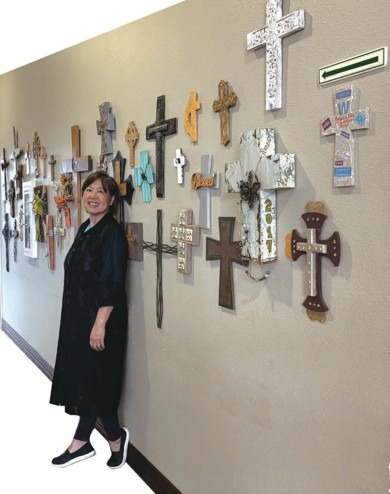
The walls of the RENEW retreat center were covered with crosses of many different designs, sent by churches from across the United States. It was here that the authors found release and renewal for their hearts and spirits.
On the surface, I needed to be strong, encouraging others to go into missions. Yet beneath the surface, I was experiencing deep inner turmoil. I found myself constantly reflecting: What motives and attitudes led my husband and me, after seven years of preparation, to retire early and enter the mission field? What were we running from? What were we pursuing? In the midst of these conflicting and complicated emotions, what was I really afraid of? And what was I truly placing my trust in?
During our four years on the mission field, we made many local friends and learned a great deal about mission strategies. We did the work that needed to be done, said the things that needed to be said, and endured the hardships that came our way. In what felt like a honeymoon period of “success right out of the gate,” we joyfully kept doing, speaking, and teaching. Even in our first year of ministry, we saw significant results. In the second year, our team leader left. In the third year, my husband's health broke down. By three and a half years into the journey, my heart was gradually growing weary, and my body was slowly losing strength as well.
For four years on the mission field, we made many local friends and learned a great deal about mission strategies. We had done what needed to be done, said what needed to be said, and endured the hardships that came our way. During the honeymoon period—when everything seemed to peak right from the start—we kept doing, speaking, and teaching with joy. Significant ministry results came even in our first year. In the second year, our team leader left. In the third year, my husband's health broke down. After three and a half years, my heart gradually grew weary, and my body slowly began to give way. My legs could no longer carry me out to visit local friends. My hands could not bring themselves to write prayer letters of thanksgiving and requests. My mouth could not open to share the gospel. My mind became a noisy little stage filled with questions: What am I doing here? Why can't I seem to do anything well? Am I merely taking up space? Who understands the suffering I am going through? And after leaving the field, where will I go from here? Ironically, returning to an environment that no longer felt familiar gave me the quietness I needed. Only then did I realize that much of this was driven by self-centeredness and pride—a kind of self-pity that felt ashamed to face those who had supported and sent us out.
“You don't even have a single fruit to show for your work. You are a failure as a missionary!” Such accusations felt like Jezebel's threat against the prophet Elijah. I was disappointed in myself, doubtful of my calling, and began to understand, at least in part, why Elijah wished that he might die.
Facing Loss, Starting Anew
By late February, our two-month home assignment was coming to an end. I was still undecided about whether to attend the RENEW retreat, an annual gathering organized by our mission agency for missionaries on home assignment. I knew that in just a few months we would be leaving the field. Was there really any need to go? Would it simply become another obligation—another responsibility that I felt compelled to fulfill?
One comment from my daughter moved me: “God will not force you to go or not to go. But if you do not go, you may miss God's blessing. Hasn't God stepped in at the last moment many times before and turned defeat into victory for you? Perhaps you will experience Him again. Why give up the opportunity to say a proper goodbye to missions?”
So my husband and I set out once again, placing everything in God's hands to see what He had prepared for us.
When we arrived at the retreat center in central Texas, nestled beside a lake, it felt like a hidden retreat far removed from the outside world. The surface of the lake was like a mirror, reflecting the branches of trees just beginning to bud in early spring. Even the sky seemed wider there. Inside, surprises awaited at every turn. The staff welcomed us with smiles, and the walls were covered with crosses of many different designs, sent from churches across the United States. In that place, I found myself slowing down without even realizing it.
“During these few days, you can completely relax and share freely in a safe environment.“
“During this retreat, we are not going to talk about vision or goals, nor will we teach mission strategies. We simply want you to receive adequate rest in body, mind, and spirit, experience renewal, and make a fresh start.” The speaker's gentle opening remarks were like a refreshing spring breeze.
On the first evening, the icebreaker activity was to share interesting experiences from the mission field. Participants reached into a bag of M&M's and grabbed a handful of candies in different colors, with each color corresponding to a different topic. Yellow: the most memorable mode of transportation. Red: the most dangerous experience. Blue: the Bible verse that helped you the most. Green: your most unique gift or strength. Brown: your favorite food.
After three rounds of sharing, the six of us—the speaker and five participants—had come to know one another on a deeper level. It was also the smallest retreat I had ever attended in my twenty-five years as a Christian. Yet it left an indelible impression on me: relaxing, diverse, profound, and deeply touching.
The speaker, Eva, had spent many years in cross-cultural ministry in East Asia. She herself was a Third Culture Kid (TCK), having grown up in a missionary family. A TCK is someone who grows up in a place different from where his or her parents were born and raised, blending elements of both the home and host cultures into a unique identity. She is also an accomplished writer of missions literature. During the second day's session, “Loss, Grief, and Renewal,” she pointed out that missionaries inevitably go through cycles of loss and renewal. Loss can take many different forms: losing the companionship of one's original community; missing family milestone celebrations; losing teammates on the mission field; or losing privileges that were once available, such as unrestricted internet access. She encouraged everyone to write down the losses they had experienced, then honestly face and feel them, even weep over them. Afterward, she invited us to say goodbye to those losses in creative ways, and in doing so, experience renewal in life.
Another speaker, Dorothy, serves with a mission organization. She was a counselor with whom I had maintained close contact while on the mission field, and she had also served as a missionary herself. I still remember that when my husband and I first arrived on the field and were confined to our rental apartment for forty days because of COVID lockdowns, Dorothy was the first person to call and check on us.
Her professional counseling and care helped me deeply appreciate that one of the important responsibilities of a mission organization is knowing how to care appropriately for the physical, emotional, and spiritual well-being of its missionaries. Only missionaries who are psychologically healthy can hope to have healthy and effective ministry. And a healthy spiritual life depends on remaining closely connected to God at all times.
On the final day of the retreat, Cindy, the spiritual coach from our mission organization, made a special trip to visit me. Her sincere care and faithful prayers over the years reminded me that I had never been fighting alone. Truly, it was grace upon grace, strength upon strength, and joy upon joy! I am grateful for this RENEW retreat. It was a gathering of fellow travelers on the same journey, where we understood and appreciated one another. Just as my daughter had said, God always steps in at the last moment. This retreat was indeed His “gift” to me—a gift for a fresh start.
Do You Love Me More Than These?
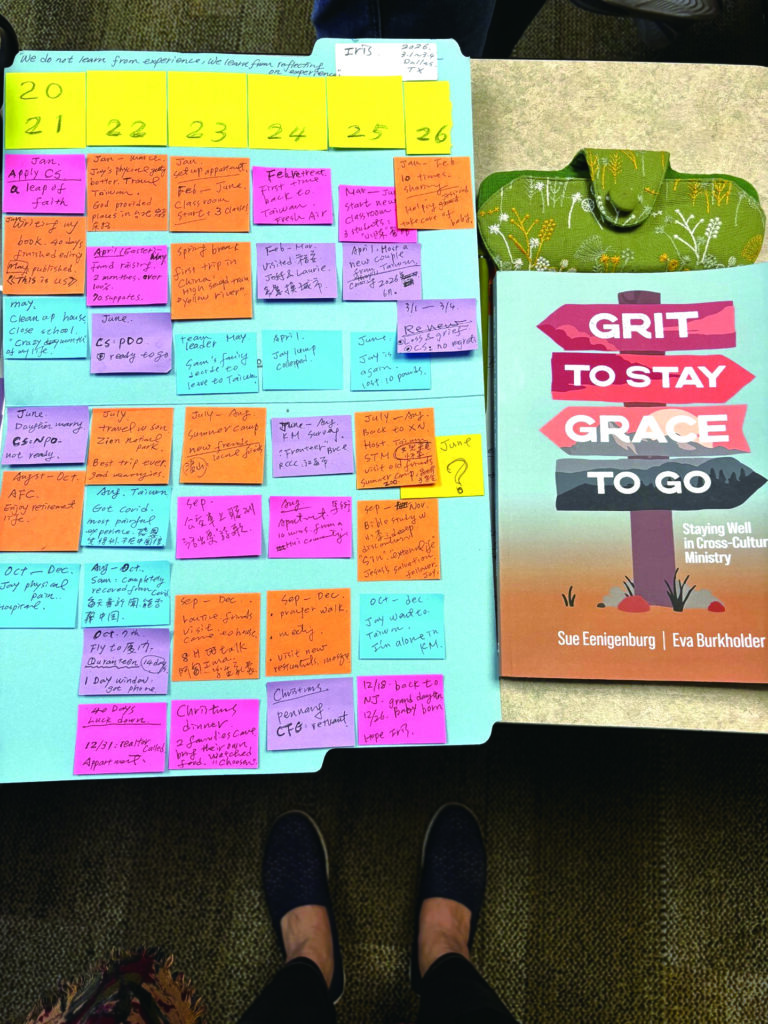
The highlight of the third day was creating a Timeline and sharing our stories from the mission field. The speaker gave each participant a sheet of paper labeled “Timeline,” divided into two columns: one for joys and the other for challenges. We were also given a folder and several stacks of colored stickers. She asked us to use words, charts, timelines, colored stickers, and markers to identify events and milestones on the mission field that had been especially significant in our lives. Eva reminded us: “We do not learn from experience. We learn from reflecting on experience.” After quietly completing our timelines, each of us shared our story. Eva then asked different questions of each participant. When it was my turn, she asked, “Among all these stickers, which ones carry special significance for you?”
Before me were all these brightly colored squares, like one frozen scene after another from a movie: those people, those events, the sweetness, the hardships, the love, the meals, the conversations, the journeys, the illnesses, the fears.... After a moment of reflection, I pointed to the very first sticker on the first page—January 1, 2021, the day we submitted our missionary application.
It was the early morning of the first day of the new year. After praying together, my husband and I formally submitted our application with a mixture of solemnity, anxiety, nervousness, and excitement. From that moment on, we spent the next year completing one hundred challenges required by the mission organization: filling out lengthy application forms, obtaining recommendation letters, and writing our wills; undergoing medical examinations; reading assigned books and documents, attending required courses, and watching designated videos; beginning to write fundraising letters; and taking Bible examinations....
The mission organization trained us as long-term missionaries. Submitting the application meant there was no turning back—only moving forward. At the same time, my husband officially brought his professional career to a close, and I began preparing our house to be rented out. This was intended to be a four-year assignment in missions. If we survived it, it might become five years, or even ten. There was even a thought in my mind that if I were to die on the mission field, that would not necessarily be unacceptable.
I then pointed to another note, marked “Christmas Eve 2023.” That evening, two Muslim families accepted our invitation to come to our home for dinner. It was a major breakthrough in our friendship. They knew how important Christmas was to us. Understanding that we had left our homeland and come to such a distant place, they felt that, as good friends, they should spend the holiday with us. After dinner, my husband and I shared our testimonies, and together we watched a special program about the birth of Jesus.
After I finished sharing, Eva prayed for me. Then she gently embraced me and said, “In just four years, you have done so much on the mission field, experienced so much, and grown so much. God knows it all.” No sooner had she finished speaking than tears began to stream down my face. It was as if she understood all the joys, sorrows, triumphs, and struggles of those years—she knew, and she understood. I asked myself: Were all these colorful stickers for me, or were they for the Lord? I never imagined that a single timeline, one embrace, and a few words of comfort from someone who understood could bring such complete healing. Renewal, I realized, is not an outward change. It is returning once again to the Lord. Walking with Him, every day becomes a new beginning.
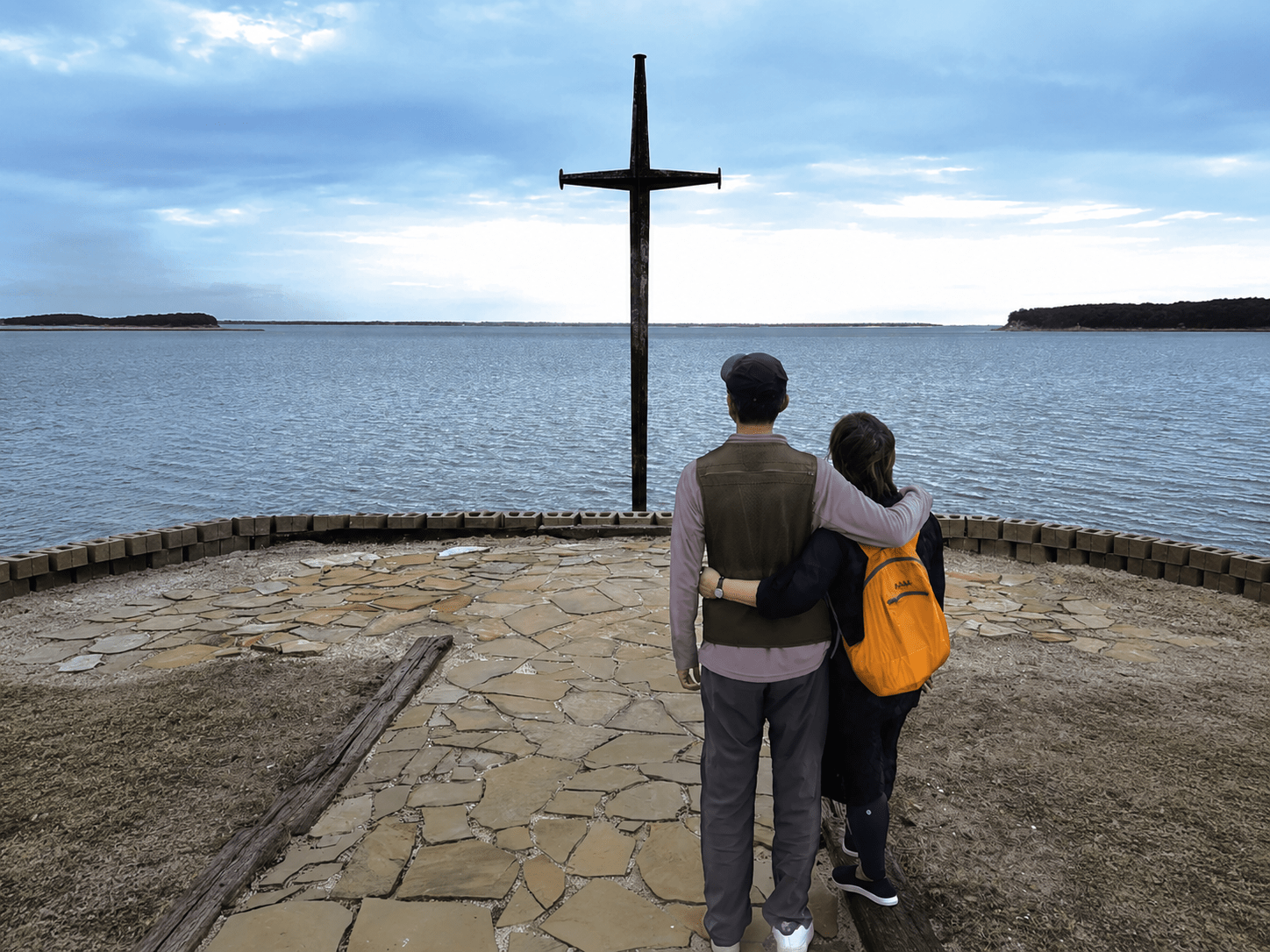
After the retreat ended, my husband and I walked once more to the lakeshore. For a moment, it felt as though we were standing by the Sea of Galilee. Facing the cross, we looked at each other. Without a word, we exchanged a glance of quiet affirmation. It seemed that the same thought had come to both of us: “Do you love Me more than these?”